 ×
×
In die afgelope paar jaar het Namibiese Wit Marmoor een van die gewildste wit natuurlike stene vir luukse binne-ontwerp geword. Dit word bewonder vir sy sagte wit agtergrond, subtiel vloeiende aders en kristalagtige tekstuur, wat ’n kalm en elegante gevoel skep...
DEEL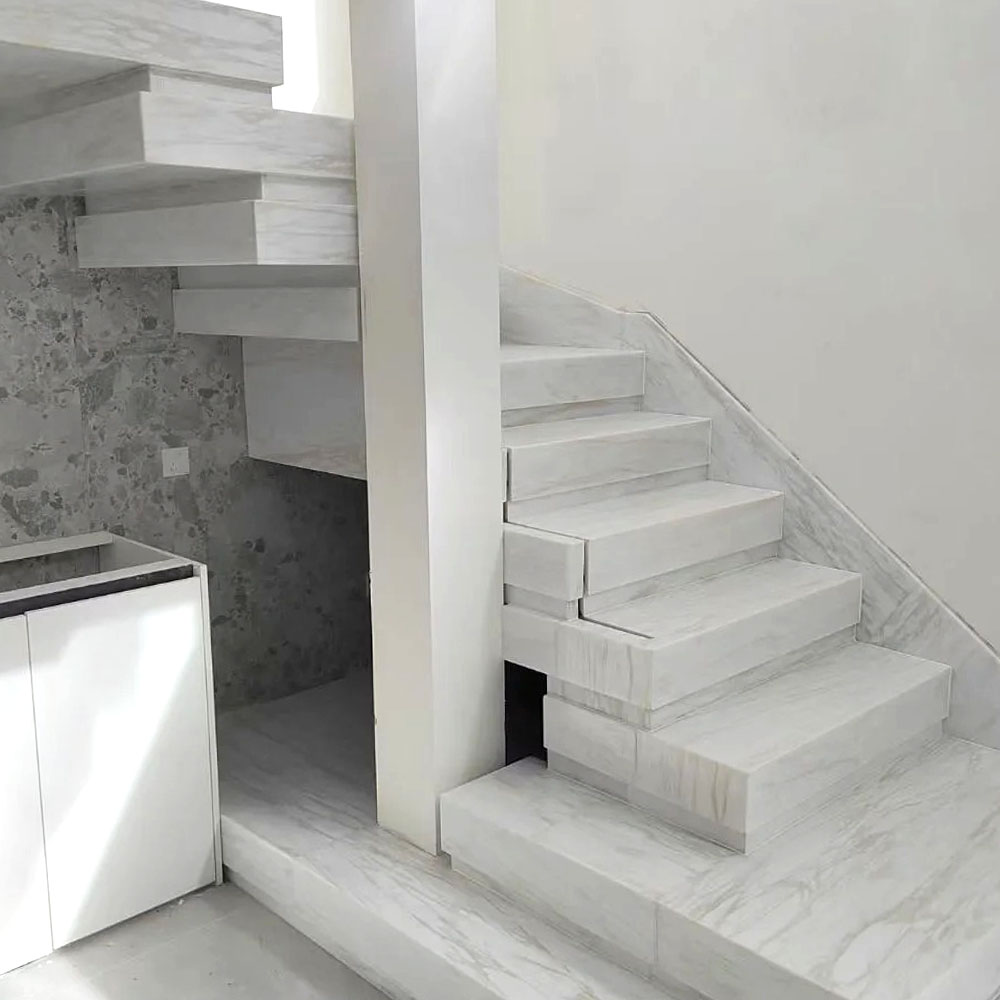
In die afgelope paar jaar het Namibië-Wit-Marmoor een van die gewildste wit natuurlike stene vir luukse binne-ontwerp geword. Dit word bewonder vir sy sagte wit agtergrond, subtiele vloeiende aders en kristalagtige tekstuur, wat ’n kalm en elegante gevoel na enige ruimte bring.
Of dit nou vir aanwerkings, wandte, vloere of badkamertuisinrigting gebruik word, bied Namibië-Wit-Marmoor ’n tydlose en luukse voorkoms wat beide moderne en klassieke style beklee.
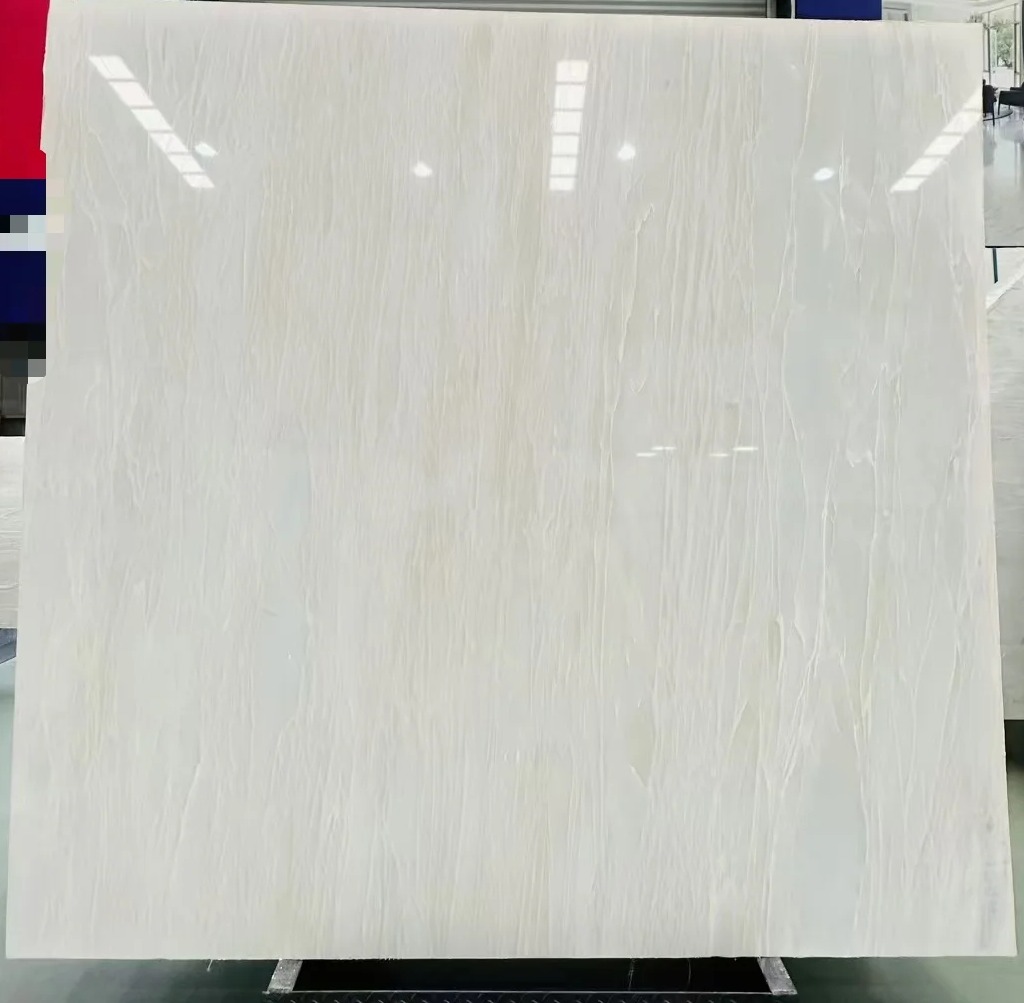
Namibië-Wit-Marmoor is ’n hoogwaardige natuurlike steen wat in Namibië, ’n land in suidelike Afrika, ontgin word. Sommige groewe is naby die Karibib-streek geleë, wat die rede is hoekom die steen soms ook met daardie streek geassosieer word.
Afhanklik van die verskaffer of mark kan hierdie materiaal ook onder verskillende handelsname verkoop word, insluitend: Namibia-Wit Marmoor, Wit Rhino-Marmoor, Rhino-Wit Marmoor, Bianco Rhino-Marmoor, Namib-Wit Marmoor, Mystery-Wit Marmoor en Rhinoceros-Wit Marmoor.
Al wissel die name, verwys hulle gewoonlik na dieselfde of baie soortgelyke wit marmoor uit Namibië.
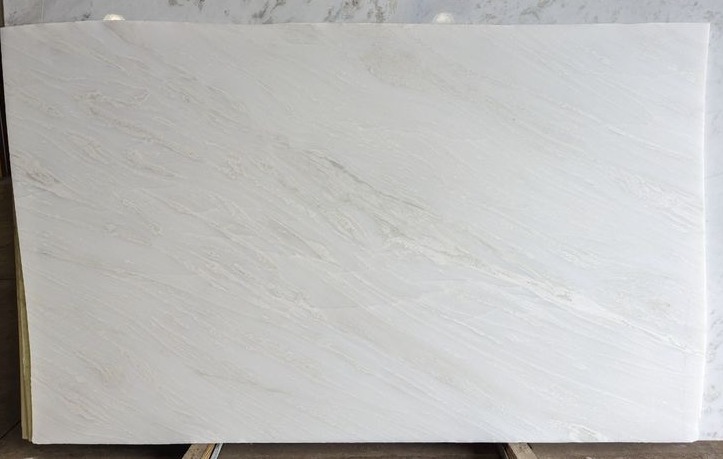
Een van die redes waarom Namibia-Wit Marmoor so gewild geword het, is sy skoon en verfynde voorkoms.
In teenstelling met sterk geaderde wit marmore met dramatiese patrone, word Namibia-Wit Marmoor gewaardeer vir sy sagter en meer gebalanseerde voorkoms. Dit het gewoonlik 'n roomwit tot ligte yvoor-agtergrond, sagte grys- of pienkgeel-adering, fyn kristalstrukture, 'n gladde en elegante visuele vloei en selfs 'n effense deurskynendheid in sommige plate.
Die algehele indruk is kalm, helder en luksueus sonder om oorweldigend te wees.
Baie ontwerpers beskryf dit as 'n "stille luksus"-steen omdat dit op 'n baie natuurlike manier 'n gesofistikeerde atmosfeer skep.
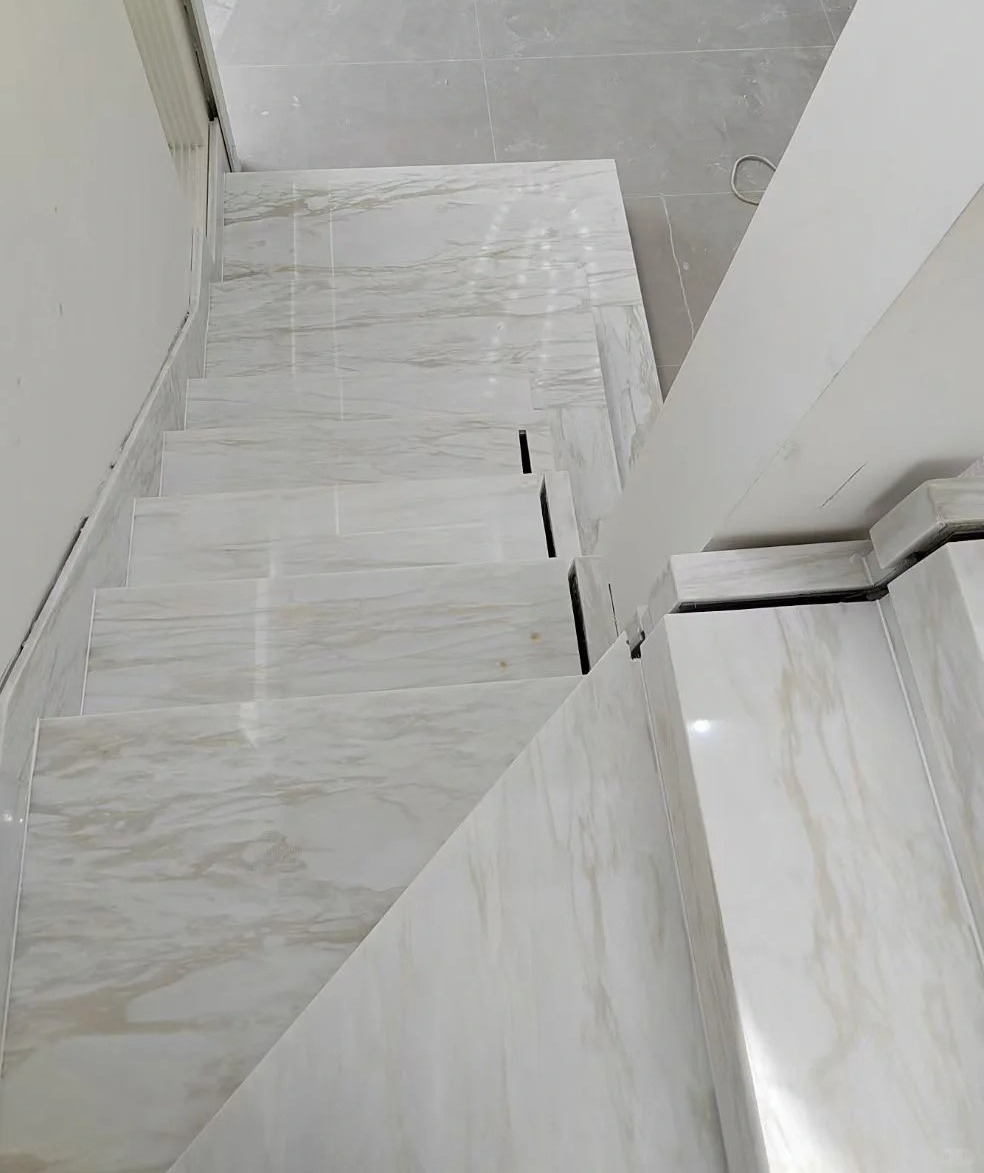
In die Chinese mark word hierdie materiaal dikwels "Karibib Jade" of "Ys Jade" (冰玉) genoem.
Die rede is eenvoudig: baie plate het 'n sagte, deurskynende kwaliteit en kristalagtige tekstuur wat aan natuurlike jade herinner.
In vergelyking met gewone wit marmoor verskyn Namibia-wit marmoor dikwels meer skynend, meer kristalagtig, effens gladter en sagter van kleur, en effens "ysagtig" of deurskynend onder verligting.
Hierdie jade-agtige gevoel maak dit veral aantreklik vir luukse huise en hoë-end kommersiële projekte.
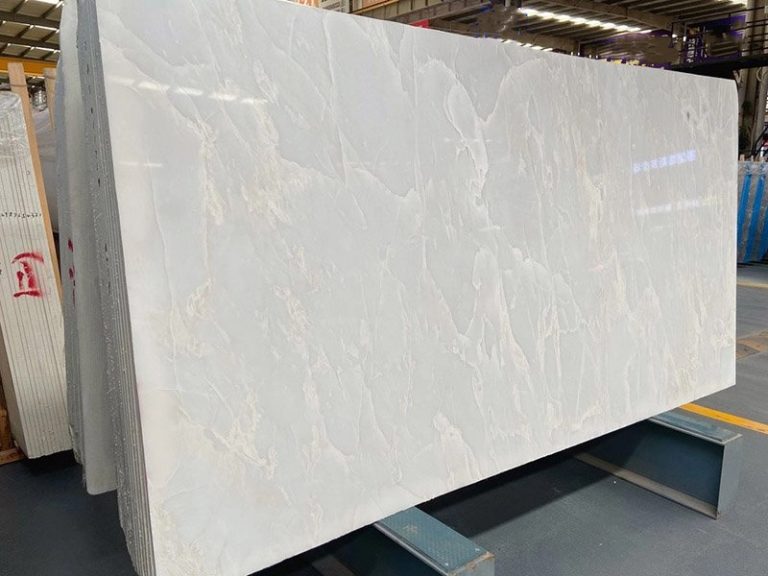
Dank sy elegante en neutrale voorkoms werk Namibia-wit marmoor pragtig in baie binne-ruimtes.
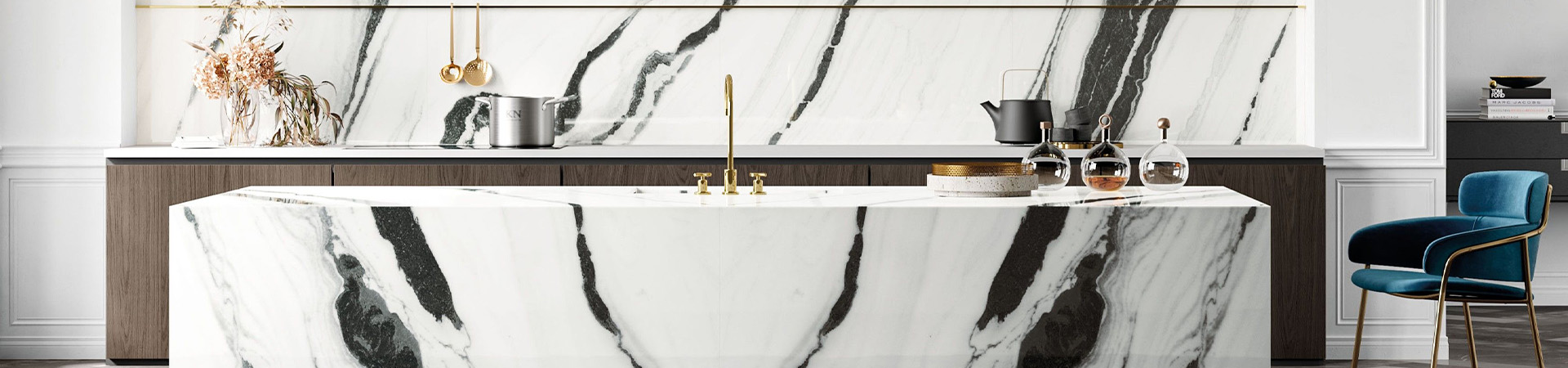
Sy skoon wit agtergrond laat kombuisse helderder en ruimer lyk. Groot kombuiseilande wat van Namibia-wit marmer gemaak is, kan die middelpunt van die hele vertrek word.
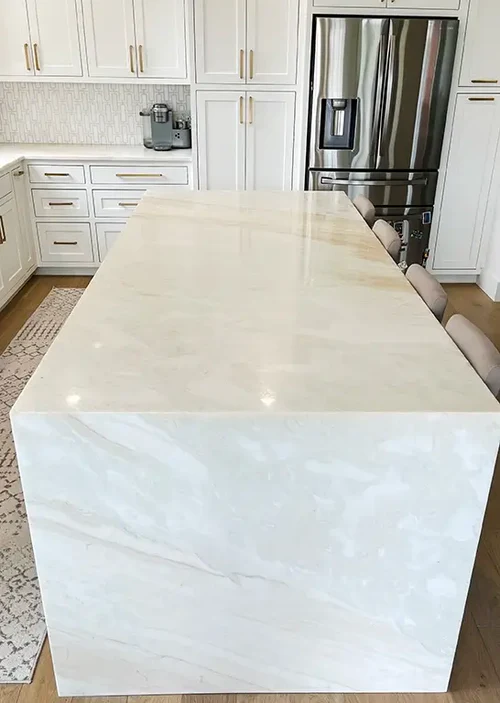
Die sagte tekstuur en kristal-effek skep 'n ontspannende spaaagtige atmosfeer, wat dit 'n gunsteling vir luukse badkamers maak.
Boekgepasde plaatjies word dikwels gebruik vir TV-mure, ontvangsarea-mure of vuurherd-omgewings. Die natuurlike vloeiende aders skep 'n pragtige kunstige effek.
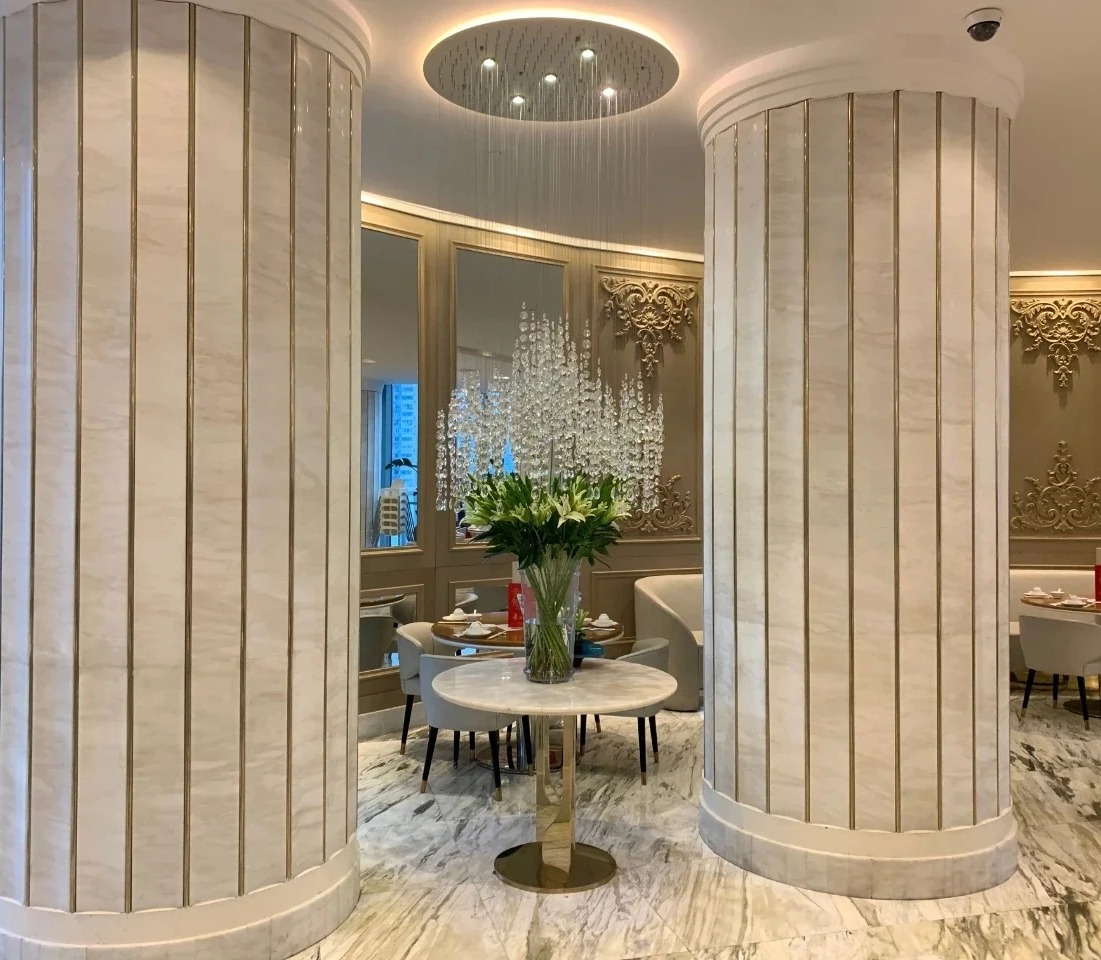
Grootformaatvloere met hierdie marmer gee interieurs 'n naadlose en elegante voorkoms, veral in moderne minimalistiese huise.
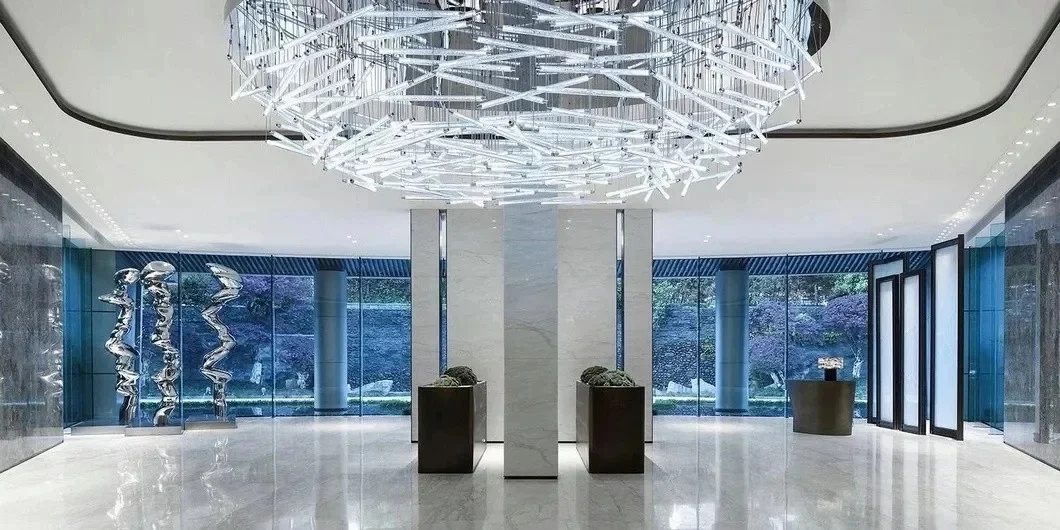
Namibia-wit marmer word ook algemeen gebruik vir aangepaste eetkamertafels, koffietafels en sytafels as gevolg van sy verfynde en tydlose voorkoms.
Hierdie klip pas veral goed by moderne minimalistiese interieurs, luukse villa's en appartemente, hotelprojekte, hoë-end kleinhandelwinkels, ruimtes wat deur wabi-sabi geïnspireer is, en sagte neutrale kleurskemas.
Aangesien die aderwerk gewoonlik nie te sterk is nie, pas dit maklik by hout, koper, swart metaal, glas en warm verligting.
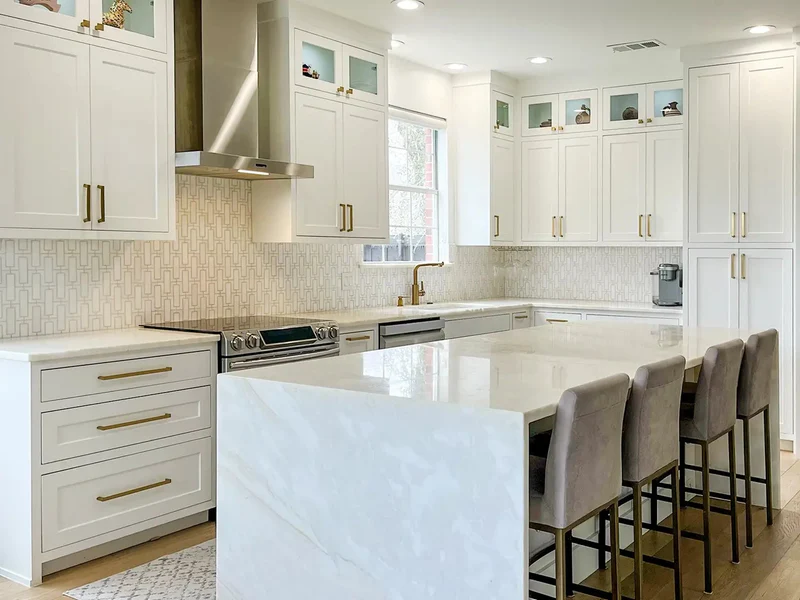
Soos alle natuurlike marmer, is Namibia-wit marmer pragtig, maar vereis ook behoorlike versorging.
Elke plaat is uniek. Die aderwerk, kristalpatrone en kleurtoon kan van stuk tot stuk verskil. Dit is een van die waardevolste eienskappe van natuurlike klip.
Alhoewel sommige Namibia-wit marmer soorte digter en harder as gewone Carrara-marmer is, bly dit steeds natuurlike marmermateriaal.
Suurstowwe soos lemoensap, essig of wyn kan die oppervlak beskadig indien dit te lank daarop gelaat word.
Daar word gereelde seëling aanbeveel, veral vir kombuistellings en badkamertoepassings. Behoorlike onderhoud help om die klip se skoonheid met verloop van tyd te bewaar.
Sommige plae kan natuurlike kristallyne of klein skeurkante bevat. Hierdie kom algemeen voor in baie premium natuurlike stene en is nie noodwendig strukturele gebreke nie.