 ×
NATURAL STONE / MATERIAL & APPLICATION CASE Sinai Pearl Limestone: Timeless Beige Stone for Contemporary Architecture An exploration of Egyptian limestone, natural fossil texture and considered detailing across interiors, outdoor paving and arc...
Share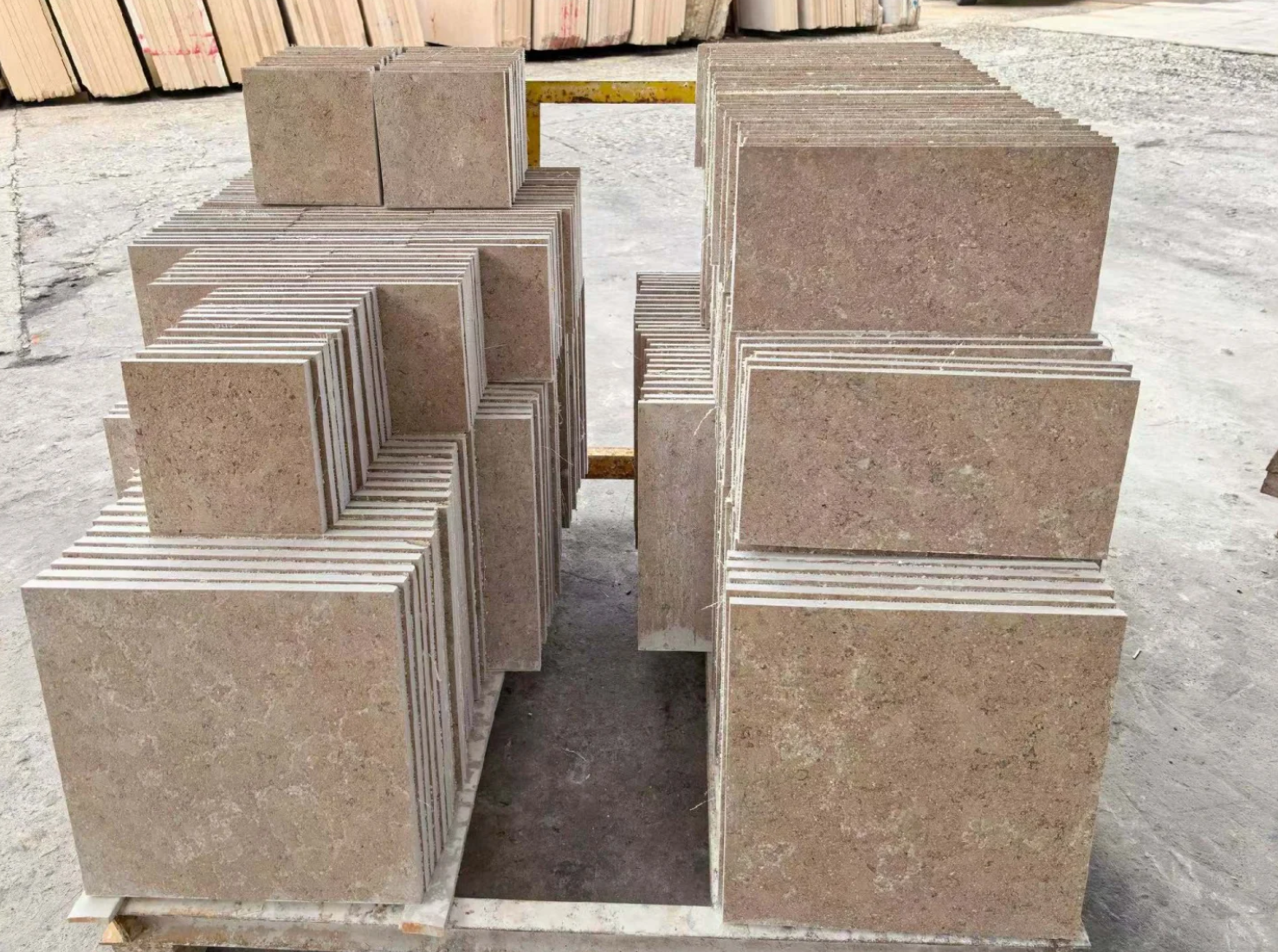
NATURAL STONE / MATERIAL & APPLICATION CASE
An exploration of Egyptian limestone, natural fossil texture and considered detailing across interiors, outdoor paving and architectural cladding.
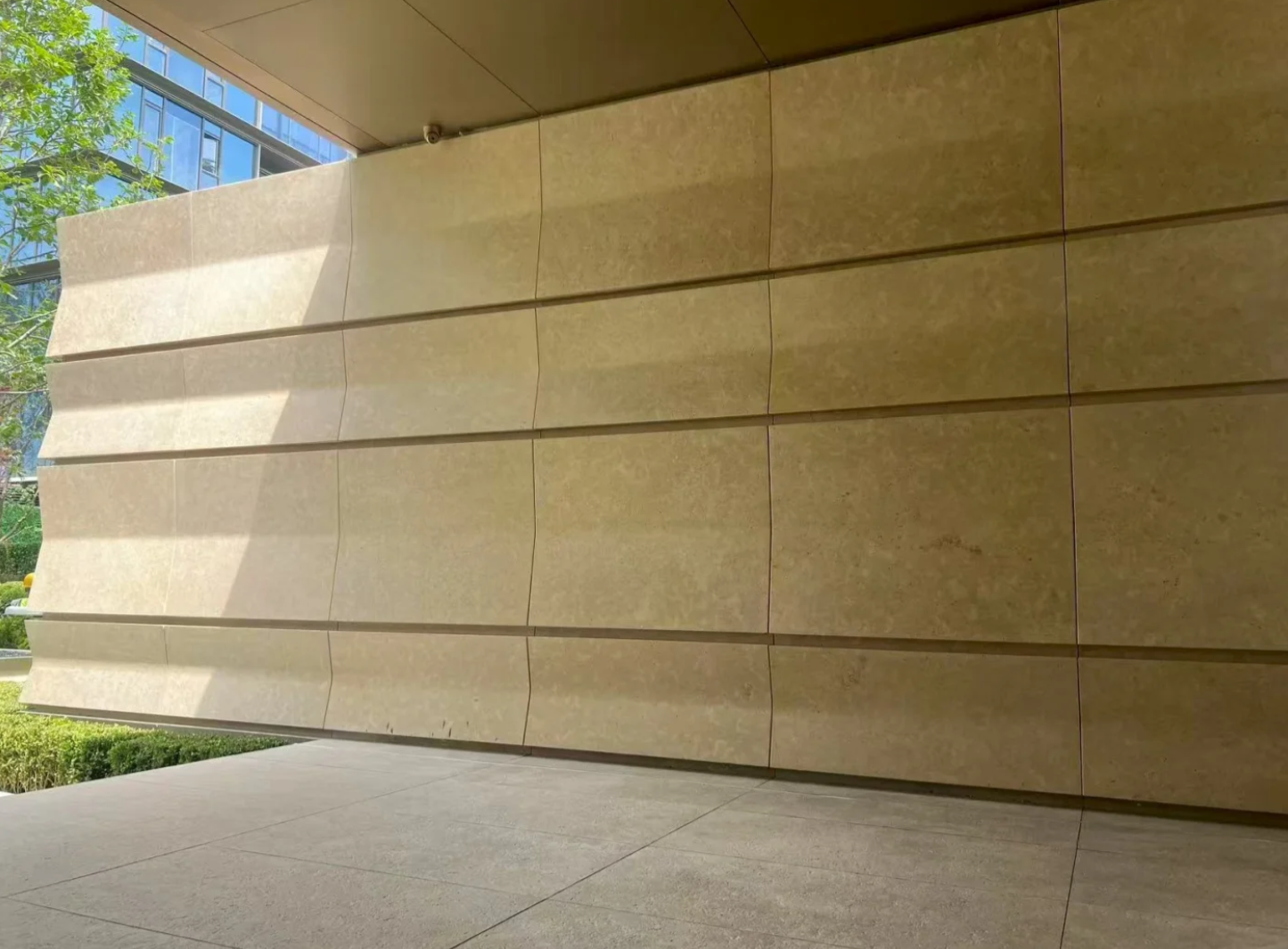
Sinai Pearl limestone offers a quiet, mineral-rich surface suited to both contemporary and traditional spaces.
Some stones transform a room through contrast. Others create a setting in which architecture, light and furniture can work together without competition. Sinai Pearl Limestone belongs to the second group. Its beige-grey background, fine variations in tone and occasional fossil markings give broad floors and walls depth without visual noise. It is especially effective where the design calls for warmth, restraint and the unmistakable character of natural stone.
Originating in Egypt's Sinai region, Sinai Pearl is used for limestone floor tiles, wall cladding, stair components and exterior paving. In international stone markets, related commercial names may include Sinai Pearl Beige, Sinai Pearl Light and, in some catalogues, Triesta or Teriesta. These names are not a substitute for approving a current stone sample: material appearance can vary between selections and blocks.
This material case examines what makes Sinai Pearl distinctive, how its appearance changes with finishing, and where it can be specified effectively in residential, hospitality and commercial architecture. The application scenes and layouts below are design references rather than claims about one completed or installed project.
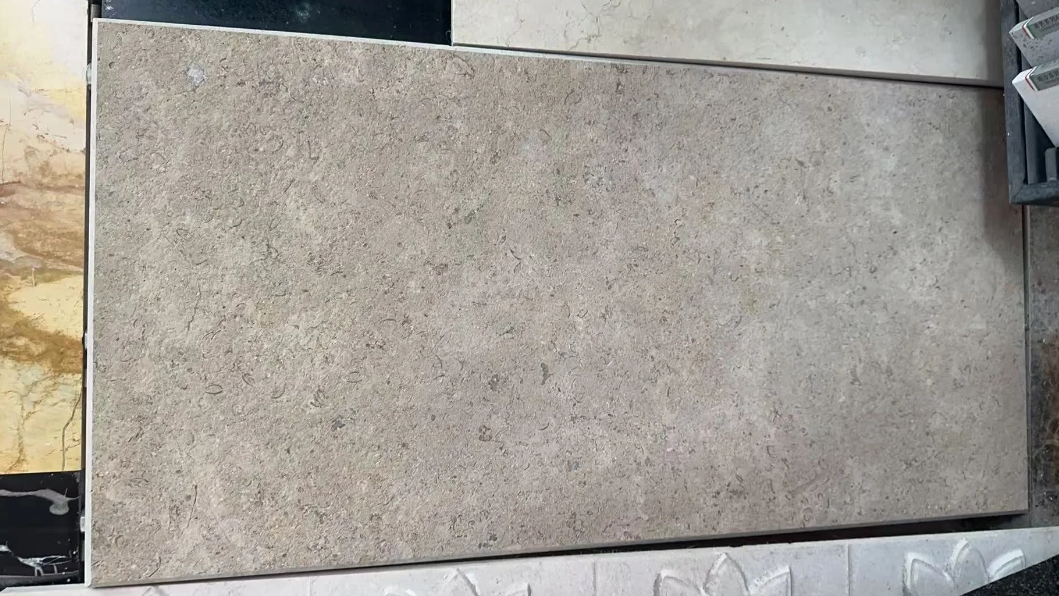
At first glance, Sinai Pearl can appear almost uniform: an understated blend of sand, cream, taupe and pale grey. A closer look reveals a more interesting surface. Small shell-like fossil traces, cloudy mineral movements and scattered darker lines interrupt the background gently. In some batches the overall appearance is creamier; in others it leans towards soft grey or warmer earth tones. The range is part of its character, and it is why viewing several pieces together is more useful than assessing a single close-up photograph.
In an interior with daylight, the stone can look light and airy. Under warm artificial lighting, it takes on a richer, more intimate tone. That flexibility makes Sinai Pearl a useful choice for warm minimalist interiors, Mediterranean-inspired houses and spaces that balance natural stone with oak, walnut, plaster, bronze or linen.
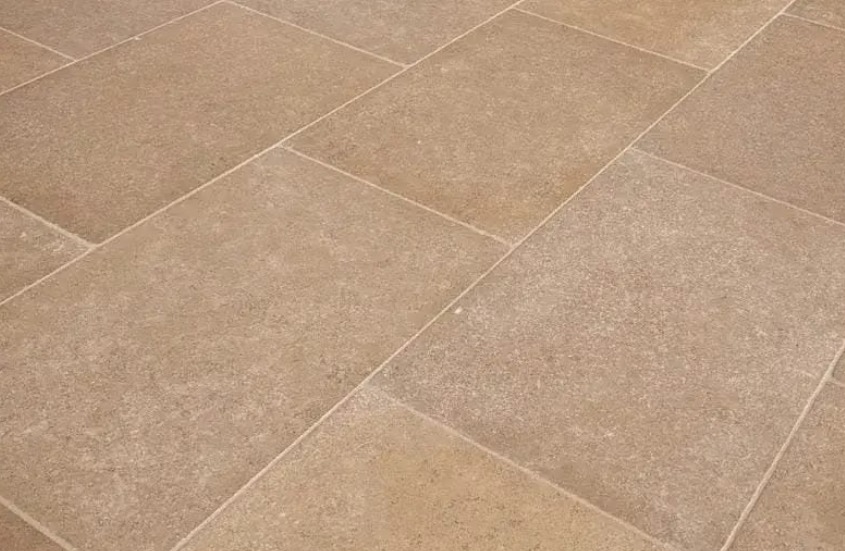 Fossil details and natural shade movement. |
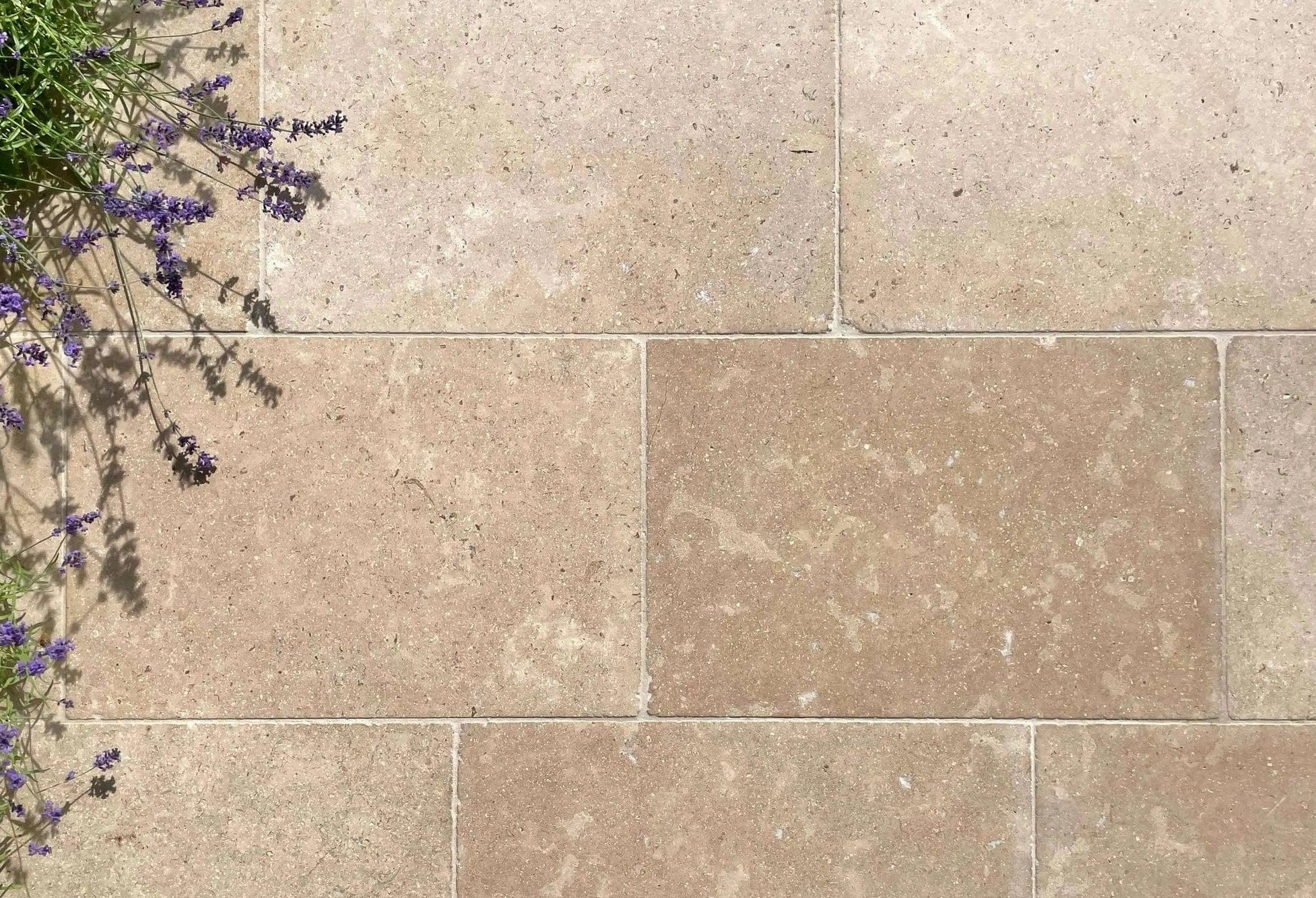 A broader view shows the natural variation across pieces. |
Flooring is one of the most convincing uses of Sinai Pearl limestone. Across a living room, hallway or open-plan dining area, its fine texture creates a continuous foundation that does not overwhelm the furniture. Large rectangular limestone tiles can emphasize clean architectural lines; smaller modules or a mixed-size layout can introduce a more relaxed, traditional rhythm.
For contemporary interiors, a honed finish is particularly appealing. Its low-sheen surface retains the visual softness of limestone while allowing delicate fossil details to remain visible. The restrained finish pairs with timber cabinetry, sculptural furniture and natural fabrics. Rather than making every surface a statement, it lets the room feel composed.
Tile size should be determined by the floor plan, the stone selection and installation conditions. Common market formats include 600 × 600 mm and 600 × 400 mm, while cut-to-size pieces can be discussed for a coordinated project. Grout tone matters as much as the layout: a close beige or warm-grey joint can keep the floor visually continuous, while contrasting joints make each tile more prominent. Stone thickness, movement joints, substrate preparation and the installation system must be specified for the actual site.
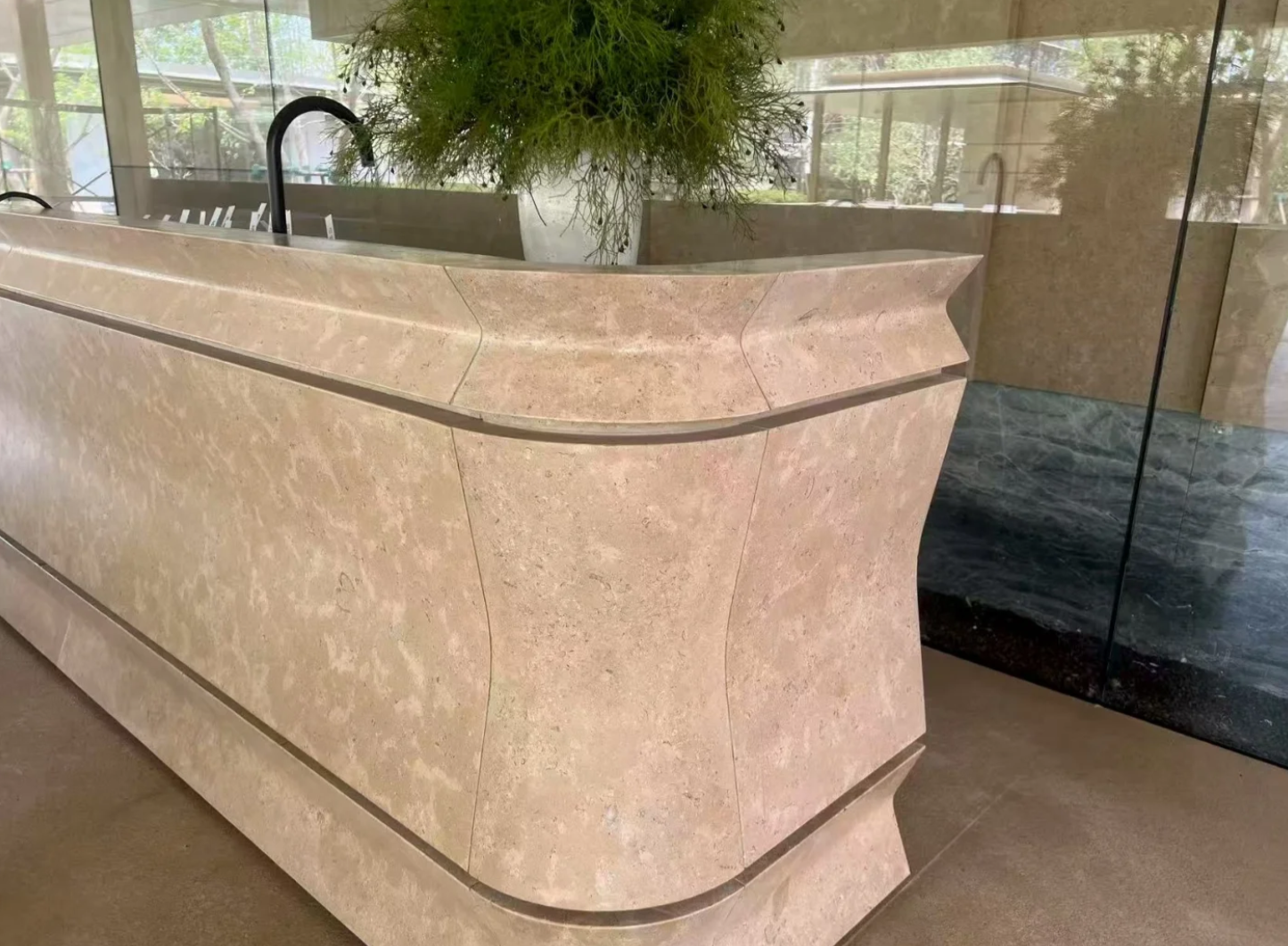
A warm limestone floor can provide continuity between living, dining and circulation areas.
Sinai Pearl is also a compelling option for natural limestone paving, garden paths, sheltered terraces and courtyard designs. Its muted beige-grey character works with planting, timber, limewashed surfaces and neutral masonry. For Mediterranean-style patios, the stone can introduce a gently aged quality without relying on strong colour contrasts.
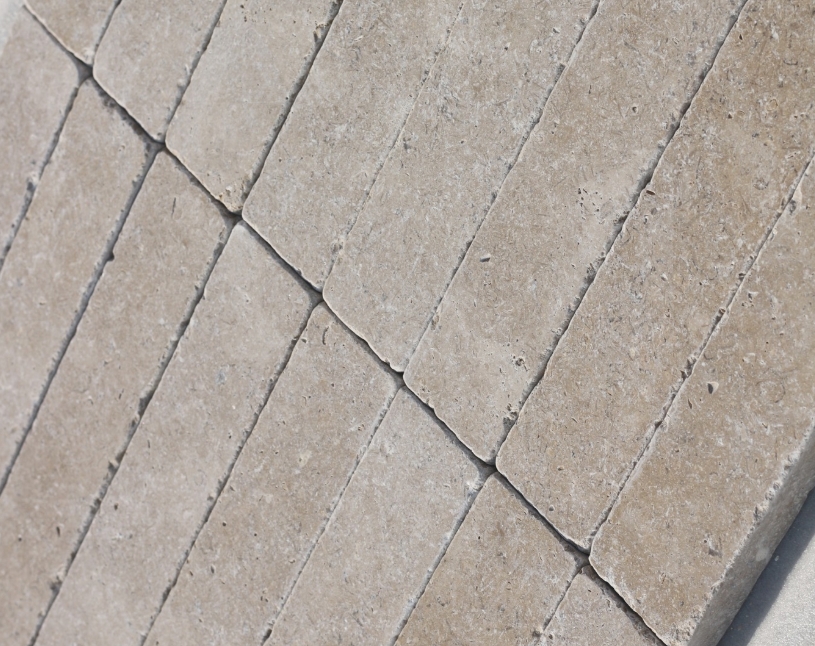
Outdoor applications require more careful selection than interior walls. Brushed, tumbled, sandblasted or other textured finishes may be considered depending on appearance and measured slip resistance. A tumbled edge can suit a traditional courtyard; a straight, sawn edge often looks more architectural. Neither a named finish nor an attractive photograph is sufficient to establish safety for a wet walkway or pool deck. Ask for relevant testing for the specific material, finish and intended use.
Drainage design, bedding, thickness, weather exposure and local installation standards all affect the specification. In freeze-thaw climates, the exact batch and product should be supported by appropriate test data rather than a generic claim that all Egyptian limestone is frost-proof. Around swimming pools, comfortable barefoot texture, slip resistance and coping-edge geometry should be reviewed together.
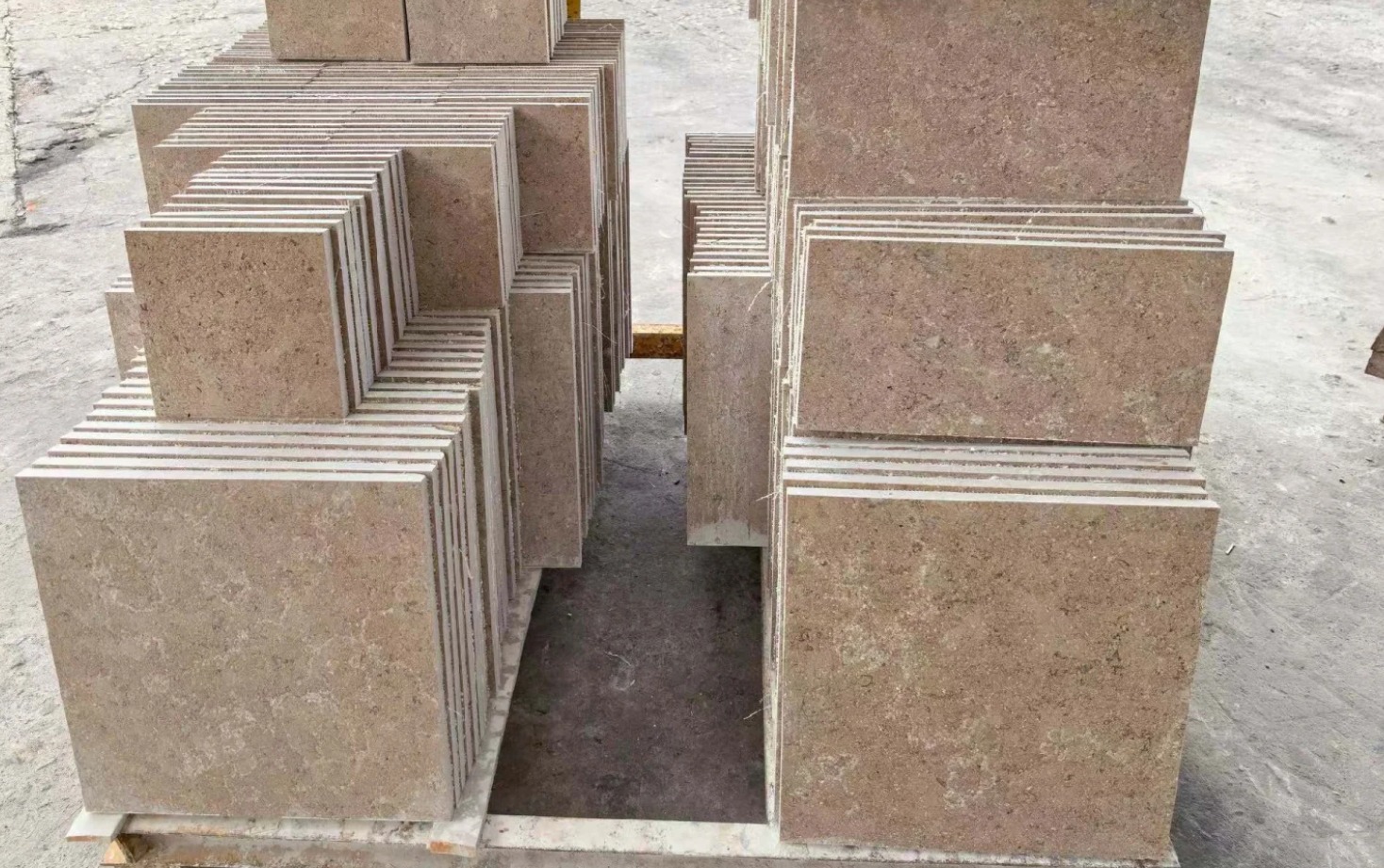 Natural limestone paving in a landscaped setting. |
 Surface texture and edge treatment should be chosen together. |
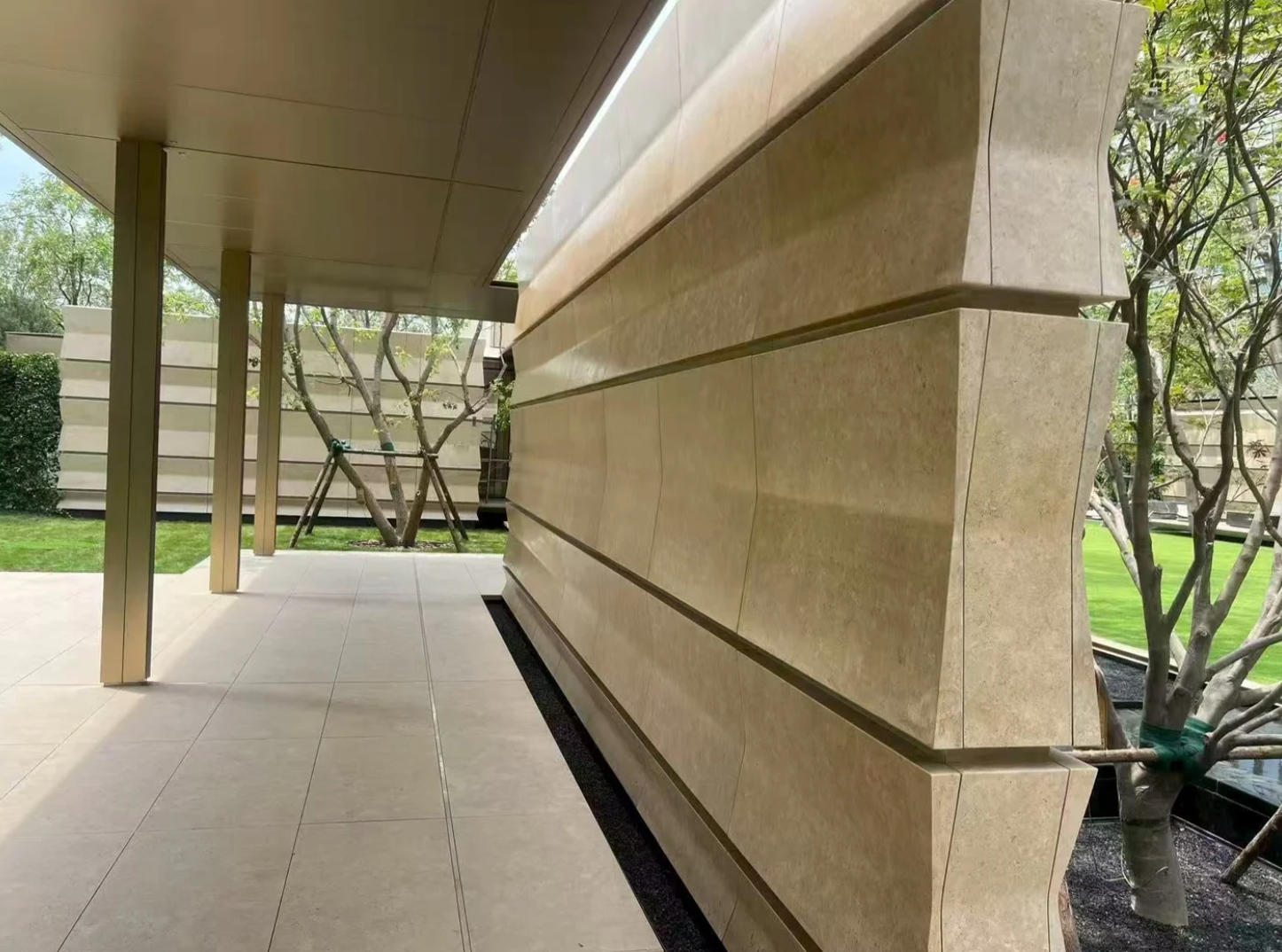
When used vertically, Sinai Pearl limestone brings warmth to entrances, stair halls, fireplace surrounds and feature walls. Its visual consistency allows individual panels to read as one larger surface, especially when joints are aligned thoughtfully. Subtle fossils become more noticeable when light washes across the wall, adding interest without a busy or highly veined appearance.
For interior wall cladding, honed panels offer a calm, refined surface. Split-face or other textured treatments can create a more tactile effect in carefully selected architectural features. The design should account for stone weight, anchoring, edge details and the compatibility of the fixing method with the underlying wall. Exterior façades require a fully engineered system, not simply a tile adhesive approach copied from indoor work.
A useful design strategy is to keep the limestone as the dominant mineral surface and introduce contrast sparingly: dark bronze metal, natural timber or black-framed glazing can define the architecture without fighting the material. This is particularly relevant to boutique hotels, villas and reception spaces where finish quality needs to feel durable rather than decorative for a single season.
Large-format stone panels benefit from measured joint lines, careful lighting and natural material contrast.
With limestone, surface finishing is not an afterthought. It changes the colour reading, texture, maintenance requirements and the way the stone responds to light. A single stone selection can suit very different design languages once the finish and edge detail are chosen appropriately.
| Finish | Visual character | Typical design direction |
|---|---|---|
| Honed | Smooth, muted, low sheen | Interior floors and wall panels |
| Brushed | Soft tactile texture | Transitional spaces and selected paving |
| Tumbled | Aged edges and informal character | Courtyards and traditional layouts |
| Sandblasted | Fine, even surface texture | Selected exterior and landscape uses |
For project samples, it is worth requesting the same stone selection in two or more finishes. Comparing them in actual daylight and artificial light can prevent costly decisions based on catalogue photographs alone. The chosen finish should then be checked for cleaning requirements and, wherever relevant, tested slip resistance.
The most successful natural stone projects begin with a clear understanding of the intended visual range. A limestone described as beige can contain soft grey markings, tiny fossils and differences in overall warmth. Architects should decide whether the design calls for a blended, natural variation or a tighter shade selection. Importers and contractors should make sure that the same expectation is documented in the approved samples and production arrangement.
For sizeable areas, reviewing several pieces as a dry layout is helpful. Large format photographs, current batch images and finish samples show different aspects of the material. Where colour consistency is critical, the selection and installation sequence should be discussed before production. Natural geological details should not automatically be treated as defects, but the acceptable range must be agreed upon.
Custom-cut limestone elements may include stair treads, skirting, window sills, thresholds, wall copings and pool coping profiles. Coordinating these elements with floor and wall stone can give a project a more coherent appearance. Drawings should show finished dimensions, thickness, edge profiles, tolerances and visible faces. For international shipments, packing design, piece identification and the order of installation deserve equal attention.
Sinai Pearl is a carbonate stone, so routine care should avoid acidic cleaners that can etch limestone. A suitable pH-neutral cleaning product is usually the safer choice. Sealer selection depends on the finish, exposure and use; it can help reduce the rate of stain absorption but does not make stone impervious or eliminate maintenance.
For floor and paving applications, water management and proper installation are fundamental. Exterior stone may require project-specific evaluation for moisture movement, salts and frost exposure. Interior design decisions should also consider foot traffic, grit, cleaning routines and expected wear. A strong specification considers the full assembly, not simply the beauty of a sample.
What makes Sinai Pearl attractive over time is its capacity to remain visually relevant. Its colour is neither an aggressively yellow beige nor a cold flat grey. Used with care, the natural movement in the stone gives spaces subtle variation while leaving room for architecture to evolve around it.
The strength of Sinai Pearl lies in subtle texture, thoughtful detailing and long-lasting visual warmth.
Sinai Pearl is an Egyptian natural limestone associated with the Sinai region. Commercial names and individual selections can vary between suppliers.
It is marketed for exterior paving and cladding, but the actual finish, thickness, installation design and climate exposure must be assessed. Wet slip resistance and freeze-thaw performance should be confirmed with appropriate test reports for the selected product.
Honed is often chosen for a smooth, low-sheen interior appearance. Textured finishes may be considered for other uses, subject to relevant performance requirements and maintenance expectations.
Cut-to-size tiles, steps, cladding pieces and coping profiles may be available depending on block selection, processing capability and the project schedule. Confirm dimensions and tolerances before ordering.
Whether the design calls for beige limestone flooring, exterior limestone pavers, architectural wall cladding or custom stone components, the right starting point is a clear material sample and a realistic technical specification. Share your application, estimated quantity, preferred finish, drawings and delivery destination so that sizes, selection and available processing options can be reviewed for your project.