 ×
×
Proučite Palissandro Bianco marmor, poznat i kao Bijeli zlatni pijesak, u modernim unutarnjim objektima, uključujući zidove, kupaone, podove i stube.
SPREDAJ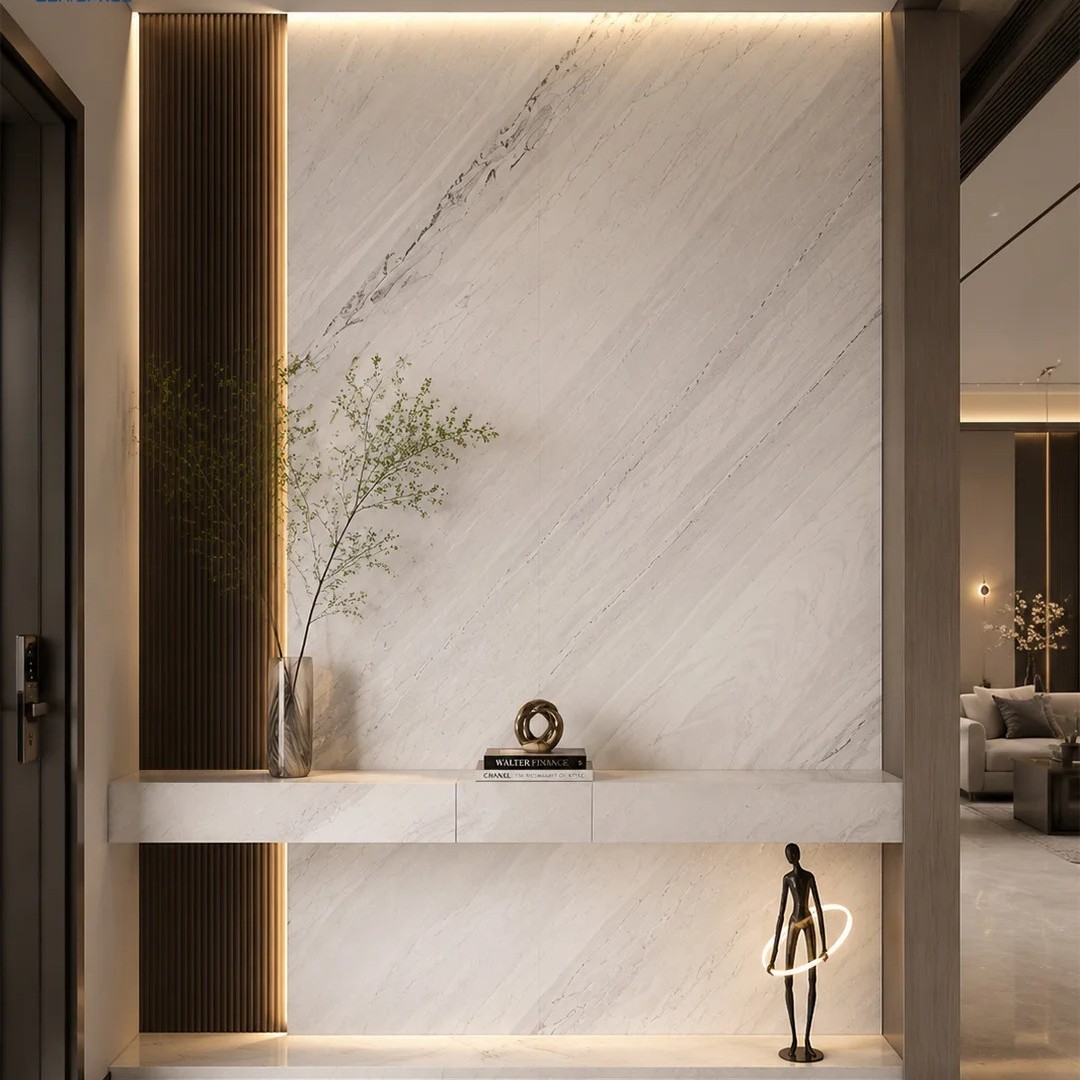
Fine dijagonalne bežno-sive linearne žile daju kamenu miran i prefinjen izgled.
Uvod
Palissandro Bianco je prirodni kamen svjetlog tonova poznat po svojoj kremasti bijeloj pozadini, tekućoj sivoj i bejz žilama i suptilnoj kristalnoj dubini. U ovom projektu materijal se također predstavlja pod trgovačkim imenom Bijeli zlatni pijesak - Što? Budući da se imena prirodnih kamenja mogu razlikovati između dobavljača i tržišta, konačna odabir uvijek treba biti temeljen na trenutnim fotografijama ploča, fizičkim uzorcima i odobrenim rasporedom.
Galerija projekta pokazuje kako različite selekcije ploča mogu stvoriti vrlo različite rezultate. Fine dijagonalne žile stvaraju mirne i prostrane enterijere, dok šire grafitno-sive trake stvaraju jače zidove, stube i arhitektonske središne točke. Zbog ove prirodne varijacije kamen je pogodan za stambene, ugostiteljske, maloprodajne i komercijalne projekte koji zahtijevaju i eleganciju i vizualni pokret.
Palissandro Bianco marmor, također tražen kao Palissandro Bianco marmor, obično ima blijedu bazu od slonovače do kreme s sivim, mornom, bejzom i povremeno toplim zlatnim tonovima. Neke ploče imaju dugo linearno kretanje, dok druge pokazuju mekše obadvorske uzorke ili dramatičnije tamne trake. Politirana površina može pokazati blagi bisernasti ili kristalni efekat pod prirodnim i umjetnim svjetlom.
Ove razlike nisu mane, već su dio karakteristike prirodnog mramora. Za velike zidove, podove ili stube, blok, slijed ploča, gustoća vena, ton pozadine i završetak treba zajedno pregledati. To pomaže završenoj instalaciji da izgleda namjerno, a ne nasumično pomiješano.
Navodno
Tipičan izgled: cremno bijelo do blijedo bijelo kožu od slonovače
Veno: sivi, bežni, morni i povremeno topli zlatni tonovi
Uobičajene završne točke: za proizvodnju proizvoda od metala ili od drugih materijala
Ulozi: zidovi, podovi, kupaonice, stube, prostorije za prijem i kamenje na zamjenu
Galerija ploča
Dvije ploče ispod pokazuju zašto je odabir jedna od najvažnijih faza projekta Palissandro Bianco Marble. Obje se uklapaju u moderne enterijere, ali njihova gustoća uzoraka i kretanje stvaraju različite vizualne efekte.
Fine dijagonalne bežno-sive linije stvaraju miran, tekstilni izgled.
Bliska ploča sa delikatnim sivim kretanjem preko površine.
Smjer vene također mijenja percepciju prostora. Horizontalni raspored može vizualno proširiti zid tuša, hodnik, pod ili dug zid. Vertikalni raspored može naglasiti visinu stropa, dok dijagonalne vene dodaju energiju i pokret. Dizajneri bi trebali prije rezanja potvrditi željeni smjer, osobito kada ploče idu kroz uglove, niše, vrata ili nekoliko povezanih površina.
Za velike instalacije preporučujemo fotografiju ploča, digitalni raspored vena, crteže radnje, suvo polaganje i sekvencijalno brojanje ploča. Ti koraci olakšavaju stvaranje sličnih karakteristika, usklađivanje jakih vena, upravljanje zglobovima i izbjegavanje postavljanja važnih uzoraka iza namještaja, sanitarija, police ili arhitektonskih otvorova.
Ako je to potrebno, provjerite uzorak, glatku žilu, slijed ploča i vidljive prirodne varijacije prije odobrenja.
Učinite snažne uzorke s zglobovima, uglovima, otvorima, osvjetljenjem, namještajem i sanitarnim priborom.
Uređujte ploče prije pakiranja kako bi instalacijski timovi mogli reprodukirati odobrenu sekvencu na mjestu.
Stanovne unutarnje prostorije
Svjetli linearni mramor stvara kontinuiranu arhitektonsku osnovu, dok odabrani tamno-vjenčani paneli dodaju kontrolirani kontrast i dubinu.
Osjetljivo povezuje sjedala i prostor za kretanje.
Bled pod i tamno-zubni paneli stvaraju uravnotežen otvoreni unutarnji prostor.
Ekspresivne velike ploče čine zid iza sjedala središnjom točkom.
U slikama dnevne sobe, svjetli mermerni pod stvara neprekidnu podlogu koja odražava dnevnu svjetlost i povezuje sjedala, kretanje i izložbene prostore. Ovaj fini linearni uzorak dodaje detalje bez da prostor izgleda zauzet. Toplo drvo, kremasto tapeta i tamni metalni akcenti uravnotežavaju hladnu mineralnu površinu i stvaraju udoban savremeni enterijer.
Slika s karakterističnim zidom koristi izrazniji izbor ploča. Veliki marmorski paneli smanjuju vidljive zglobove i omogućuju prirodnim žilama da postanu središnja točka iza sjedala. Prije izrade najjače žile treba postaviti oko glavne zone za promatranje i koordinirati ih s osvjetljenjem, namještajem, televizorima, policama i otvorima vrata.
Princip dizajna
Palissandro Bianco može biti ili mirna pozadina ili snažna arhitektonska izjava. Na zidovima s više elemenata, manje i veći paneli obično stvaraju čistiju kompoziciju. Digitalni raspored pomaže da se najistaknutije žile postave tamo gdje ostaju vidljive nakon što su namještaji i namještaj postavljeni.
Vlažna područja
Čvrsta obloga zida, usklađen smjer vena i ispravna površinska obrada mogu stvoriti svijetlu, jedinstvenu kupaonicu inspiriranu spa-om.
Marmorska obloga oko staklenog tuša i sanitarnog prostora.
Zidni paneli, prostorije oko kupatila, prostor za prazninu i skriveno osvjetljenje čine jedan usklađeni materijalni plan.
Horizontalne vene vizualno proširuju uski tuš.
Fotografije kupaonice pokazuju kako Palissandro Bianco Marble može stvoriti svijetlo, ujedinjeno i spa-inspirirano okruženje. Čvrsta obloga zidova vizuelno uvećava prostoriju, dok mekana bijela i bejžna pozadina dobro odgovara staklenim pršnim ekranima, tamnim ormarićima za vanity, toplom rasvjetljenjem i jednostavnim metalnim priborom.
Horizontalna vena posebno je učinkovita u uskim tuširanjima jer vodi oko preko zida i čini prostor širim. Koristeći isti mramor na zidovima tuša, vanity backsplashes, kupatila okruženja, i odabranih podnih područja može stvoriti vizualni kontinuitet, ali završetak mora biti izabran u skladu s funkcijom svake površine.
Napomena za vlažne površine: Polirani mramor pogodan je za mnoge vertikalne primjene, dok su nacijepljeni ili otporni na klizište finiši obično praktičniji za mokre podove. Kupaonice također zahtijevaju odgovarajuću vodootpornost, lepak od prirodnog kamena, odgovarajuću špilu, pokretne zglobove i periodično zapečaćivanje. Ne treba koristiti kisela sredstva za čišćenje jer prirodni mramor može izrezati ili izgubiti sjaj.
Arhitektonski kamen
Šire žile grafit pretvaraju mramor iz pozadinske obloge u arhitektonski element koji povezuje stepenice, podloge i izabrane zidove.
Bliži pogled na stepenice i podiglice koji pokazuju važnost sekvence vena i detalja rubova.
Određeni mramor se nastavlja preko stuba i okolnog poda.
Sekvencijalno raspoređene stepenice čine skulpturalnu kompoziciju na više razina.
Na fotografijama stuba prikazane su ploče s širim tamno sivim i grafitnim žilama. U ovoj aplikaciji, kamen postaje dio arhitekture, a ne mirna pozadina. Proširenje mramora preko podova, stepenica, podizanja, slijetanja i odabranih zidnih područja stvara snažnu vizualnu vezu između razina.
Izrada marmurnog stuba zahtijeva precizne šablone i pažljivo slijedenje. Prije rezanja treba potvrditi dubinu polugoreba, visinu podignuća, profil rubova, pojačanje, antiprogresivu obradu, položaj zglobova i poravnanost vena. Slijedno brojanje ploča posebno je važno za zakrivljene, uzvijene, plutajuće ili kantileverirane stube.
Snažan žiloviti Palissandro Bianco marmor najbolje radi s kontroliranom okolnom paletom. Čisto staklo, brisa, tamni metal, sivi gip i jednostavno osvijetljenje omogućuju da se marmorni uzorak i dalje istakne. Za podove i stube s velikim prometom, površinski završetak i plan održavanja trebaju se odabrati u skladu s očekivanom upotrebom prostora.
Koordinacija projektiranja
Drvo, metal, staklo, razina završetka i temperatura svjetlosti utječu na to kako se opaža bleda pozadina i slojevite vene.
Svjetli hrast, orah, tople bejz tkanine, bronza, mesing, crni metal i prozirno staklo omekšavaju ili definiraju kamen bez natjecanja s njegovim uzorkom.
Polirana površina stvara jači odraz i formalni luksuzni izgled. Izrezanje izgleda mekše, moderno i smanjuje bljeskanje.
Danje svjetlo naglašava blede tonove i fine sive linije. Topla skrivena svjetlost može otkriti bejz, mornasta i suptilne zlatne tonove.
Palissandro Bianco Marmor se prirodno kombinuje s svjetlim hrastom, orašastim, toplim bejskim tkaninama, bronzom, mesingom, crnim metalom i prozirnim staklom. Drvo omekšava kamen i daje toplinu, dok tamni akcenti definiraju rubove i arhitektonske detalje. Ova kombinacija odgovara modernim vilama, luksuznim stanovima, hotelima, uredima, izložbenim prostorima i prostorima za prijem.
Osvijetljenje ima veliki utjecaj na konačni izgled. U slučaju da se ne primjenjuje primjena ovog standarda, ispitna metoda može se upotrijebiti za utvrđivanje vrijednosti za određenu kategoriju materijala.
Budući da je svaka ploča jedinstvena, mali uzorak ne može predstavljati cijeli projekt. Za potrebe ovog članka, za sve proizvode koji su proizvedeni u skladu s člankom 6. stavkom 1. stavkom 1. ovog Pravilnika, za koje se primjenjuje članak 5. stavkom 1. točaka 1. i 2. ovog Pravilnika, za koje se primjenjuje članak 5. točaka 1. i 2. ovog Pravilnika, potrebno je utvrditi da
Veliki svjetlosno-tonozni zidni paneli stvaraju čistu pozadinu za komercijalni prijem na tamnijem poliranom podu.
Proizvodnja po narudžbi
Za prilagođene projekte Palissandro Bianco Marble, naša podrška može uključivati trenutne fotografije ploča, potvrdu uzorka, proizvodnju rezane veličine, crteže radnje, digitalni raspored žile, bookmatching, profile rubova, uzorke završetka, predložke stubišta, brojanje plo
Sredstva za upravljanje sustavima za upravljanje sustavima za upravljanje sustavima za upravljanje sustavima za upravljanje sustavima za upravljanje sustavima za upravljanje sustavima za upravljanje sustavima za upravljanje sustavima za upravljanje sustavima za upravljanje sustavima za upravljanje sustavima za upravljanje sustavima za upravljanje sustavima za upravljanje sustavima za upravljanje sustavima za upravljanje sustavima za upravljanje sustavima za upravljanje sustav Primjer komercijalne recepcije pokazuje kako velike svjetlosne ploče mogu stvoriti čistu, prostranu i profesionalnu pozadinu u hotelima, uredima, izložbenim prostorijama, ulazima maloprodaje i luksuznim zajedničkim stambenim područjima.
Podrška za projekte može uključivati:
Trenutne fotografije ploča · potvrda uzorka · izrada izrezanih na veličinu · crteži iz radnje · digitalni raspored žile · usklađivanje knjiga · profile rubova · završni uzorci · brojanje ploča · pakiranje za izvoz
Pitanja kupca
Trgovinska imena kamena nisu uvijek standardizirana. Na nekim tržištima vizuelno slični svjetlosni linearni mramori mogu se prodavati pod imenima kao što su Palissandro Bianco, Palissandro White ili White Gold Sand Marble. Kupci bi trebali usporediti stvarne fotografije ploča, informacije o podrijetlu, uzorke i tehničke zahtjeve umjesto da se oslanjaju samo na ime proizvoda.
Obično se navodi za unutarnju obluku zidova, zidove, podove, kupaonice, tušne prostorije, vanity backsplashes, stube, područja za prijem, stolove i druge prilagođene kamene elemente. U slučaju da se ne primjenjuje, ispitna metoda može se upotrijebiti za utvrđivanje vrijednosti.
Polirani mramor ima jači odraz i naglašava kristalni karakter kamena, što ga čini popularnim za zidove i formalne enterijere. Oštreni mramor ima mekši, manje sjajan izgled i često se preferira za suvremene podove. U slučaju podova koji su mokri, može se zahtijevati dodatni otporan na klizište.
Najbolji rezultati dolaze od fotografiranja odabranih ploča, pripreme digitalnog rasporeda, potvrđivanja crteža radnje, suha postavljanja ploča i brojanja svakog dijela prije pakiranja. Ovaj proces pomaže u kontroli smjera vene, zglobova, podudaranja i prijelaza oko uglova ili otvora.
-Da, to je dobro. U skladu s člankom 3. stavkom 1. točkom (a) Uredbe (EZ) br. 765/2008 Komisija je odlučila da se primjenjuje sljedeći standard: Kamenje treba zapečati po potrebi i izbjegavati kiselo ili abrazivno čišćenje.
Koristite mekanu krpu ili mop s pH-neutralnim čistačem kamena, brzo uklonite prolijevanje i izbjegavajte sirće, čistače na bazi limuna, izbjeljivač i abrazivni prah. Intervali između ponovno zapečaćivanja ovisiti o završetku, mjestu, izloženosti i korištenom zapečaćenju.
Odluka Komisije
Ovaj projekt pokazuje niz Palissandro Bianco marmora, od mirnih linearnih ploča koje se koriste na podovima i zidovima tuša do dramatičnih odabirâ za zidove i stube. Najuspješniji rezultat dolazi od usklađivanja karaktera ploče, smjera žile, završetka, veličine ploče i detalja izrade s arhitekturom.
Za stambeni, ugostiteljski ili komercijalni projekt, prije naručivanja pregledajte dostupne ploče i prije proizvodnje potvrdite raspored. To omogućuje bolju kontrolu boje, kontinuiteta vena, zglobova i konačnog vizualnog efekta.
Pregledajte trenutnu dostupnost ploča, prilagođene veličine, završetke, raspored vena i podršku za proizvodnju.
Proučavanje mramornih ploča Zahtijevati citat projekta