 ×
×
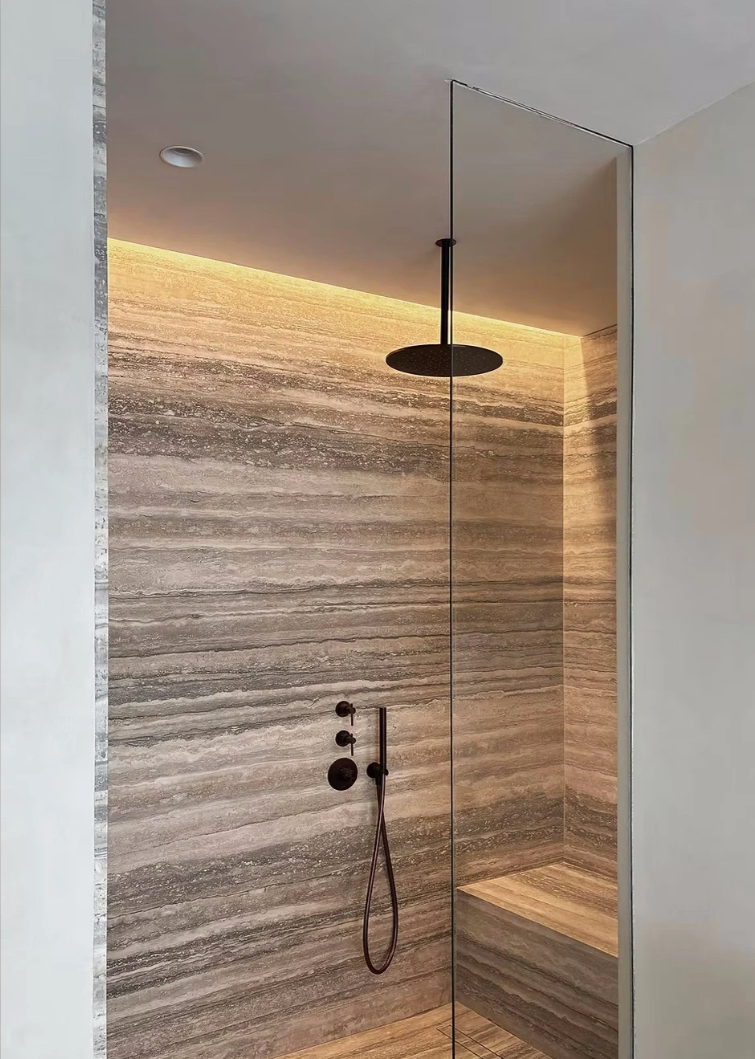
Some stones try too hard. They scream for attention with bright colors or dramatic veining. Silver grey travertine stone does the opposite. It sits quietly in a room, offering texture and depth without competing with your furniture, artwork, or lighting. This is why more designers are specifying it for both residential and commercial spaces.
The colour sits somewhere between cool pewter and warm grey. The natural holes add character. And when you start exploring different cuts, the same material can look completely different. Below, I will walk you through the most common applications and explain why cross cut travertine stone deserves special attention.
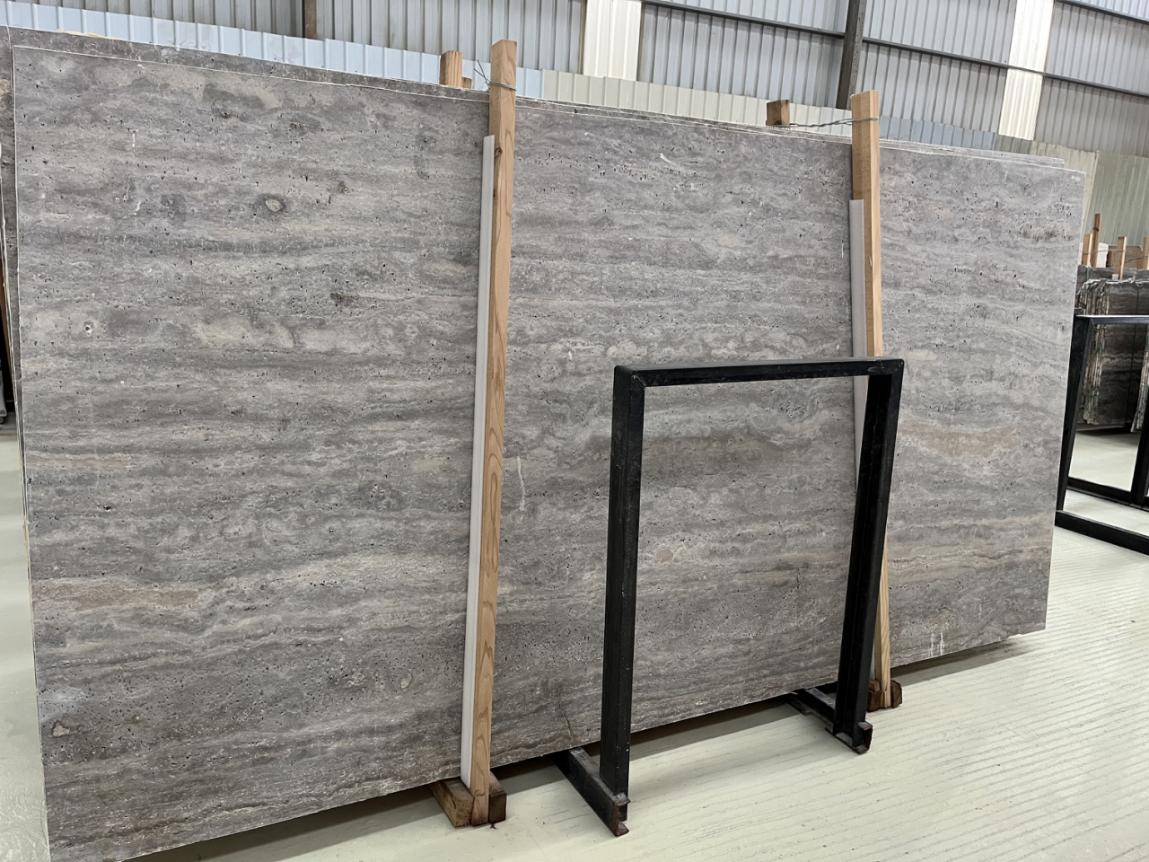
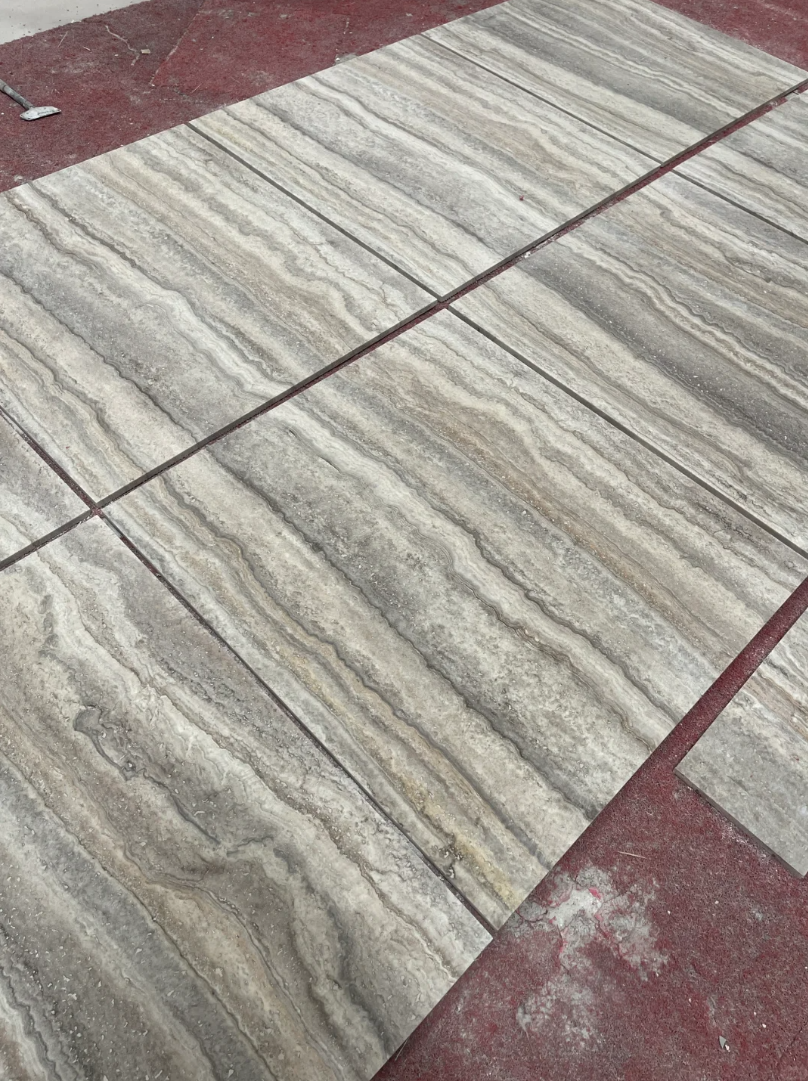
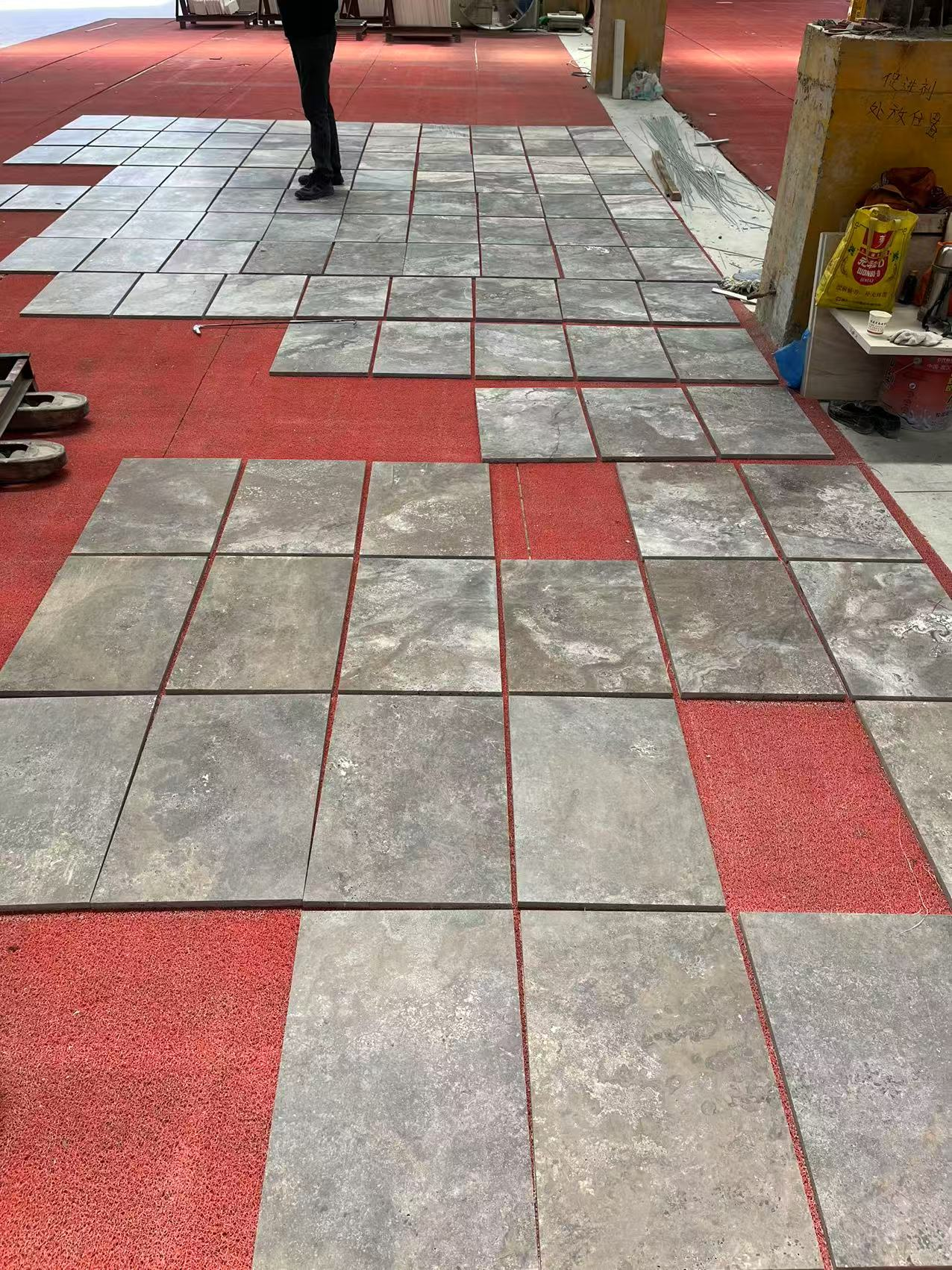
For walls and floors that need a clean, repeated layout, cut-to-size tile is the most practical choice. We produce these tiles in standard formats such as 12x12 or 12x24 inches, but we also offer stone customized sizing for unusual dimensions.
Why choose cut-to-size? The consistency saves time during installation. Your contractor or tile setter does not need to make endless cuts on site. Every piece fits. Every grout line aligns.
Best uses for silver grey travertine stone in tile format include:
- interior floor in living rooms, hallways, or bedrooms;
- Feature walls behind a freestanding bathtub;
- Outdoor patios (when properly sealed);
For a contractor project with tight deadlines, cut-to-size tile keeps everything moving smoothly.
A countertop made from silver grey travertine stone feels different from granite or quartz. It has a slightly soft, matte texture that warms up a kitchen or bathroom vanity. The neutral grey works with almost any cabinet colour — white, dark wood, black, or even navy.
Important note: Because travertine contains natural holes, we strongly recommend a filled and honed finish for countertops. This closes the voids while keeping the natural look. Sealing is also necessary, especially in kitchens where red wine, coffee, or oil might spill.
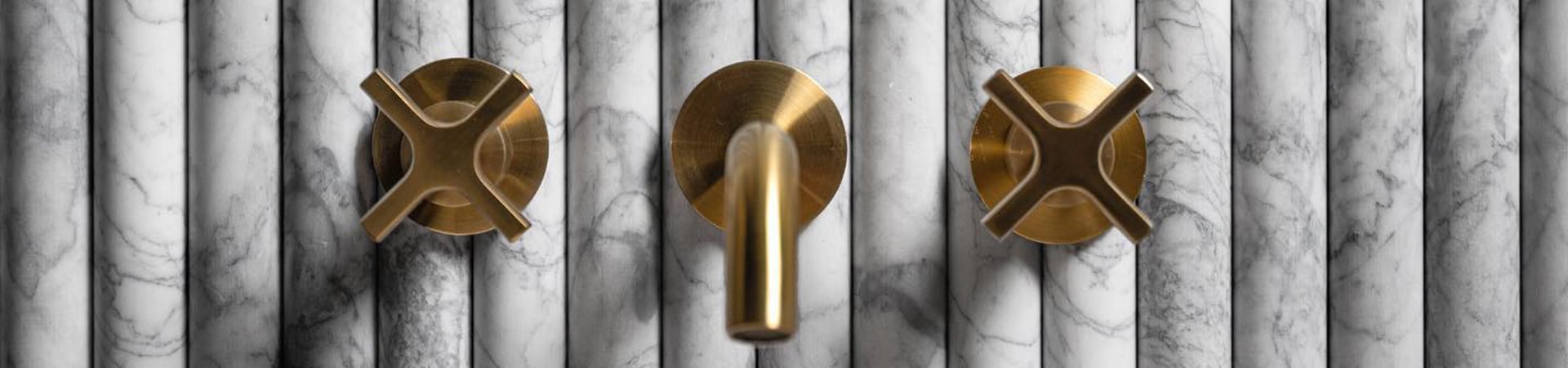
For personal project at home, a silver grey travertine countertop pairs beautifully with brass or matte black faucets. The contrast feels intentional but not dramatic.
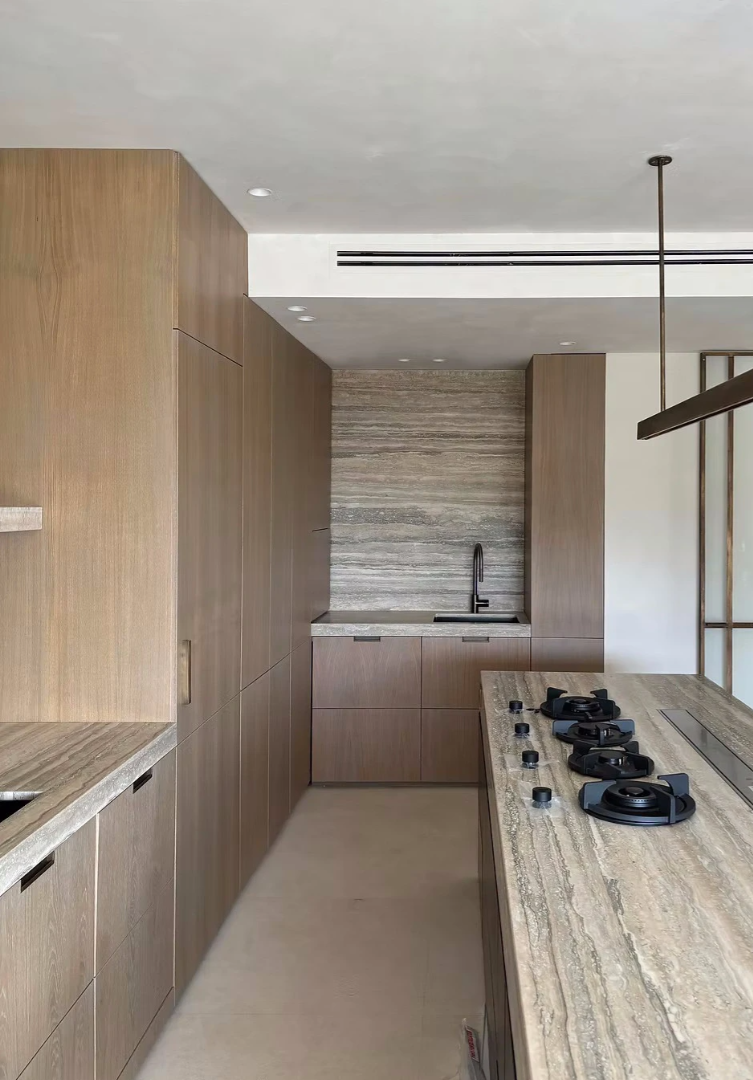
A backsplash is often an afterthought. People pick the cheapest tile left over from the floor. But this is actually where silver grey travertine stone shines. Because the area is small, you can afford a more interesting finish without breaking your budget.
Try using unfilled travertine for the backsplash. The open holes add texture behind a stove or sink. They catch shadows from under-cabinet lighting, creating a subtle pattern that changes through the day.
For Engineering projects like hotel suites or restaurant restrooms, a silver grey travertine backsplash signals quality without being flashy.
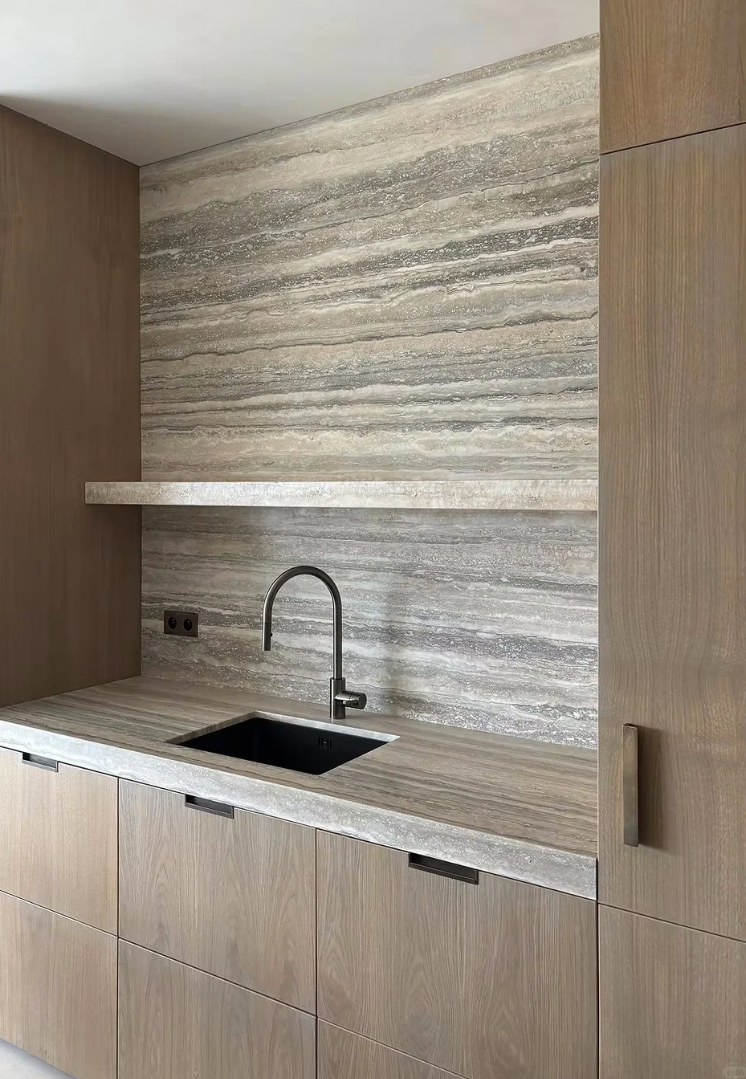
Most people never consider natural stone for a sink. They assume it is too porous or too difficult to clean. However, a sink carved from silver grey travertine stone creates a stunning focal point in a powder room or outdoor kitchen.
The key is fabrication. The sink bowl requires a completely filled and sealed surface. The exterior can remain more textured. When you choose stone customized for a sink application, we work with your fabricator to ensure proper sealing and drainage.
This is not a choice for every project. But for a personal project where you want something truly unique, a travertine sink becomes a conversation piece.
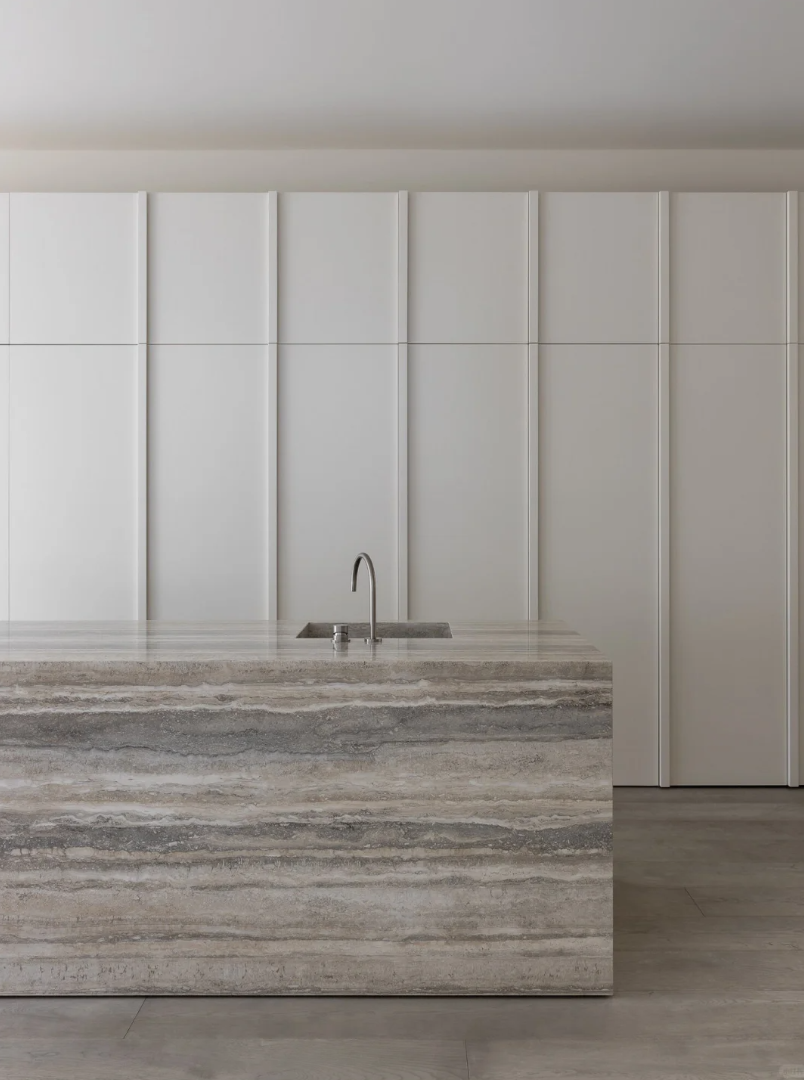
Now let us talk about cross cut travertine stone. This is where things get interesting.
Most travertine is cut with the natural bedding plane of the stone. This produces the classic linear, slightly striped look you see everywhere. Cross cut travertine stone is cut perpendicular to that bedding plane. Instead of lines, you get a flowing, almost swirling pattern of natural veins.
Imagine the difference between looking at a tree trunk from the side (linear grain) versus cutting straight across the top (circles and rings). Cross cut travertine stone is the top of the tree.
What does this mean for your space?
Linear cut (traditional): Clean, modern, predictable. Good for large floors or fireplaces.
Cross cut: Organic, artistic, unpredictable. Excellent for a single countertop, a fireplace surround, or a feature wall behind a bed.
The natural veins in cross cut material look almost like marble but with the soft, earthy feel of travertine. For personal project where you want to impress visitors, cross cut is the smarter choice over marble. It offers similar drama but with less maintenance and lower cost.
Silver grey travertine stone proves that neutral does not mean boring. The subtle shifts in tone, the natural holes, and the dramatic difference between linear and cross cut travertine stone give you real options.
Whether you are sourcing for large Engineering projects, bidding on a contractor project, or finally designing that personal project you have dreamed about, we can provide the right format and finish. Come see how this quiet stone speaks louder than you expect.