 ×
×
Explore a warm contemporary home featuring Taj Mahal Quartzite in the kitchen, bathroom, feature walls, dining table, staircase and custom stone details.
Share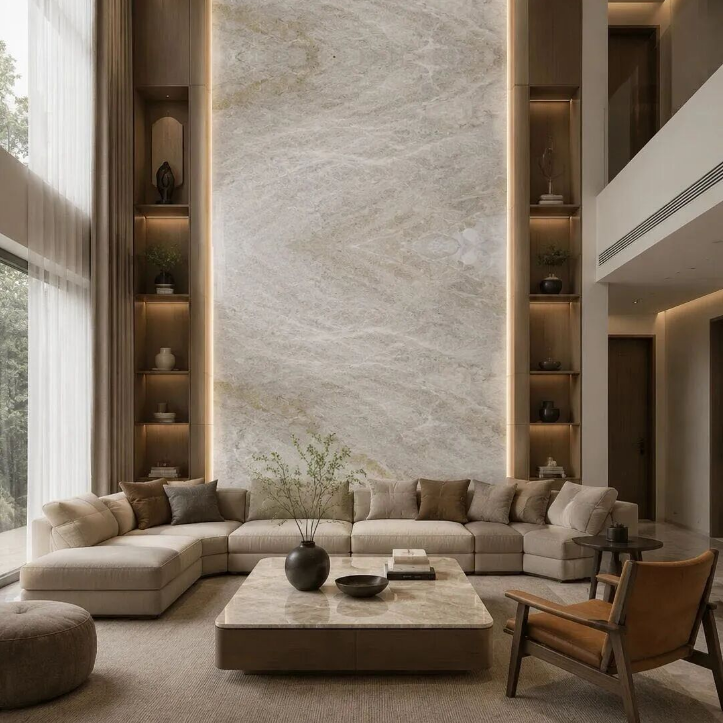
Natural Stone Interior Case
A material-led interior case exploring how Taj Mahal Quartzite connects feature walls, kitchen surfaces, dining furniture, bathrooms, staircases and custom architectural details.

A warm entrance feature wall where Taj Mahal Quartzite is balanced by timber, neutral finishes and indirect lighting.
The strength of this design is not one dramatic surface, but the continuity created by using the same natural stone in different scales and functions.
Project type: Contemporary residential interior design concept
Material focus: Taj Mahal Quartzite slabs
Main applications: Feature walls, floors, kitchen island, backsplash, dining table, bathroom, staircase, window ledge and vanity top
Design objective: Create warmth, continuity and a refined natural atmosphere without heavy contrast
01 / Project Overview
This contemporary residential design case explores how Taj Mahal Quartzite can create a consistent visual language across an entire interior. The material appears on feature walls, floors, kitchen surfaces, furniture, bathroom areas and custom architectural details.
Rather than using the stone as a single decorative statement, the design repeats it in carefully selected locations. The overall direction is warm contemporary: soft ivory stone, natural wood, neutral upholstery and layered lighting.
Taj Mahal Quartzite supports this palette with gentle grey, taupe and muted gold movement. Its pattern is visible enough to add character, but restrained enough to remain calm across larger surfaces.
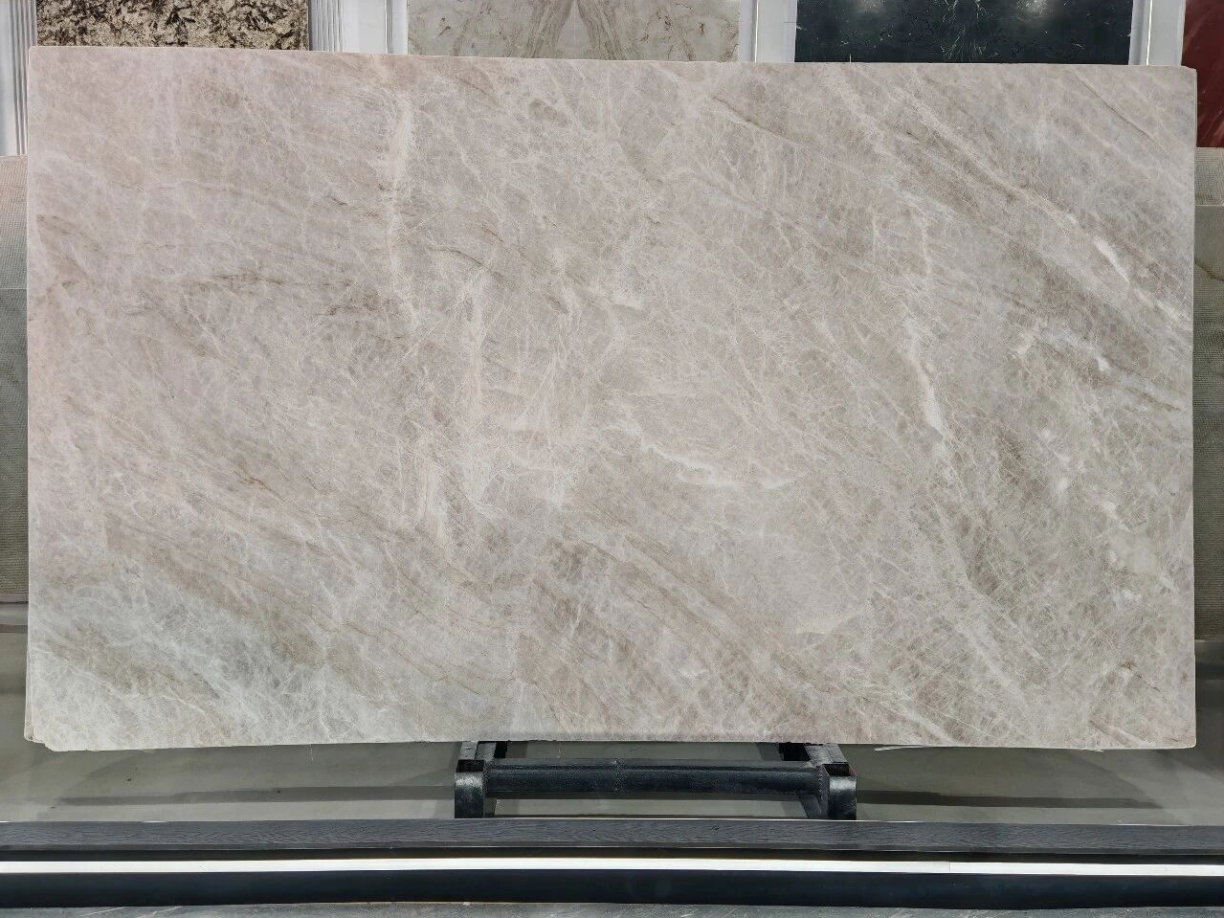
The slab reference shows the soft ivory base and flowing grey-beige movement that define the material.
02 / Material Selection
Taj Mahal Quartzite is often chosen for interiors that need the elegance of natural stone without the sharp contrast of many white marbles. Its warm ivory background works naturally with oak, walnut, bronze details and warm-toned fabrics.
In a multi-room design, this balance is especially useful. The stone can become a focal point on a wall or island, then appear more quietly on a floor, ledge or vanity. Repetition creates continuity, but each application still has its own purpose and visual weight.
Because every slab is different, slab selection should be treated as a design step. Full-slab photographs, dry layout planning and confirmation of vein direction help control the final appearance before cutting.
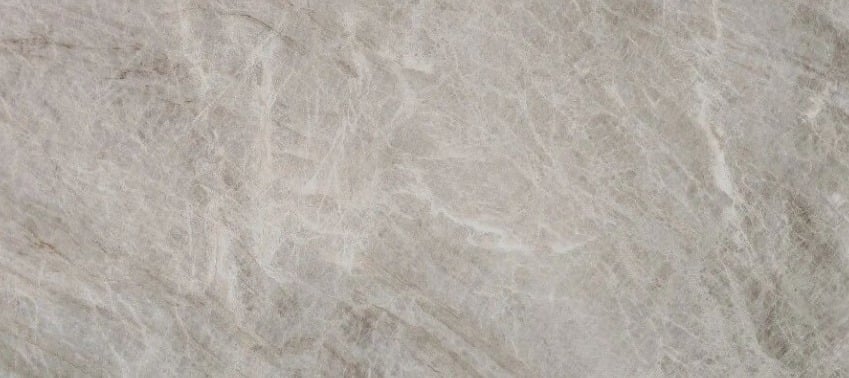
A closer view helps guide vein direction, panel placement and the relationship between adjacent pieces.
03 / Living & Dining
In the living room, Taj Mahal Quartzite forms a quiet architectural backdrop rather than an overly decorative wall. Large-format panels allow the natural movement to remain visible, while slim joints and controlled vein direction create a cleaner composition.
The coffee table and floor extend the material beyond the wall. These applications vary in scale, so the stone language feels connected rather than repeated.
In the dining area, the stone tabletop becomes the main functional centerpiece. Its subtle pattern adds detail without competing with lighting, chairs or artwork.
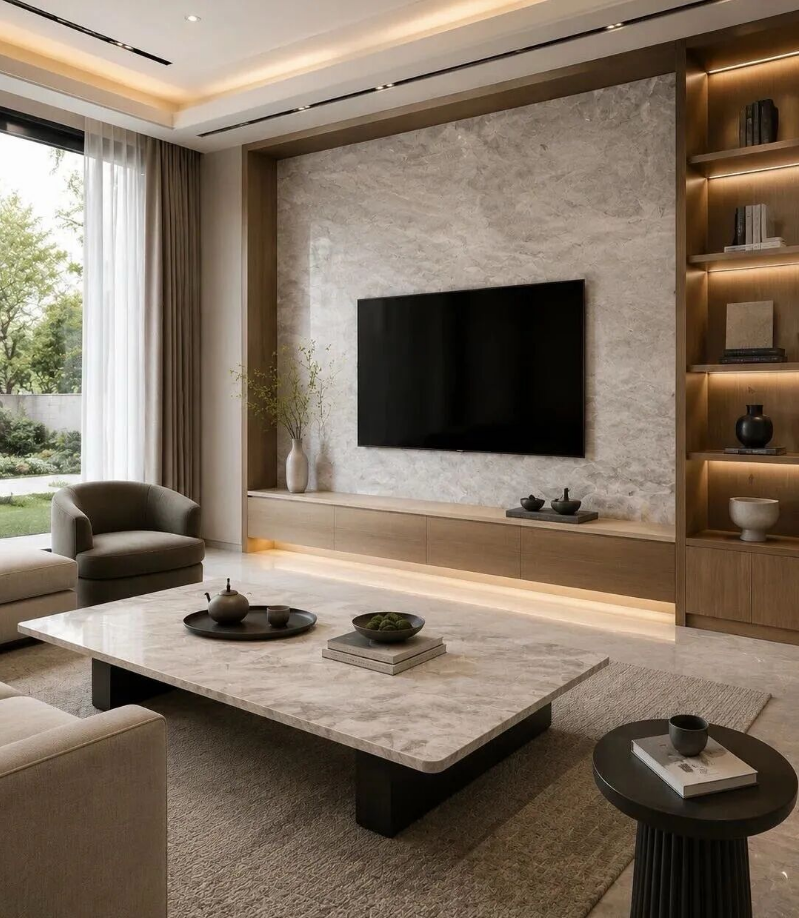
Living room: feature wall, floor and coffee table use the same stone at different scales.
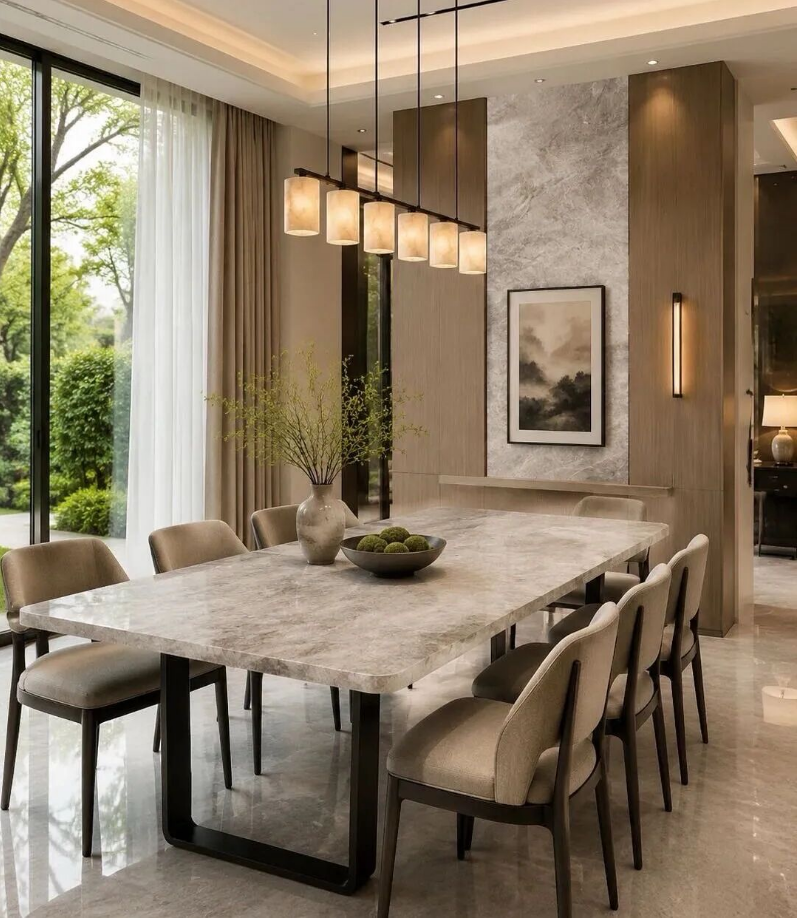
Dining area: a large stone tabletop continues the material language in a more tactile application.
04 / Kitchen
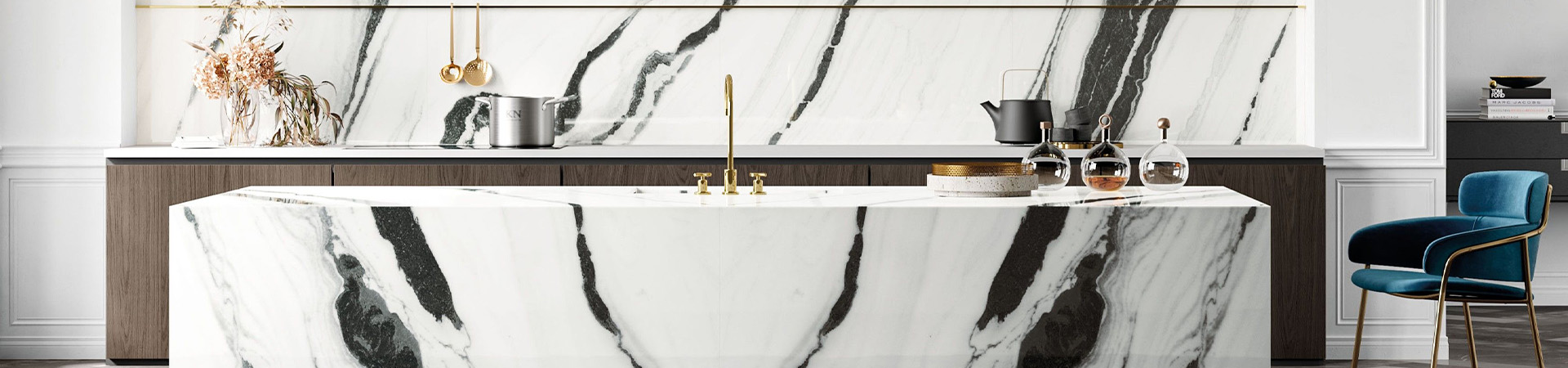
The kitchen is where visual impact and fabrication accuracy need to work together. In this design, the island is the main stone feature, supported by a matching backsplash and selected wall surfaces.
A waterfall edge is most successful when the vein flow is planned across the horizontal top and vertical end panel. Sink and cooktop cutouts, edge profiles, overhangs and cabinet support should be confirmed in fabrication drawings before production.
For daily kitchen use, professional fabrication, appropriate sealing and routine care are important. The selected finish should suit the project’s practical requirements while preserving the natural character of the stone.
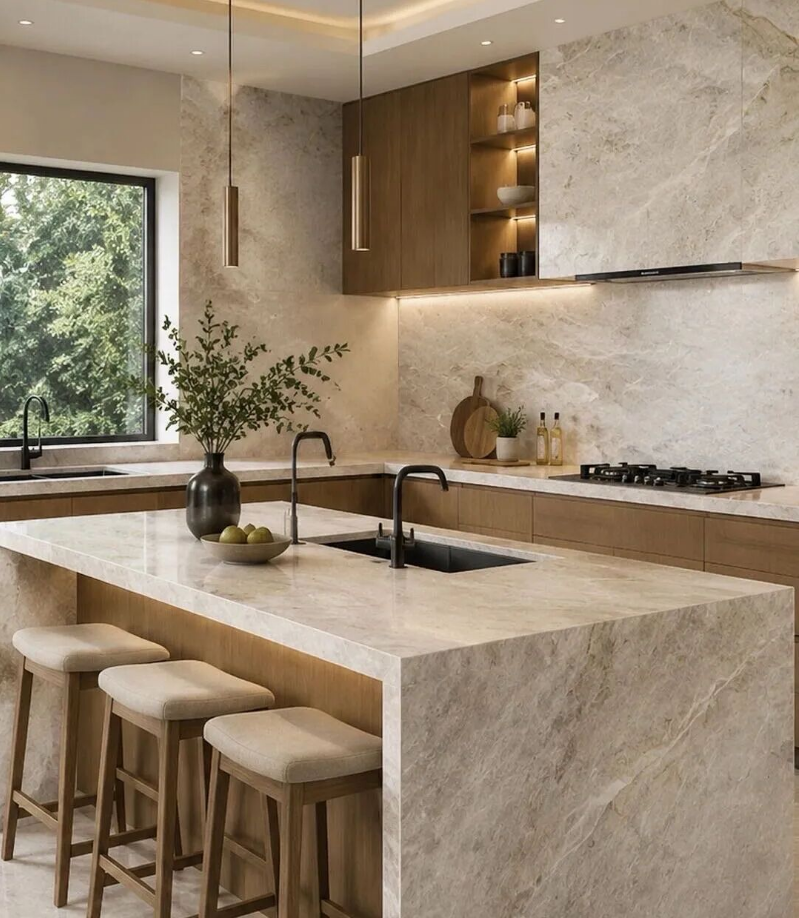
The island, backsplash and wall surfaces create one continuous Taj Mahal Quartzite kitchen composition.
05 / Bathroom & Vanity
In the bathroom, large-format surfaces reduce visual interruption and allow the stone to wrap the room with a calm, continuous effect. Integrated lighting emphasizes the soft layers within the veining.
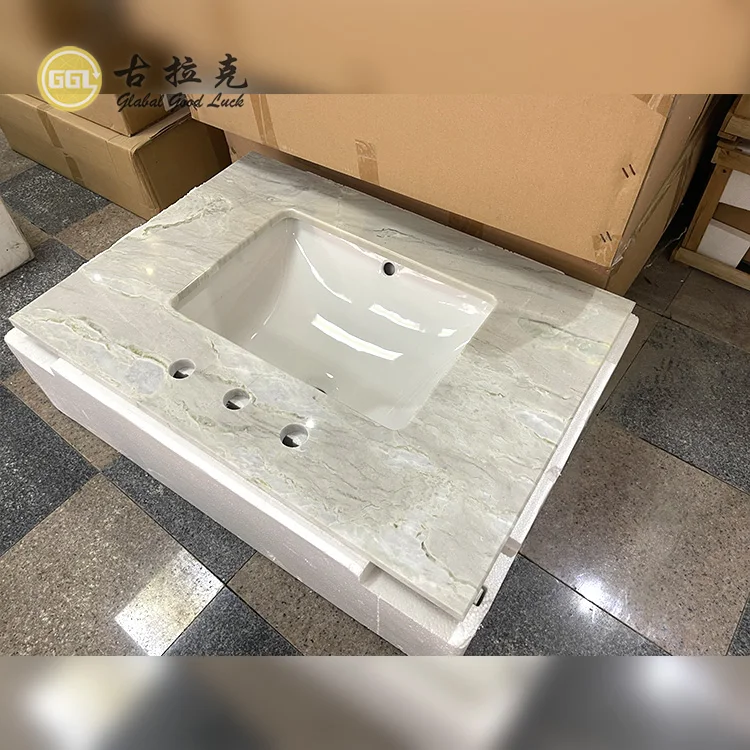
The vanity demonstrates a more focused application. At this scale, edge quality, cutouts and the selected section of the slab become especially noticeable.
Wet areas require application-specific planning. Finish, joint layout, waterproofing and slip-resistance requirements should be confirmed according to the exact location of use.
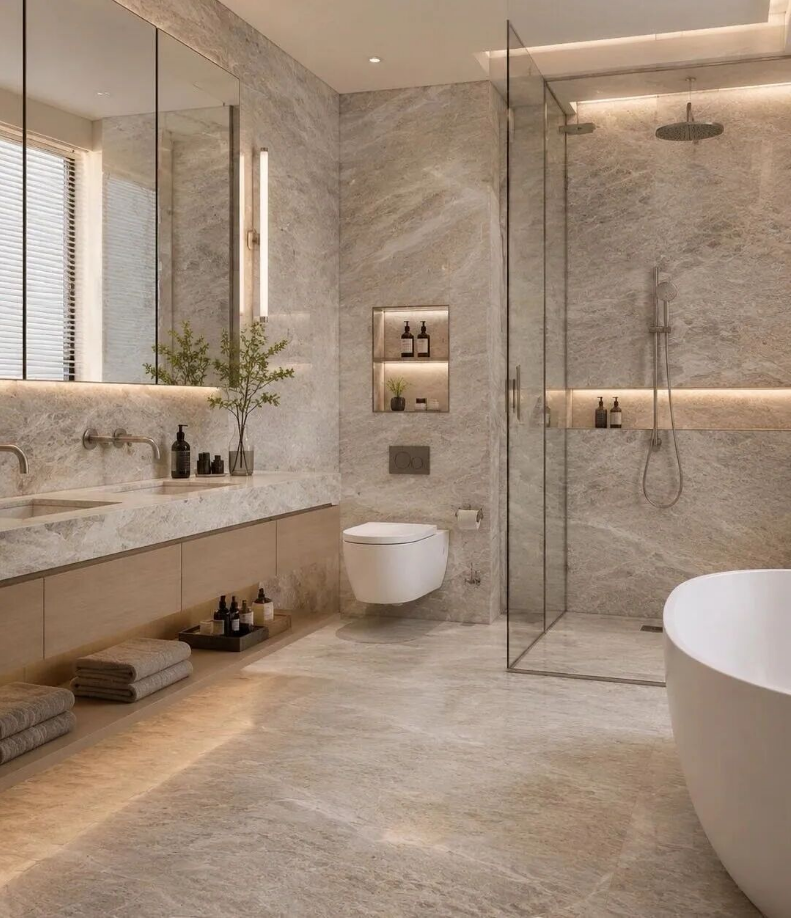
Large-format wall and floor applications create a quieter, more continuous envelope.
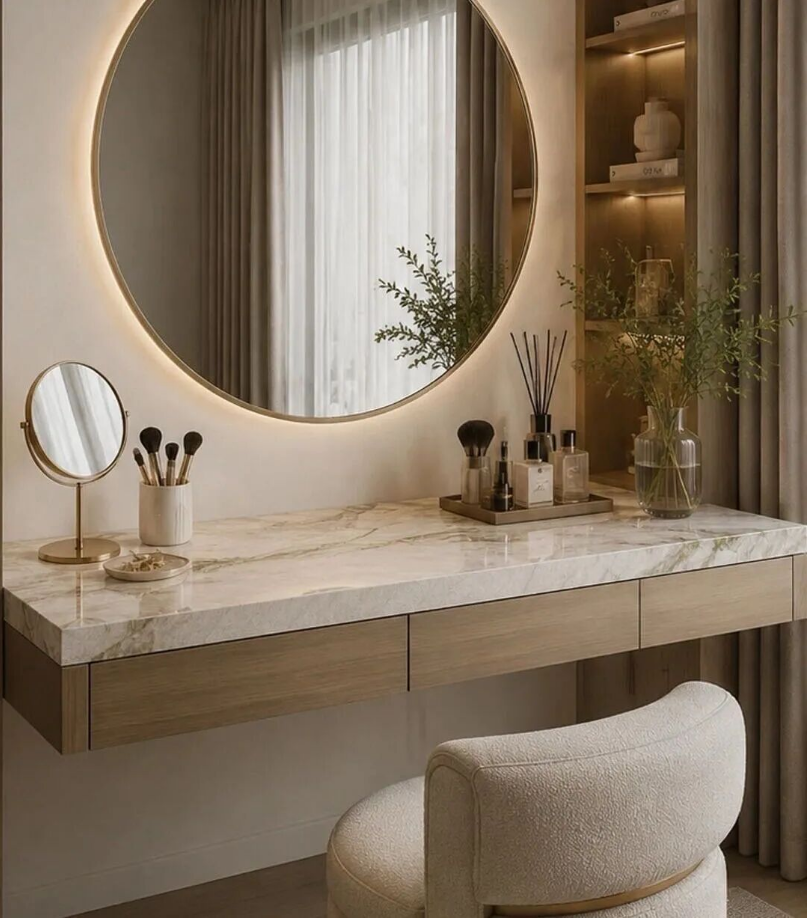
A smaller vanity application highlights edge quality and the selected section of the slab.
06 / Custom Applications
On the staircase, repeated treads create an architectural rhythm, while warm step lighting brings out the depth of the material. Accurate templates, tread dimensions, nosing details and structural support are essential before fabrication.
At the window, the stone forms a wide ledge and built-in seating surface. This application shows how the same material can shift from a dramatic wall or island to a quieter furniture-like detail.
Using one natural stone across different custom elements strengthens the identity of the interior. The key is variation in scale and function.
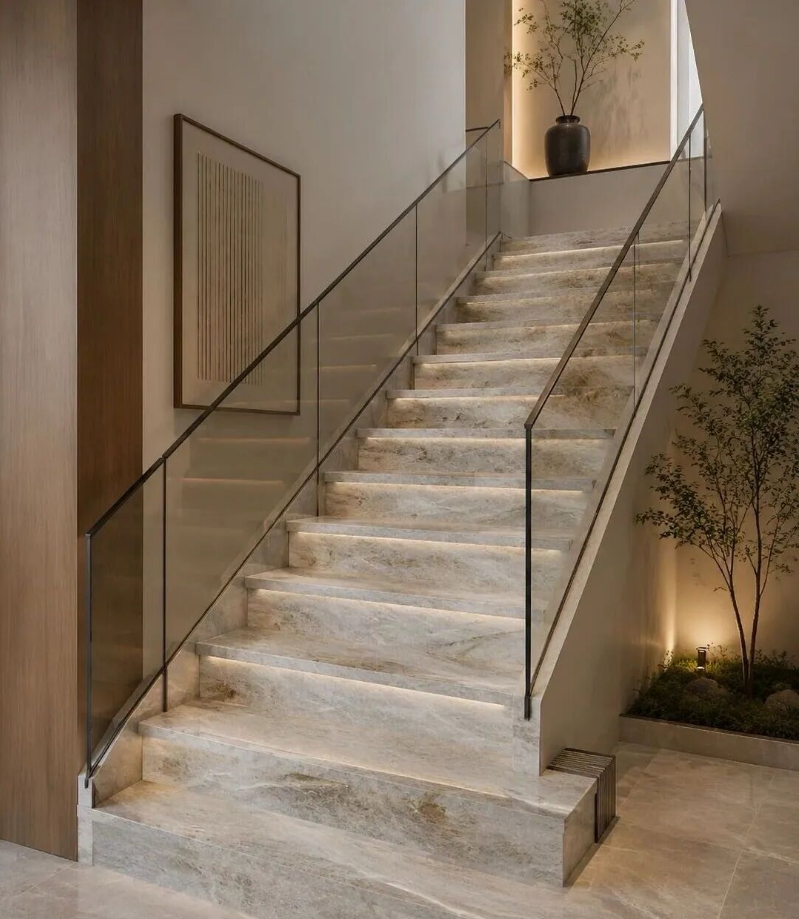
Repeated treads transform the natural veining into an architectural rhythm.
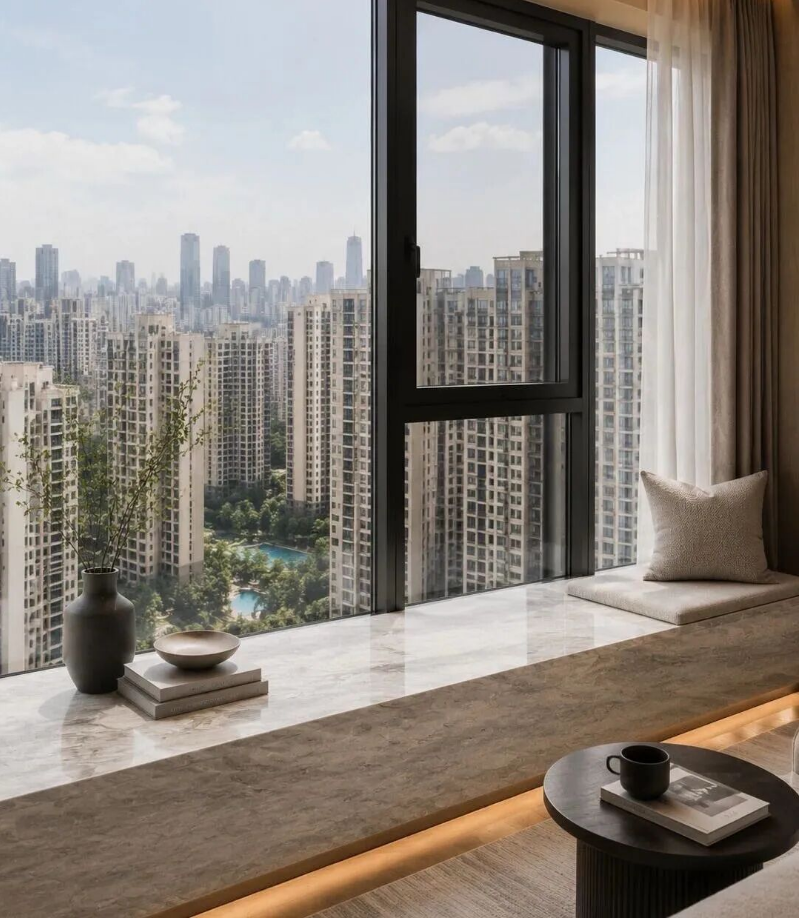
The stone becomes part of the furniture and frames the exterior view without adding visual clutter.
07 / Fabrication Priorities
01. Review full-slab photos and mark preferred sections for each application.
02. Confirm vein direction and joint positions on walls, islands and stair components.
03. Prepare accurate shop drawings for cutouts, edges, overhangs and custom profiles.
04. Allocate the best-matched pieces to the most visible surfaces.
05. Confirm finish, sealing and installation requirements for each dry or wet area.
06. Use protective packing designed for each fabricated component.
Final Result
Taj Mahal Quartzite can be architectural on a feature wall, functional on a kitchen island, calming in a bathroom and precise on a custom vanity or staircase. Thoughtful slab selection, accurate fabrication and planned lighting allow the material to create an interior that feels connected, refined and comfortable.
Send your floor plans, elevations, application list, preferred finish and estimated quantities for slab-selection and fabrication advice.
Request a Quote Explore Stone Materials