 ×

Discover the natural colors, distinctive grain patterns and design possibilities of wood-like stone from different parts of the world.
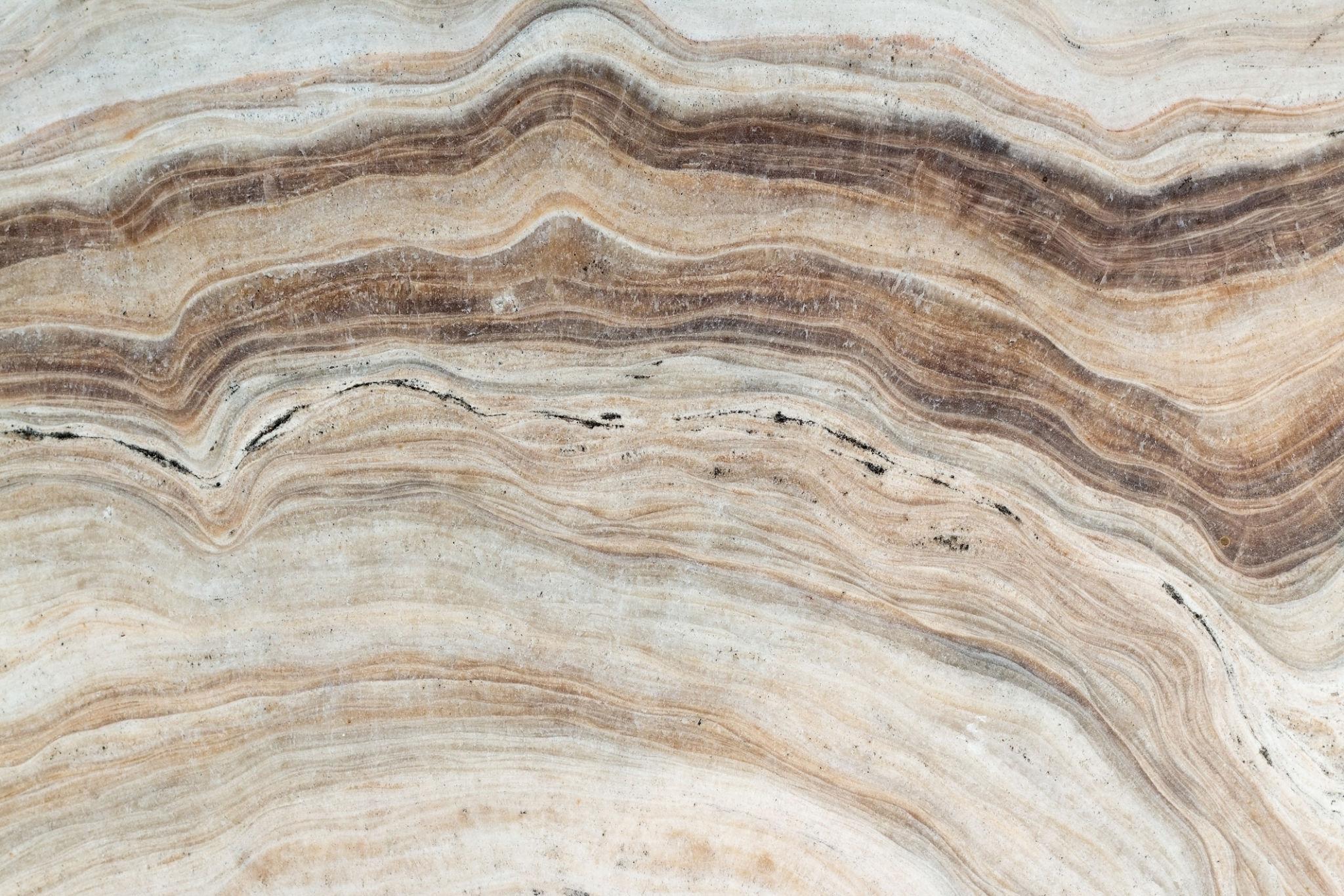
Natural stone is often admired for its distinctive veining, from the bold movement of Calacatta marble to the soft, cloudy patterns of travertine. Yet beyond these familiar appearances, there is another interesting expression of natural stone: patterns that resemble the grain of wood.
With fine parallel lines, flowing bands and subtle changes in color, some natural stones share a visual quality with natural timber. These patterns bring a sense of rhythm and continuity to a surface while retaining the depth and character of stone.
Wood-like patterns can be found in different types of natural stone. From the light, delicate lines of white wood-grain marble to the rich brown bands of darker stones, each material offers its own interpretation of this natural pattern.
In this article, we take a closer look at different varieties of wood-like natural stone, explore their colors and textures, and discover how they can be incorporated into architectural and interior design.
The terms Wood-Like Stone, Wood-Grain Marble and Wooden Marble are commonly used in the stone market to describe materials with patterns resembling natural wood grain.
These are general descriptions based on appearance, rather than formal geological classifications. They do not refer to one specific type of stone. Instead, they describe a visual feature that can appear in marble, limestone, travertine and other natural materials.
Wood-like patterns are usually characterized by long, linear formations that extend across the stone surface. Some are fine and closely spaced, while others appear as wider bands with noticeable changes in color. The lines may be straight and parallel, gently wavy or irregularly layered.
These patterns develop through natural geological processes over long periods of time. Differences in sediment layers and mineral composition can create variations in color and structure within the rock. Later geological changes may further influence the appearance of these patterns.
The direction of cutting also plays an important role. Depending on how a stone block is cut, its natural layers may appear as long, continuous lines or softer, more irregular patterns.
Wood-like patterns appear in natural stones from different regions around the world. From white and grey to coffee brown and deep black, these stones offer different interpretations of natural wood grain.
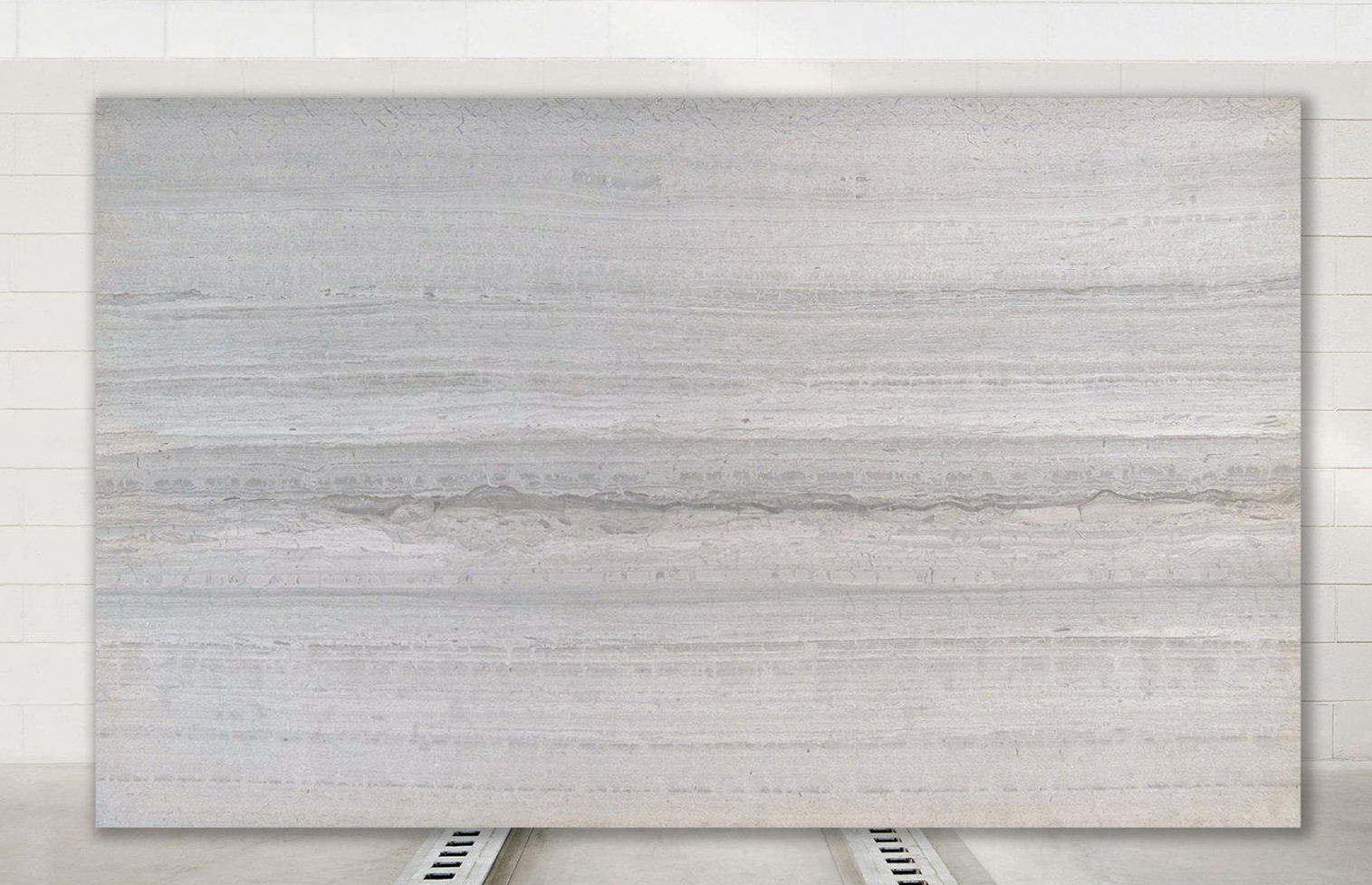
White Wooden Marble is one of the recognizable wood-grain stones from Guizhou, China. It typically features a soft white or grey-white background with fine grey and silver lines running across the surface.
Its grain is often delicate and relatively close together, creating a light and continuous appearance. Depending on the cutting direction, the patterns can appear as straight parallel lines or softer, more cloud-like formations.
The subtle color contrast gives White Wooden Marble a clean and understated character, making it suitable for designs that call for natural texture without an overly strong visual effect.
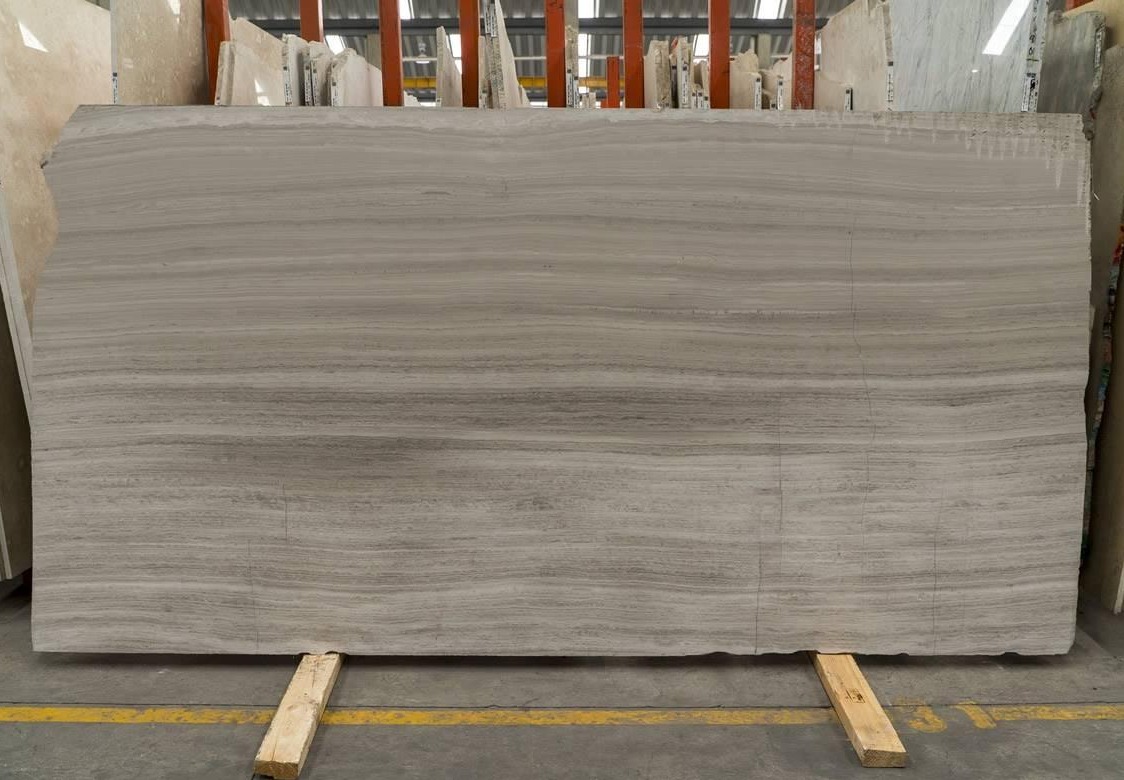
Grey Wooden Marble shares a similar linear character with White Wooden Marble but features a deeper grey background. Its patterns often combine different shades of grey, silver and darker tones, creating more visible contrasts across the surface.
Compared with lighter varieties, Grey Wooden Marble tends to have a stronger and more contemporary appearance. Some selections feature fine, closely arranged lines, while others show broader and more pronounced bands.
Its neutral color and clear linear patterns make it an interesting choice for modern architectural and interior spaces.
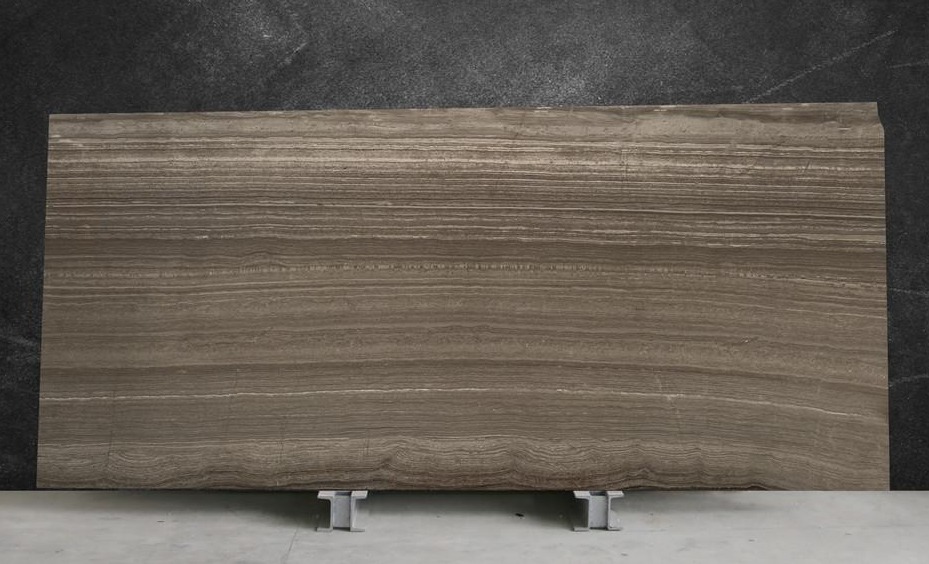
Coffee Wooden Marble offers a warmer interpretation of the wood-grain pattern. It is commonly presented in the market as a brown or grey-brown variety, with darker lines running through a coffee-toned background.
The combination of warm and cool shades gives the stone a rich, natural appearance. Its layered patterns can bring to mind the grain of walnut or other darker timber, making it a good option for interiors that emphasize warmth and natural materials.
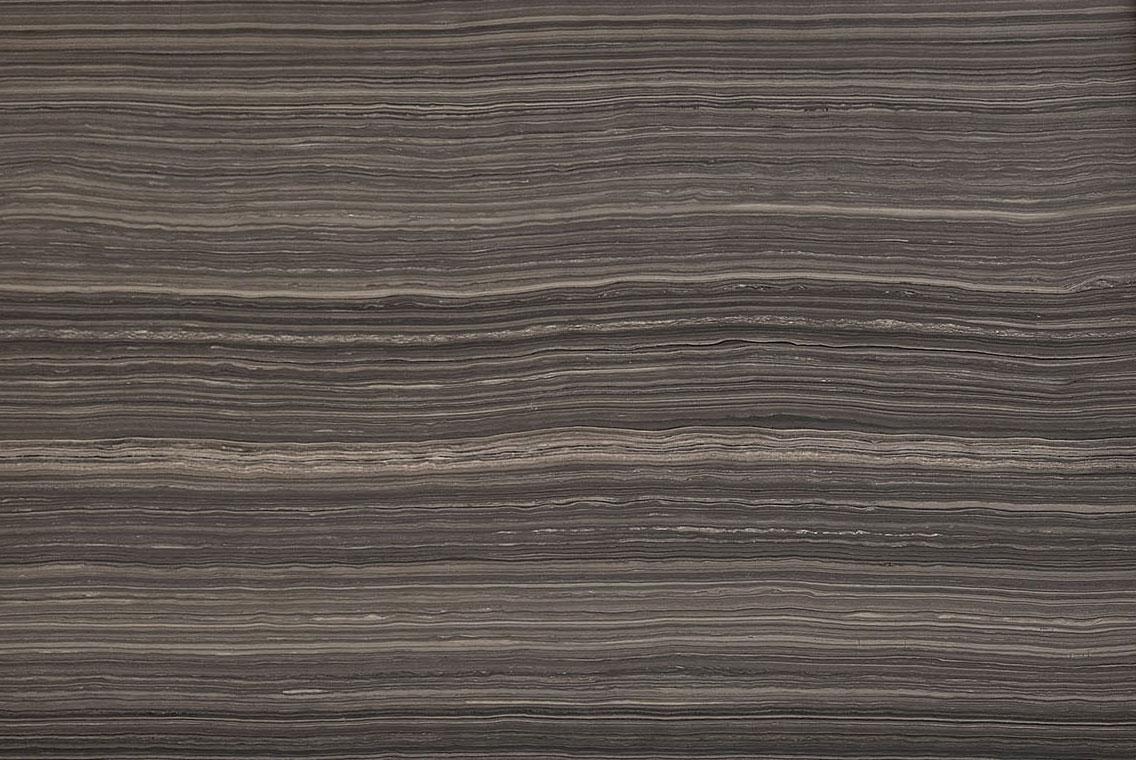
Ancient Wood Marble, also known in the market through names such as Black Wooden Marble or Black Wood Vein Marble, represents a darker expression of wood-like stone.
It generally features a deep grey or black background with grey-white lines flowing across the surface. Unlike the fine and delicate patterns of White Wooden Marble, its grain is often bolder and more expressive.
The contrast between the dark background and lighter veins creates depth and a dramatic visual effect. This type of stone can be particularly attractive for feature walls and other areas where the natural pattern is intended to become a focal point.
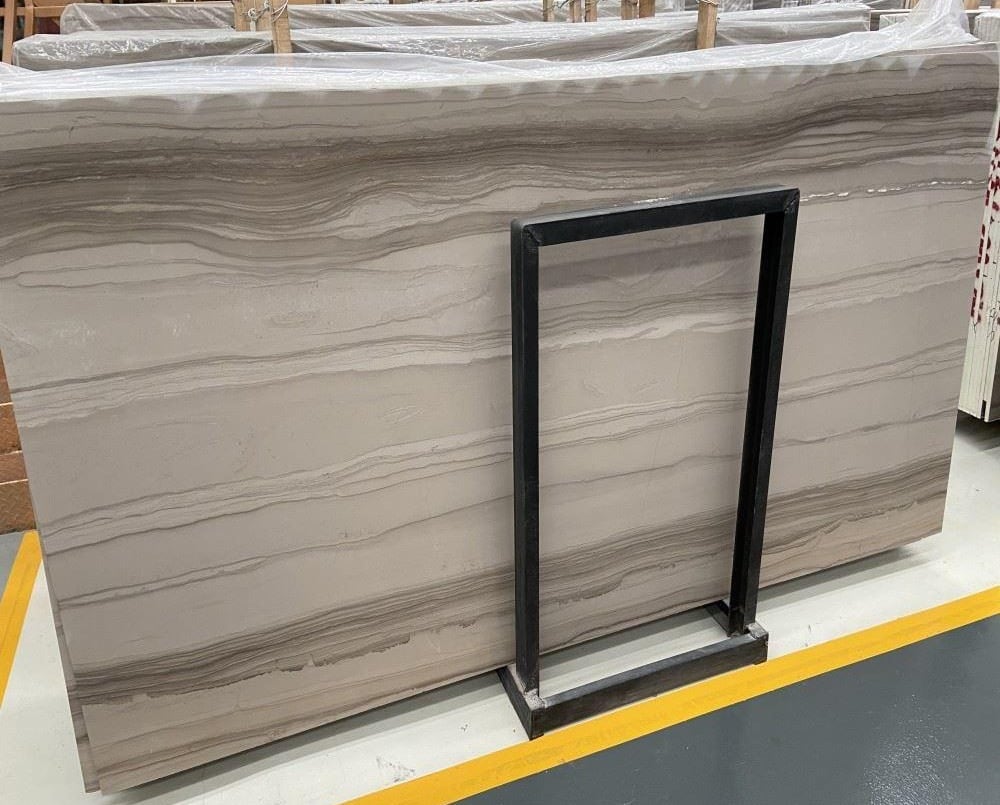
Greek White Wood Marble is another example of naturally striped stone. Associated with the Veria area in northern Greece, it is generally described as a white marble with light grey and off-white bands.
Its patterns create a distinct striped appearance, with lines that can be more noticeable and regular than those found in some softer white wood-grain varieties.
The light background and natural bands give the stone a clear sense of direction, making it an interesting alternative to more familiar white marble surfaces.
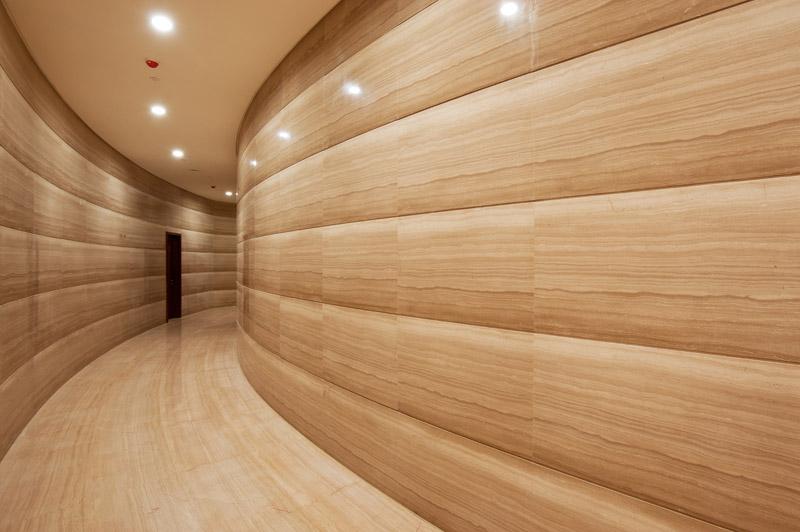
Serpeggiante is a well-known ornamental stone from the Apricena area in southern Italy. Its warm beige and light brown tones are often accompanied by continuous linear bands and gently flowing patterns.
The name itself is associated with its characteristic winding or serpentine appearance. When cut in a suitable direction, its natural layers create a wood-like visual effect, with alternating bands of slightly different tones.
Compared with the cooler appearance of white and grey wood-grain stones, Serpeggiante offers a warmer and more classic character. It is commonly traded within the marble and ornamental stone market, although the Apricena variety is geologically classified as limestone.
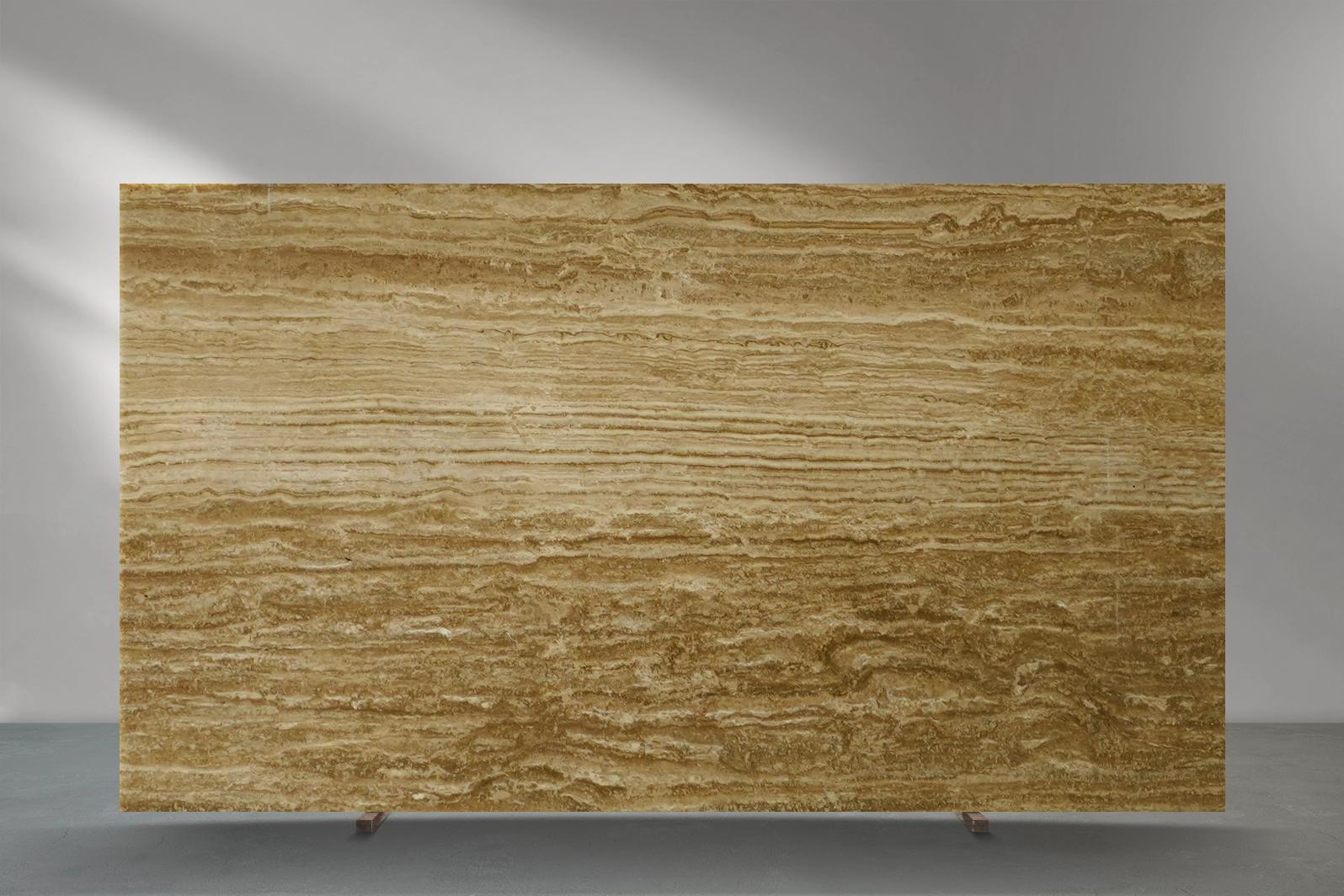
Wood-like patterns are not exclusive to materials commercially sold as wooden marble. Eramosa, a natural stone from the Wiarton area of Ontario, Canada, is a good example.
Geologically classified as dolostone, Eramosa is known for its distinctive brown, taupe and dark grey layers. Its linear-cut surface reveals fine, regular bands that strongly resemble the grain of natural timber.
The stone's appearance changes with the cutting direction. Linear cuts emphasize the parallel bands, while other cuts reveal more organic and irregular patterns. This makes Eramosa an interesting example of how different cutting methods can create different visual expressions from the same natural material.
Wood-like patterns are not limited to one region or one type of stone. Each material offers its own combination of color, line and natural character.
One of the most appealing features of wood-like natural stone is its variety of colors. From light and subtle tones to deep and dramatic shades, different colors can create very different impressions in a space.
Beyond color, the width, direction and contrast of the lines also influence the overall appearance. Some stones feature fine and delicate grains, while others have bold, pronounced bands. Some are almost straight and parallel; others are gently wavy and flowing.

Calm and Contemporary
Grey wood-grain stone often features different shades of grey arranged in fine or pronounced parallel lines. Its neutral color makes it suitable for contemporary interiors, concrete, glass, black metal and darker wood finishes.
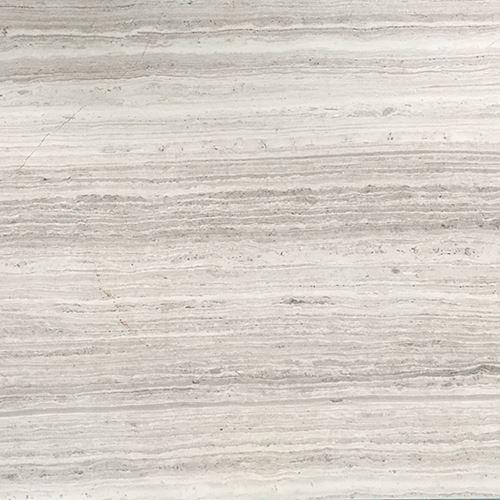
Light and Refined
White and light grey varieties usually have a softer appearance, with fine grey or silver lines running across a pale background. They create a bright and clean visual effect while adding natural detail.
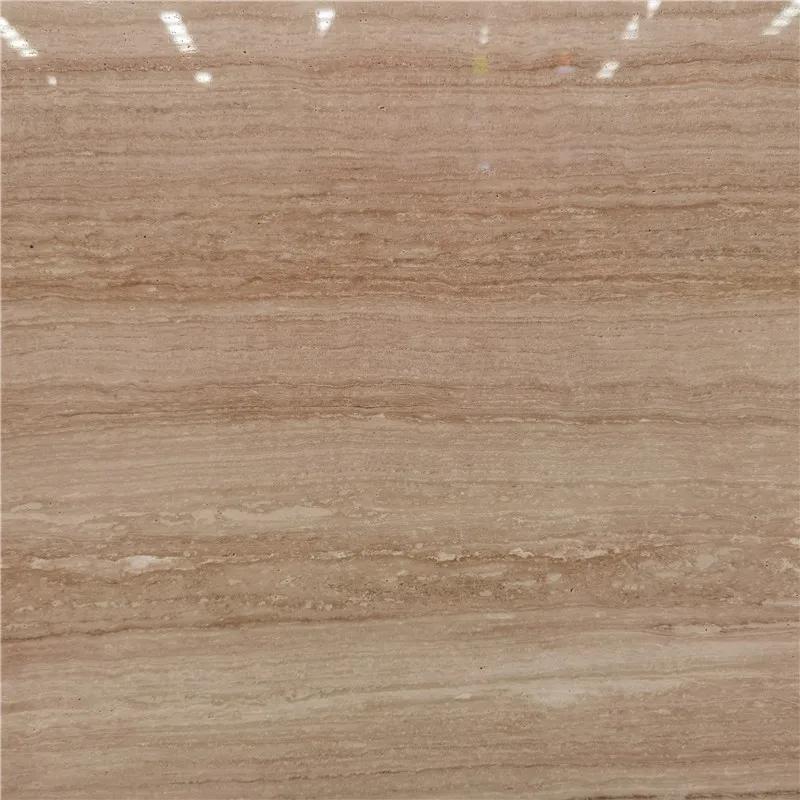
Warm and Natural
Beige wood-like stone often features cream, ivory, sand and warm grey tones. It works particularly well with natural wood, warm lighting, linen fabrics and other earthy materials.
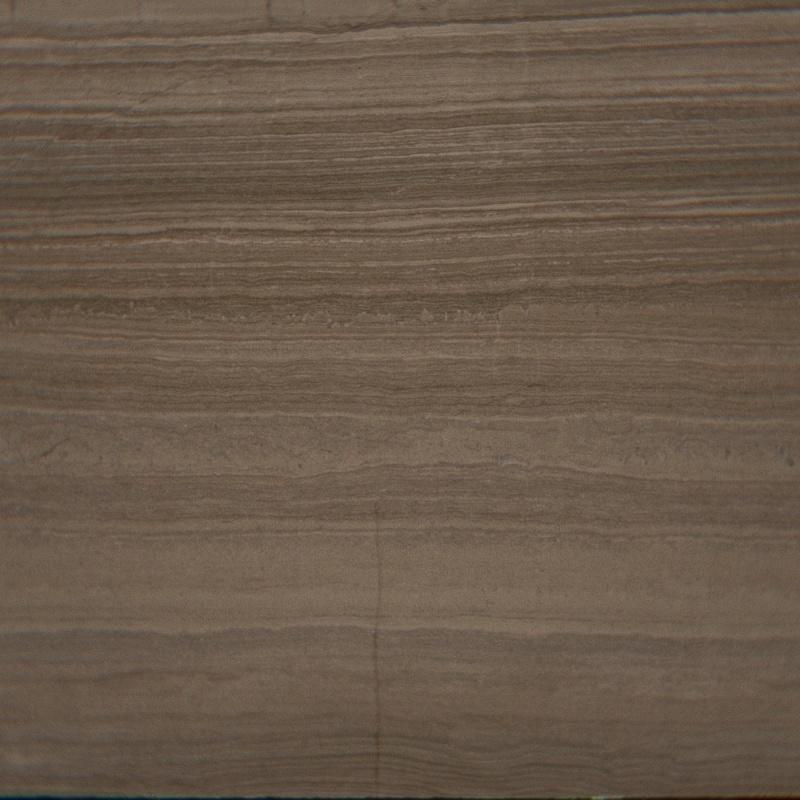
Rich and Grounded
Brown varieties range from light taupe and caramel to deeper coffee and walnut shades. Their layered patterns create a warm and natural appearance.
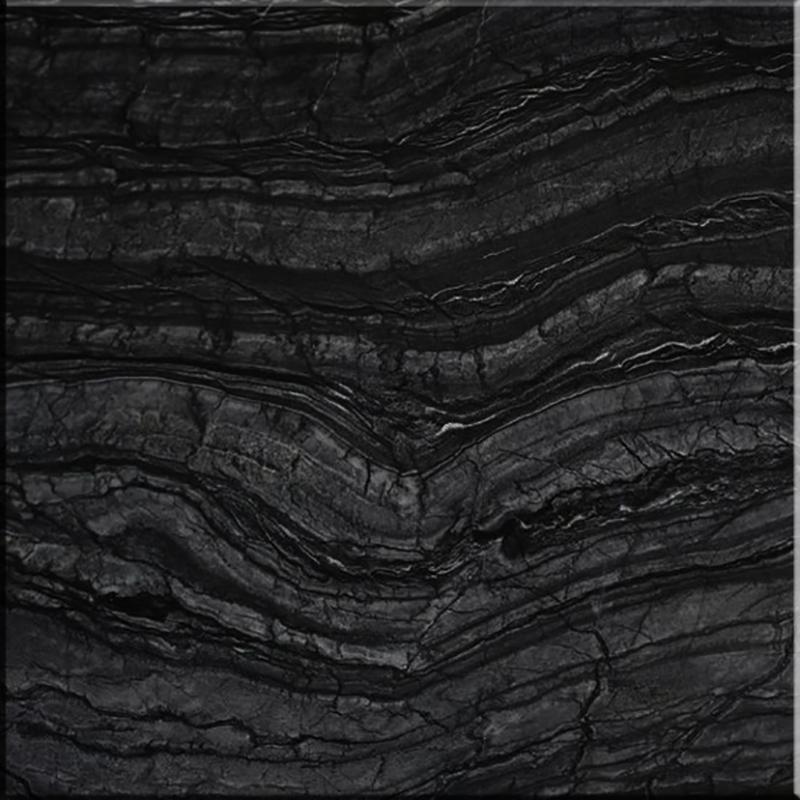
Bold and Dramatic
Dark wood-like stone offers depth and contrast. Lighter lines against a deep background make the natural patterns particularly noticeable in feature walls and reception areas.
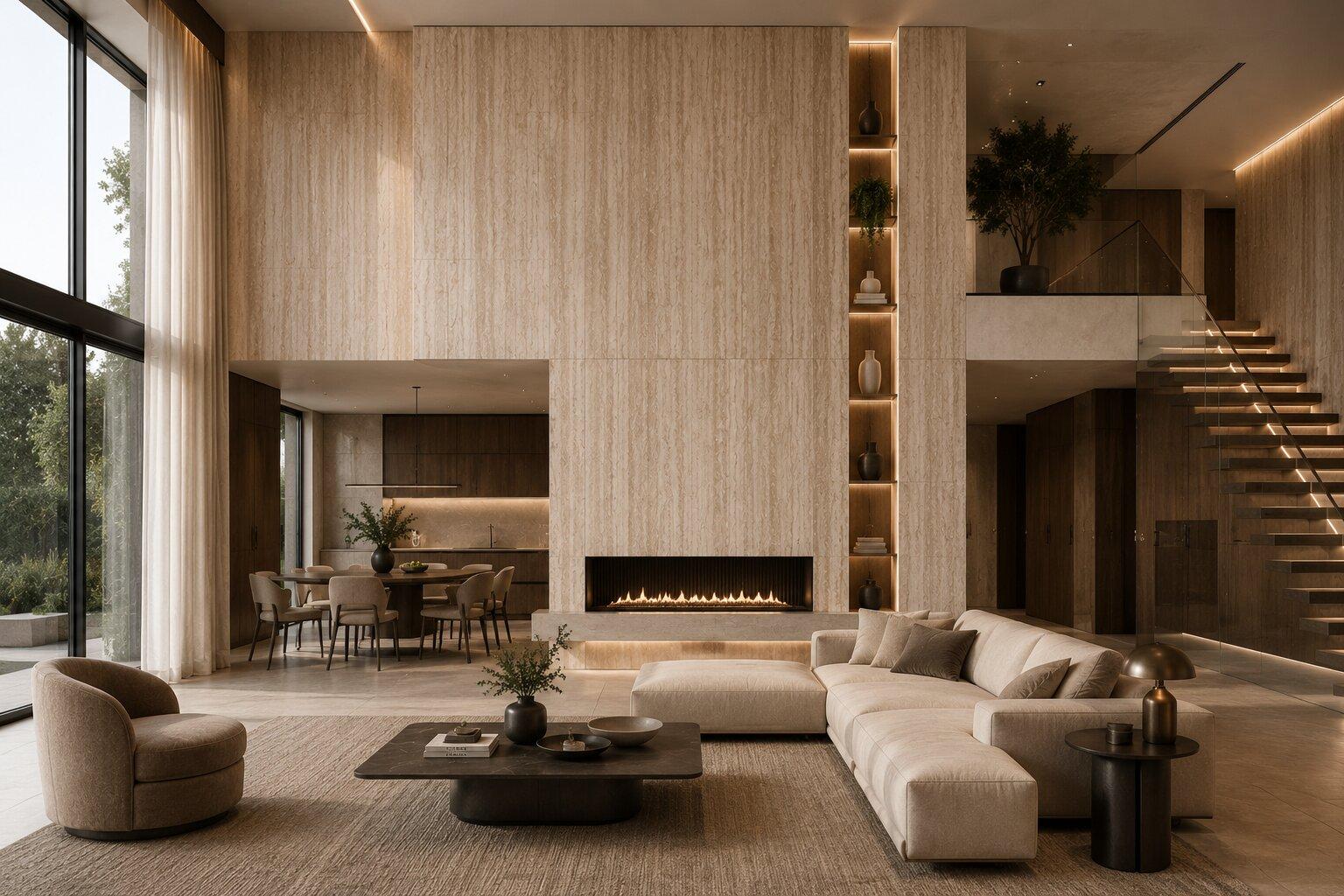
Beyond color, the patterns themselves can also vary considerably. Fine, closely spaced lines create a delicate and restrained appearance, while wider bands bring stronger visual movement. Straight, parallel grain can make a surface feel orderly and continuous, whereas wavy or irregular lines add a more natural and expressive quality.
No two natural stone slabs are exactly alike. Even within the same variety, the width, direction and intensity of the patterns may vary. This natural variation is part of what makes wood-like stone interesting.
The appeal of wood-like natural stone lies not only in its appearance but also in the way its linear patterns interact with architectural spaces.
Depending on the color, scale and cutting direction, it can create different visual effects, from a calm and continuous background to a distinctive decorative feature.

In commercial and public spaces, wood-like natural stone can be used on a larger scale to create a consistent architectural appearance.
Grey, white and darker varieties are particularly suitable for contemporary office buildings, corporate lobbies, hotel reception areas, corridors and other shared spaces where a clean and composed atmosphere is desired.
When used across large wall surfaces or floors, the linear patterns can guide the eye and create a sense of direction. Depending on how the slabs are arranged, the lines may emphasize the height of a wall, extend the visual length of a corridor or bring rhythm to a large open space.
For projects with extensive stone surfaces, selecting slabs with a consistent color range and pattern direction can help create a more unified appearance. Carefully planned slab layouts can also make the natural lines more prominent.
Wood-like stone can also be considered for exterior architectural applications. However, suitability for outdoor use depends on the specific stone's physical properties, climate conditions, finish and installation system, rather than its appearance alone.
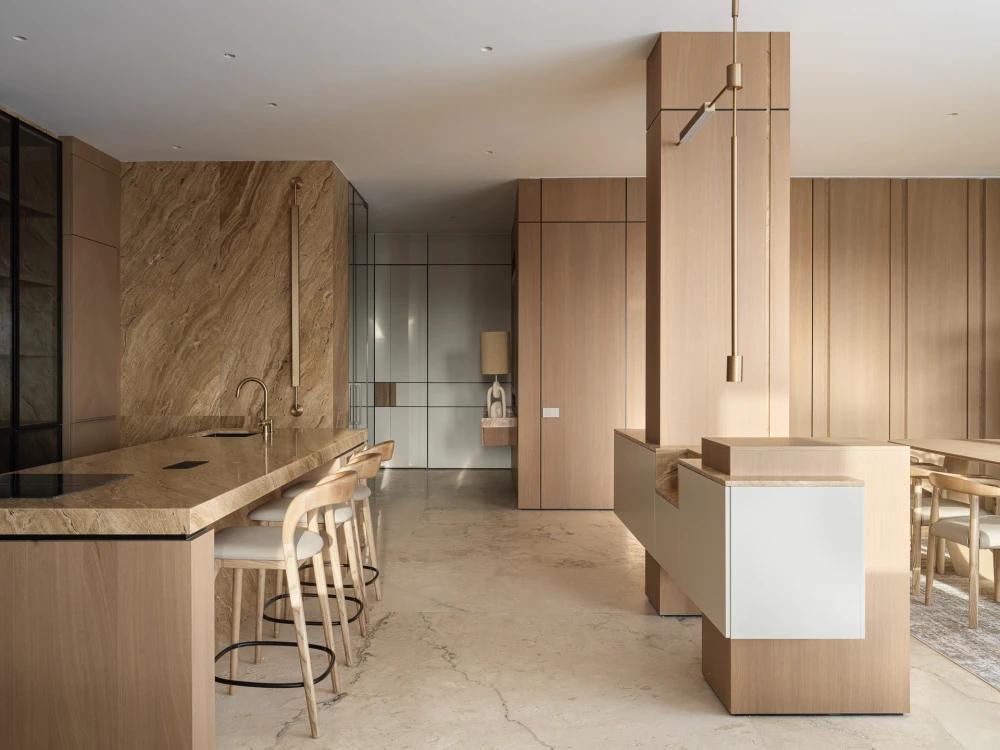
In residential interiors, wood-like stone does not always need to cover a large area. It can also be used selectively to introduce texture and natural detail into everyday spaces.
A wood-like stone backsplash adds visual interest to the kitchen while creating a natural connection with wooden cabinets, metal fixtures and other finishes. Lighter grey, white and beige varieties are particularly versatile.
White, grey and beige wood-like stones can bring a calm and refined quality to bathrooms. Their linear patterns add depth to wall surfaces and vanity backgrounds without relying on elaborate decoration.
The directional nature of wood-like patterns makes them interesting for staircases, corridors and selected floor areas. Arranging the lines consistently can create a stronger sense of flow between different parts of a home.
In living rooms, entrance areas or private studies, wood-like stone can become a natural focal point. A large slab with distinctive grain patterns can provide visual interest while keeping the overall design relatively simple.
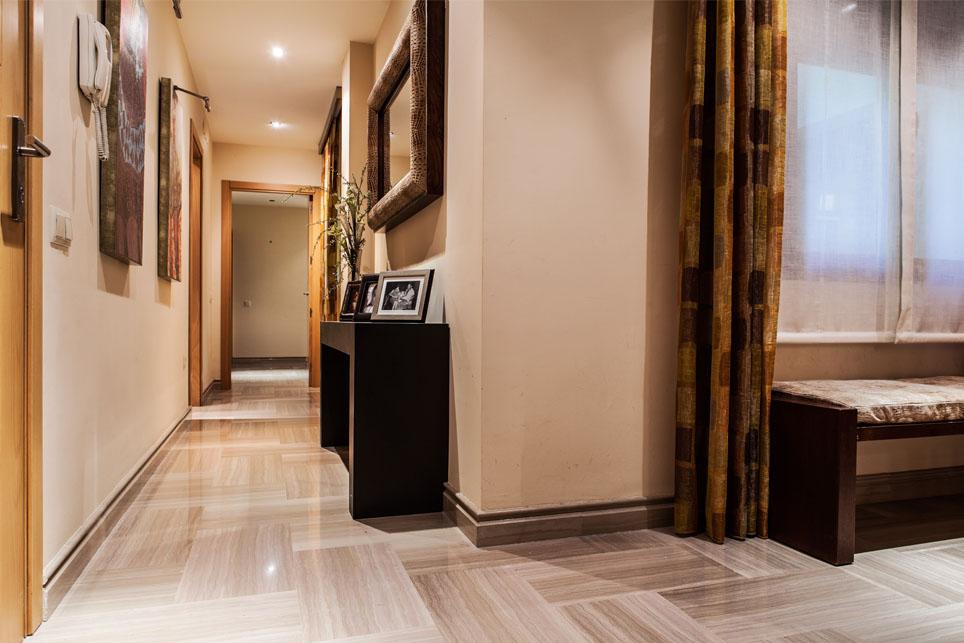
One of the most interesting ways to use wood-like natural stone is to combine it with other materials.
Although its patterns resemble wood, natural stone has a different surface character, with a mineral depth and texture that distinguish it from timber. This creates opportunities to pair the two materials rather than treat them as alternatives.
Beige and brown wood-like stones work naturally with oak, walnut and other warm wood finishes. Their similar color tones create a harmonious appearance, while the different surface textures add depth and contrast.
Grey and white varieties can be paired with glass, stainless steel, black metal and concrete for a more contemporary look. These combinations are particularly effective in modern kitchens, bathrooms and commercial interiors.
For darker wood-like stones, brass details, warm lighting and deep-colored wood furniture can introduce contrast and make the overall space feel more layered and refined.
The key is to consider not only the color of the stone but also the direction and intensity of its natural grain. When these details are carefully coordinated with surrounding materials, wood-like stone can become an important part of the overall design.
From the fine grey lines of White Wooden Marble to the warm brown bands of Eramosa and the layered patterns of Italian Serpeggiante, wood-like natural stone offers a wide range of visual possibilities.
It brings together two familiar natural elements in an interesting way: the linear character of wood grain and the mineral depth of stone. Whether used across large architectural surfaces or as a smaller detail in a residential interior, these patterns can add rhythm, warmth and individuality to a space.
More than a single stone variety, wood-like patterns represent another way to appreciate the diversity of natural stone. Each material has its own origin, color and structure, offering designers and homeowners different ways to bring natural textures into their spaces.
From natural marble and limestone to custom stone products, our team can help you explore suitable materials, finishes and fabrication options for your architectural and interior projects.
CONTACT US FOR A CONSULTATION


