 ×
NATURAL STONE DESIGN JOURNAL
From classical carved marble mantels to modern stone surrounds, explore how natural materials and thoughtful craftsmanship shape the fireplace.
A fireplace changes the atmosphere of a room even before the fire is lit. It anchors the furniture, gives the wall a sense of purpose and introduces a material that people notice at close range. With natural stone, the appeal lies in the relationship between architectural form and a pattern that can never be repeated exactly.
A richly carved mantel can feel perfectly at home in a traditional villa, while a simple stone frame may be all a contemporary living room needs. The examples here bring those approaches together, pairing interior design visualizations with photographs of actual fabricated fireplace surrounds. The visualizations illustrate potential settings; the product photographs show the stone and workmanship behind the designs.
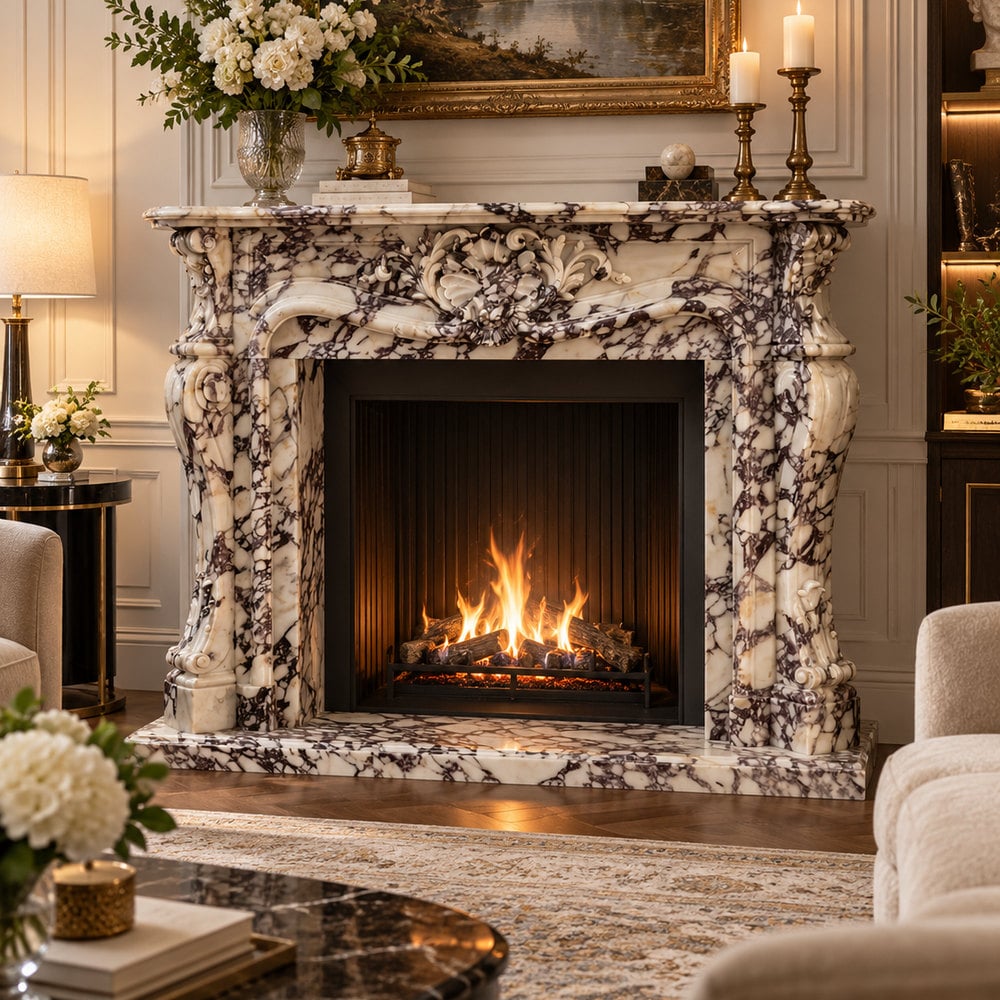
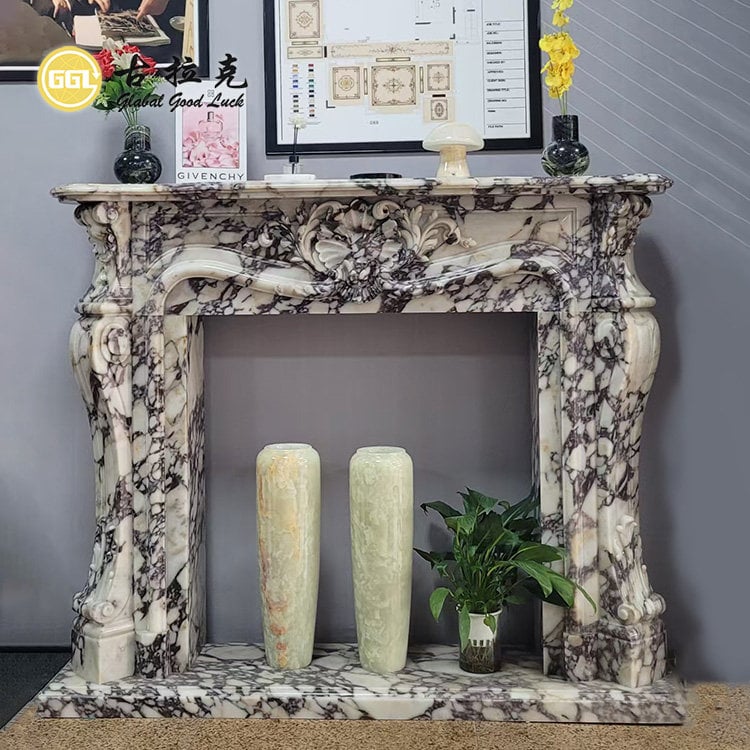
Calacatta Viola does not need much decoration around it. Its creamy background and dramatic purple-brown veins already create movement, while the sculpted flowers and curved supports give that movement a three-dimensional setting. In a living room with warm ivory walls, quiet upholstery and antique metal accents, the mantel becomes the obvious focal point without making the whole space feel busy.
|
INTERIOR DESIGN VISUALIZATION |
ACTUAL FABRICATED PRODUCT |
The product photograph reveals what a staged interior cannot: the depth of the central carving, the thickness of the shelf and the way individual veins cross different parts of the structure. For a custom order, these details deserve attention before fabrication. A dramatic vein can be an asset, but its placement should be considered alongside the carved profile rather than left entirely to chance.
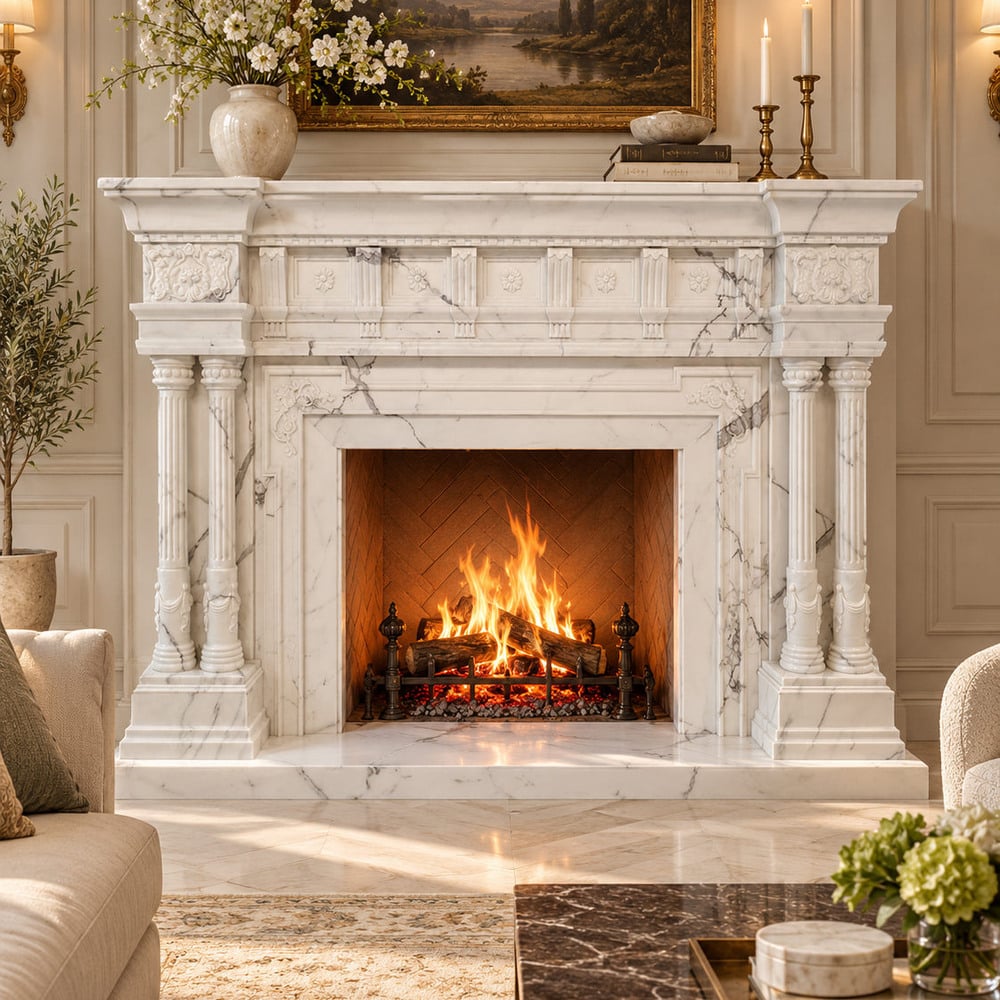
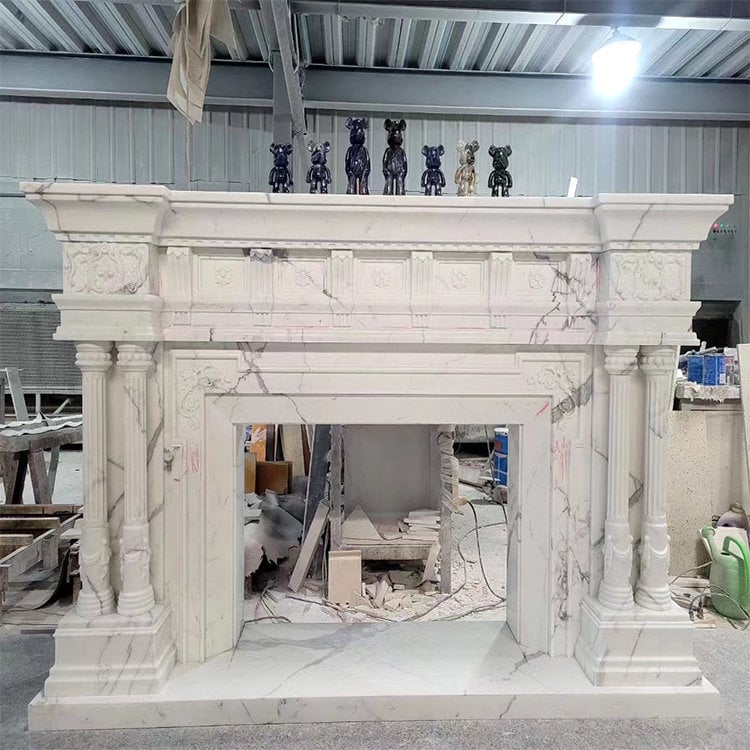
A white marble fireplace with paired columns and carefully carved panels brings architectural rhythm to a room. Here, the stone’s relatively restrained color allows the craftsmanship to take the lead. Capitals, floral ornaments and layered moldings create shadows that change with the light, giving the mantel visual depth without relying on strong contrasts.
|
INTERIOR DESIGN VISUALIZATION |
ACTUAL FABRICATED PRODUCT |
This style works particularly well with wall paneling, tall ceilings and traditional furniture, but it can also provide an interesting contrast to modern seating. The most important decision is scale: a large, deeply carved surround should feel balanced against the wall rather than overwhelm it.
Seen without furnishings, the product’s construction becomes much easier to assess. It is a useful reminder that mantel width, opening height and shelf projection should be confirmed from a drawing, not estimated from a room photograph. On a carved design, the size of each decorative element also needs to work with the overall proportions.
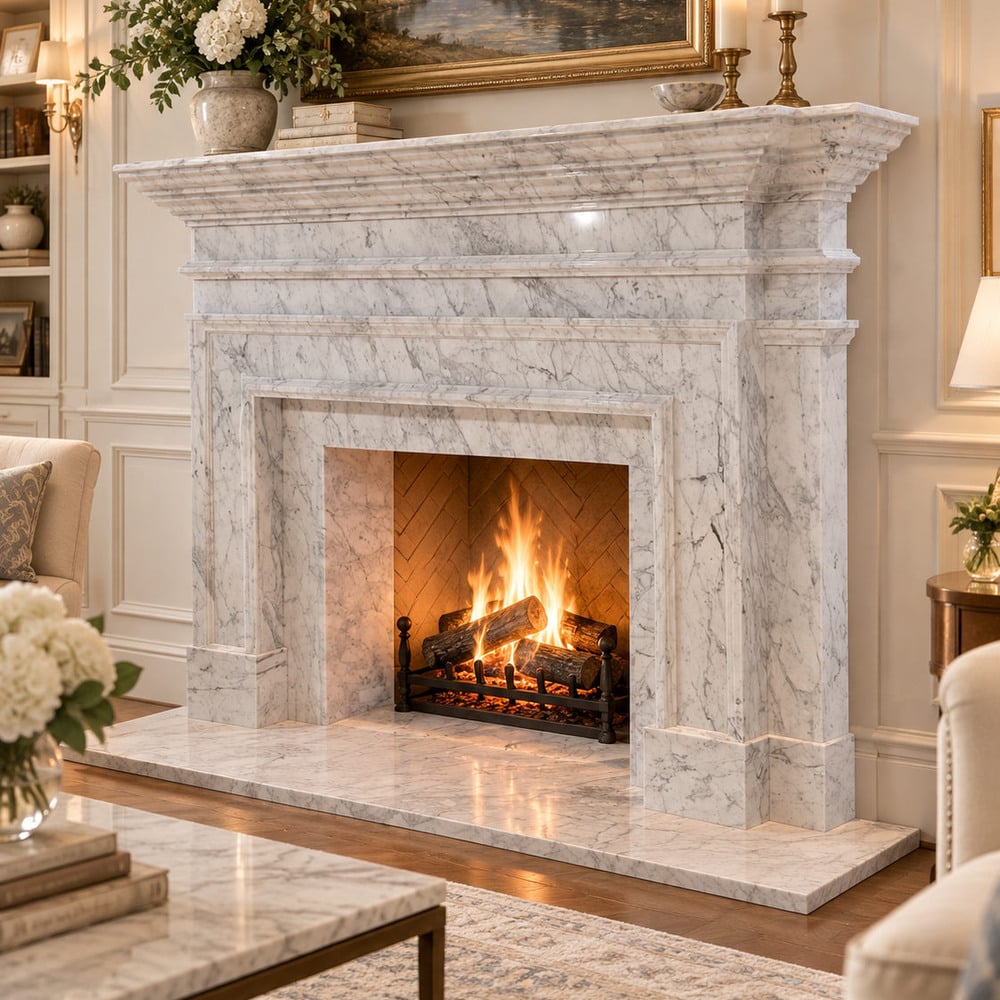
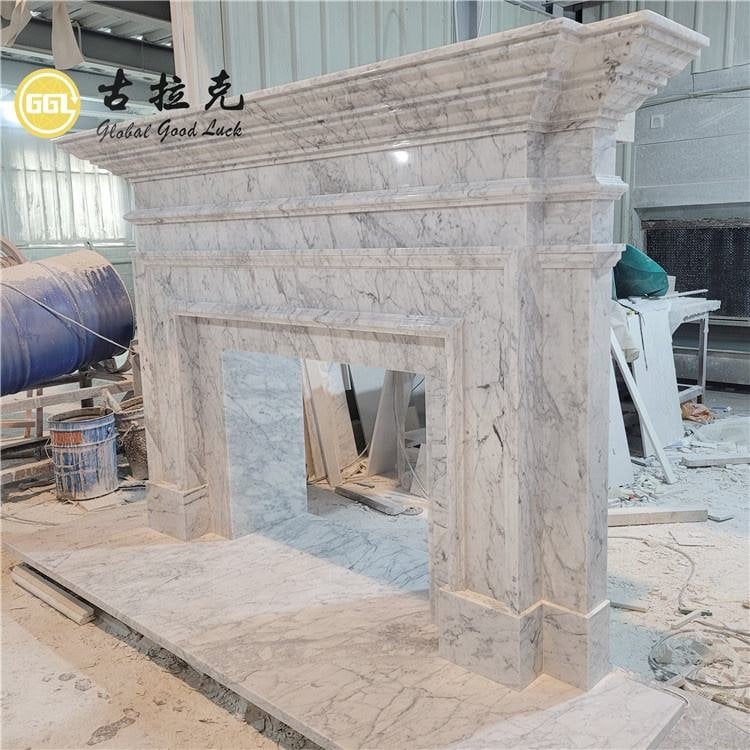
A Carrara White marble mantel offers a quieter interpretation of traditional design. Stepped horizontal moldings and rectangular supports establish a clear outline; the gray veining adds enough interest to keep the surface from appearing flat. Paired with oak flooring, neutral fabrics and uncomplicated furniture, it feels settled rather than formal.
|
INTERIOR DESIGN VISUALIZATION |
ACTUAL FABRICATED PRODUCT |
The original photograph is especially helpful here because it shows the depth of the supports and the broad hearth. Both affect the space around the fireplace, including furniture placement and walking clearance. The practical footprint of a mantel matters just as much as its appearance from the front.
For this style, accuracy matters more than ornament. A carefully proportioned shelf, consistent edge profiles and clean joints can do more for the finished appearance than adding another decorative feature. A restrained surround can remain visually relevant even as the furniture and decoration around it change.
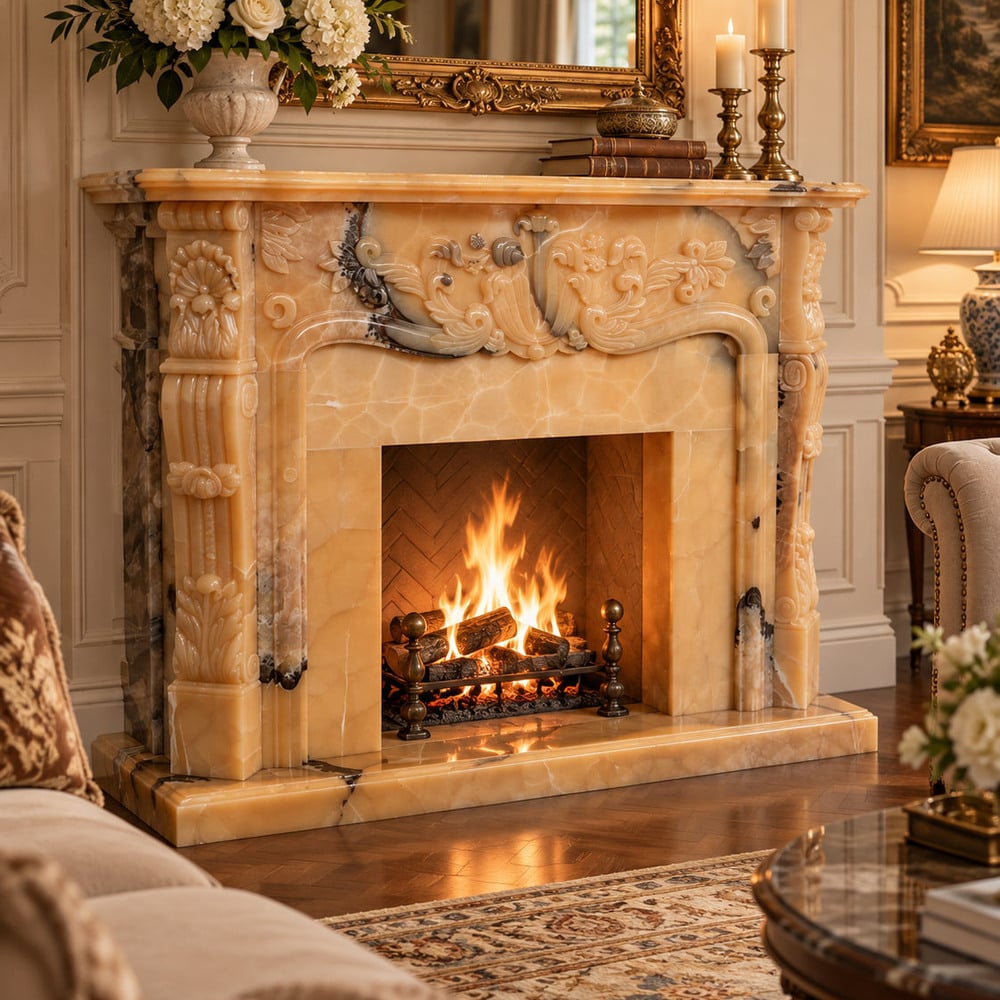
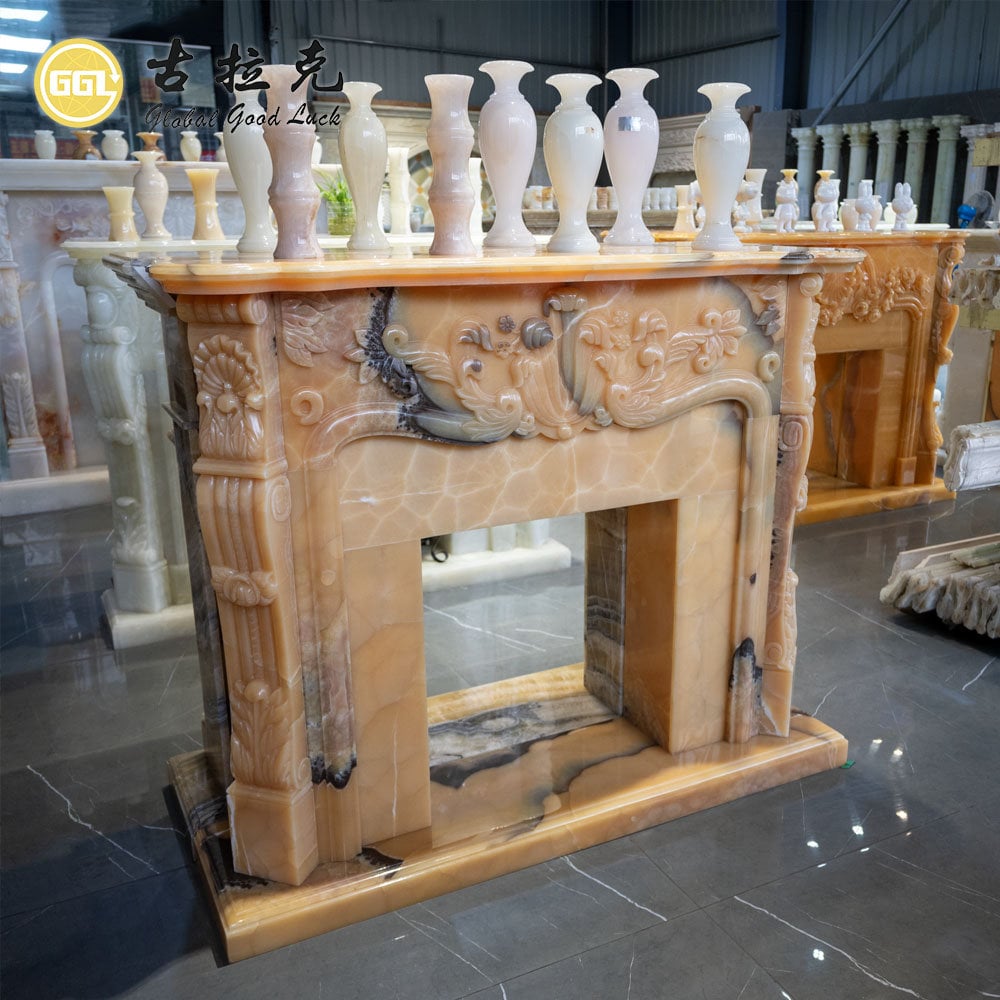
Honey-colored onyx brings amber and cream tones that look inviting even when the fireplace is unlit. Its decorative appeal is especially strong in carved designs, where flowers and scrollwork give the stone more surfaces to catch the light. In a room finished with timber, ivory textiles and soft brass accents, the effect feels rich but welcoming.
|
INTERIOR DESIGN VISUALIZATION |
ACTUAL FABRICATED PRODUCT |
The real product photograph makes the material variation clearer. Onyx is not simply a differently colored marble: individual varieties can differ in structure, translucency and sensitivity to environmental conditions. Before considering it for a functioning fireplace, the project team should evaluate the actual stone, expected temperatures and the appliance’s installation requirements. In some settings, a decorative non-heating fireplace may be the more appropriate application.
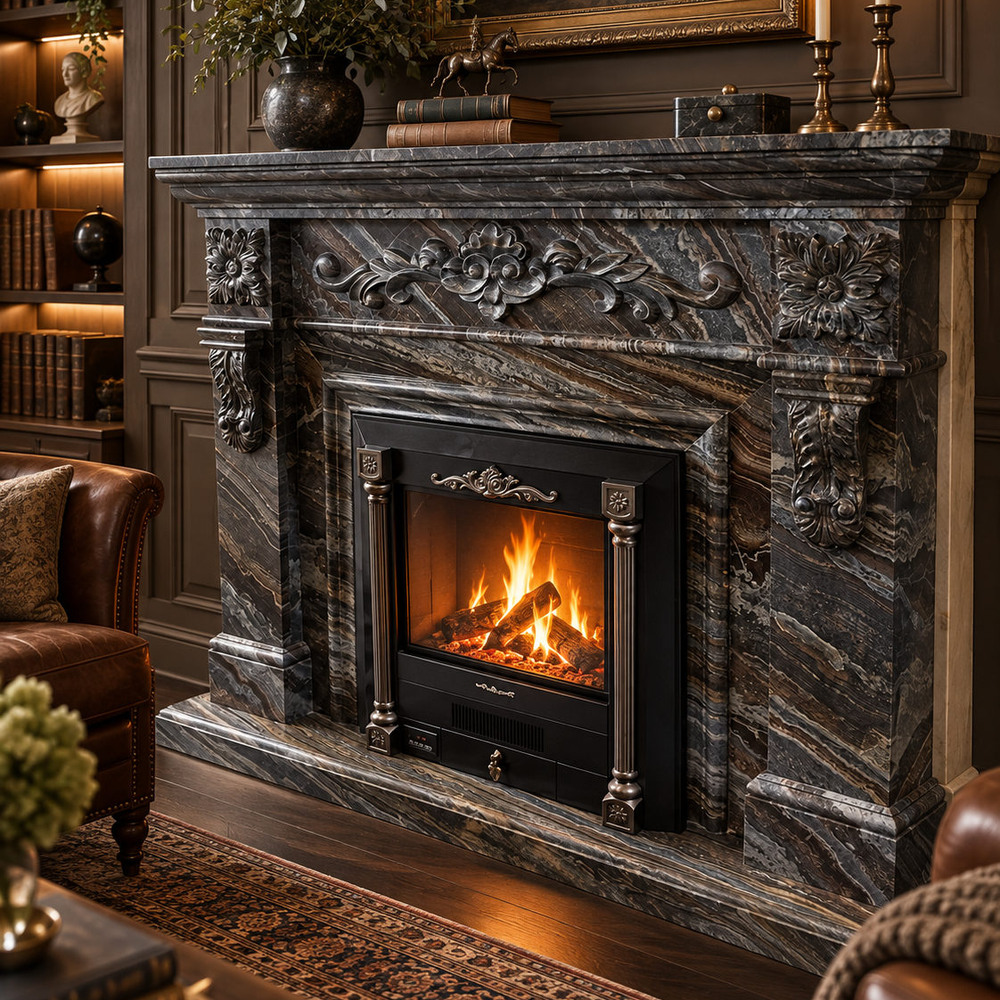
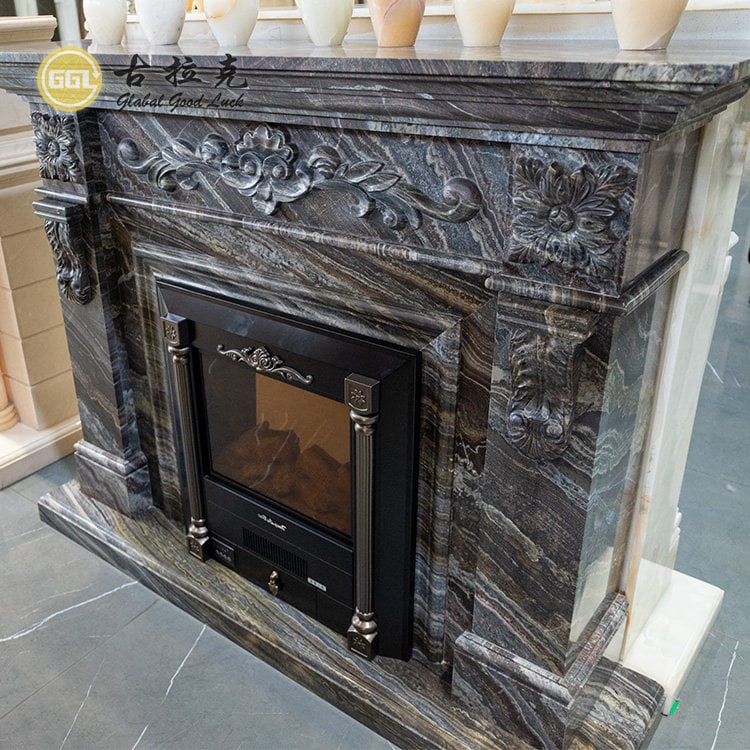
Dark, strongly veined stone creates a different mood. The layered gray and brown markings in this mantel are visible against the black fireplace insert, while the carved flowers become more pronounced under directional lighting. Such a fireplace suits a library, a traditional lounge or a private study where wood, leather and softer light are already part of the palette.
|
INTERIOR DESIGN VISUALIZATION |
ACTUAL FABRICATED PRODUCT |
The original photograph draws attention to an important practical issue: the insert and stone frame must be designed together. Finished opening dimensions, required clearances, accessible controls and the appliance manufacturer’s instructions should be checked before the stone is cut. The visual result matters, but a good technical fit is essential. Where stone veining is highly directional, the orientation of each component deserves review as well.
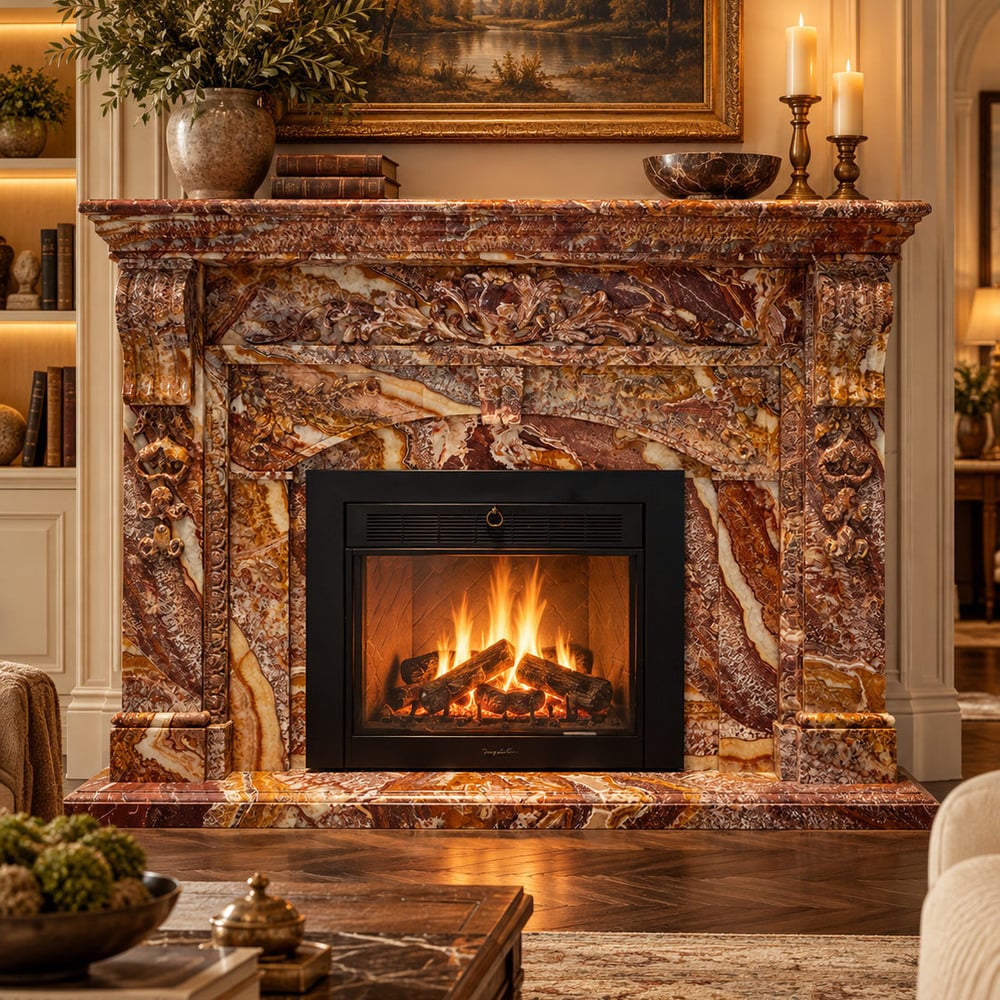
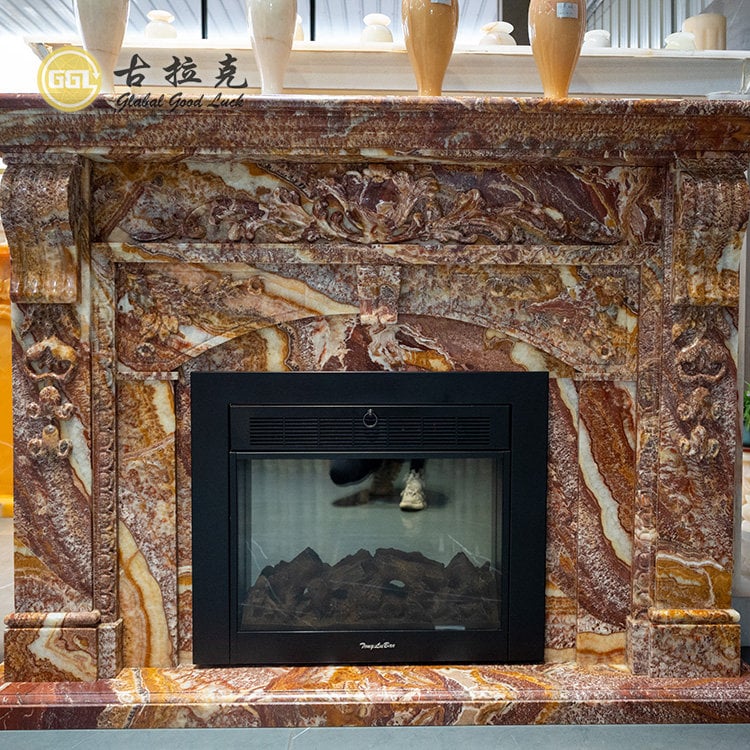
Red and reddish-brown marbles can give a room warmth and individuality. Rust, cream and gold veins travel across the carved face and supports, producing an almost painterly surface. Because the stone itself is so expressive, surrounding finishes can stay simple: warm wood, plain walls and upholstery in muted tones usually provide enough balance.
|
INTERIOR DESIGN VISUALIZATION |
ACTUAL FABRICATED PRODUCT |
For a material with this much variation, slab or block selection is a design decision. Ask which areas will appear on the most visible surfaces and whether adjoining sections can be arranged for a pleasing overall effect. Exact vein matching may not be possible, particularly across deeply shaped components, but careful planning makes a difference.
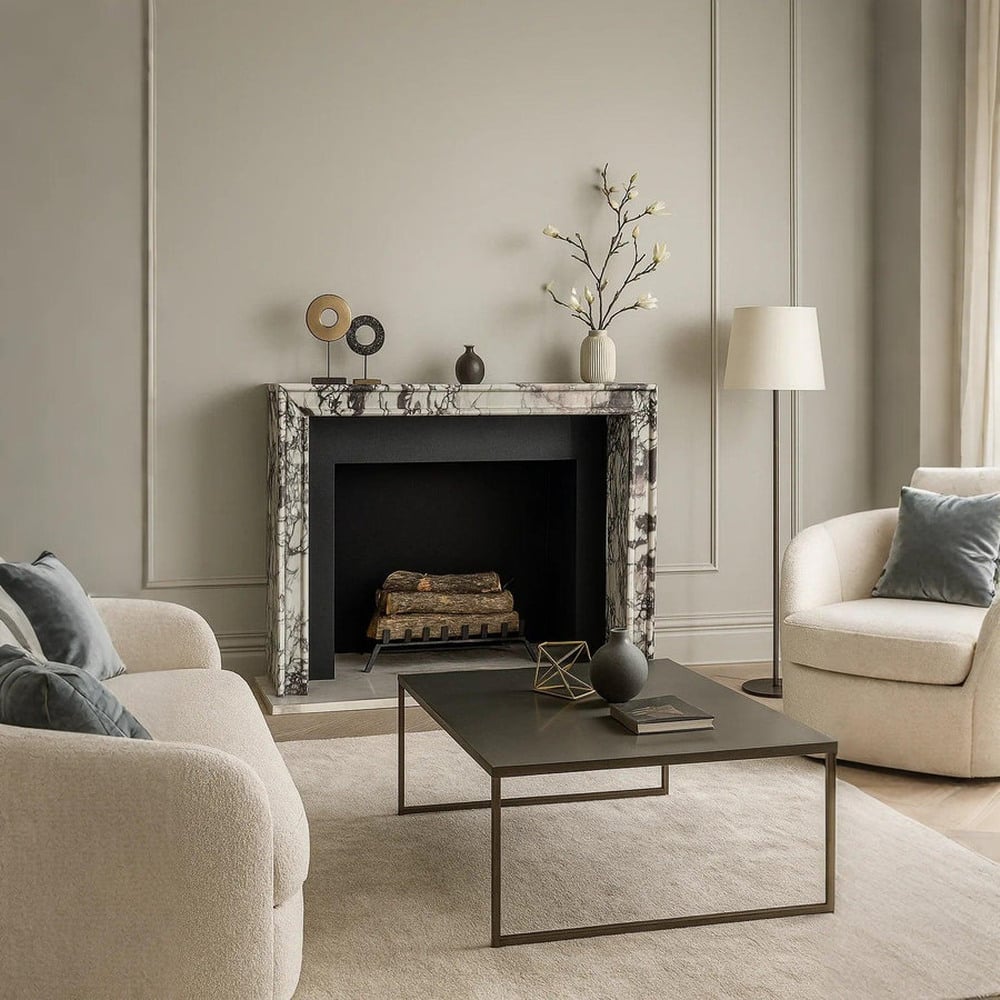
Not every fireplace needs columns or ornament. A slim stone surround with straight edges can feel just as deliberate, especially when the material carries a bold natural pattern. In a modern room, pale walls and low furniture let the geometry of the opening and the contrast of the stone do the work.
CONTEMPORARY DESIGN REFERENCE
Minimalist construction can be demanding. When there are few decorative elements, small discrepancies in alignment, joints and edge finishing are easier to notice. Careful measurement and fabrication are therefore central to the design, not merely finishing touches. This contemporary reference also demonstrates how the same natural material category can serve a very different interior language.
The best starting point is a drawing that shows the fireplace appliance and the surrounding space. Confirm the desired overall width, height, depth, opening size and hearth projection. The installer should also establish the wall construction and required safety clearances. A reference photograph is useful for discussing style, but it cannot replace approved technical dimensions.
Material selection comes next. With strongly veined stone, photographs of the actual available slabs or blocks are more informative than a generic sample. Discuss which surfaces will be most visible, the preferred polished or honed finish, and whether carving details can be produced successfully in the chosen material. A mock-up or carefully reviewed fabrication drawing can help resolve questions before production.
Decorative surrounds may consist of several components rather than one solid piece. For overseas projects, ask how sections will be identified, supported and protected during shipping, and what assembly information the local installer will receive. Clear documentation helps everyone understand the design before production begins. Packaging should protect delicate carved corners and projecting edges, which can be particularly vulnerable in transit.
Natural stone is widely used for decorative fireplace surrounds, but suitability depends on the specific material and heating system. Exposure to high temperatures, uneven heating, thermal movement and inappropriate fixing methods can cause damage. Follow the appliance manufacturer’s requirements, applicable local regulations and advice from qualified installation professionals. The visualizations in this article are design concepts, not technical installation examples.
For routine care, use a soft cloth and products intended for natural stone. Avoid acidic cleaners and harsh abrasives, particularly on polished marble. Soot or staining should be assessed according to the stone type and finish rather than treated with an aggressive household product. Appropriate maintenance also helps protect the sharp edges and relief details that give carved mantels their character.
A successful stone fireplace brings together the room’s proportions, the character of the material and the skill of fabrication. The result might be an ornate Calacatta Viola mantel, a restrained Carrara surround or a contemporary stone frame. What matters is that the design makes sense both aesthetically and technically.
If you are considering a custom natural stone fireplace, share your reference images, drawings, approximate dimensions and preferred material. We can discuss fabrication options, stone selection and arrangements for international delivery.
Send us your drawings, preferred stone and approximate dimensions to discuss customization.
Interior scenes are design visualizations, not completed installation photographs. Fireplace suitability requires project-specific technical verification.