 ×
×
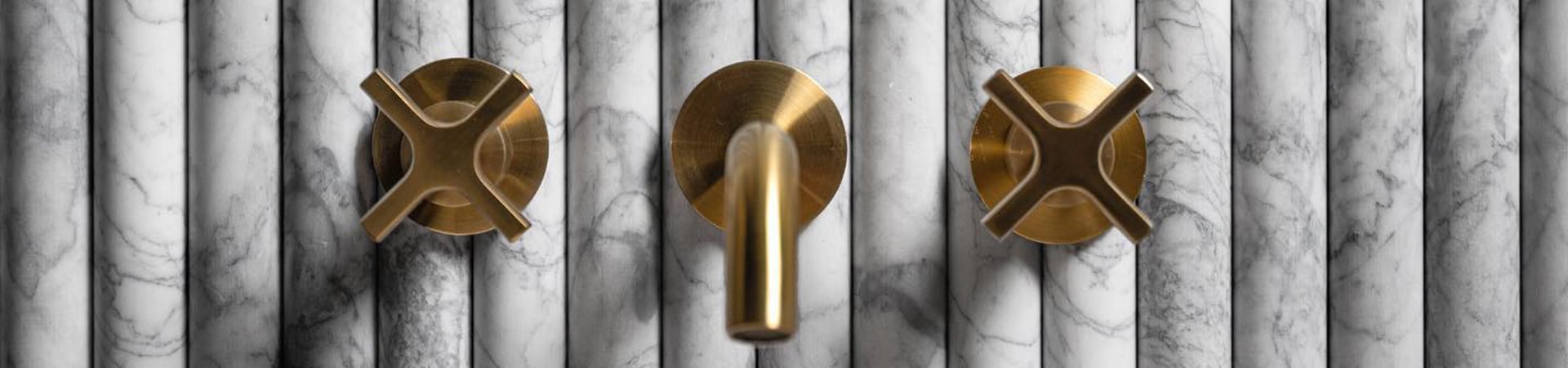
A brand logo can appear in many places—on storefront signs, packaging, business cards, or digital screens. But when that same logo becomes part of a building's floor or wall, it takes on a different character.
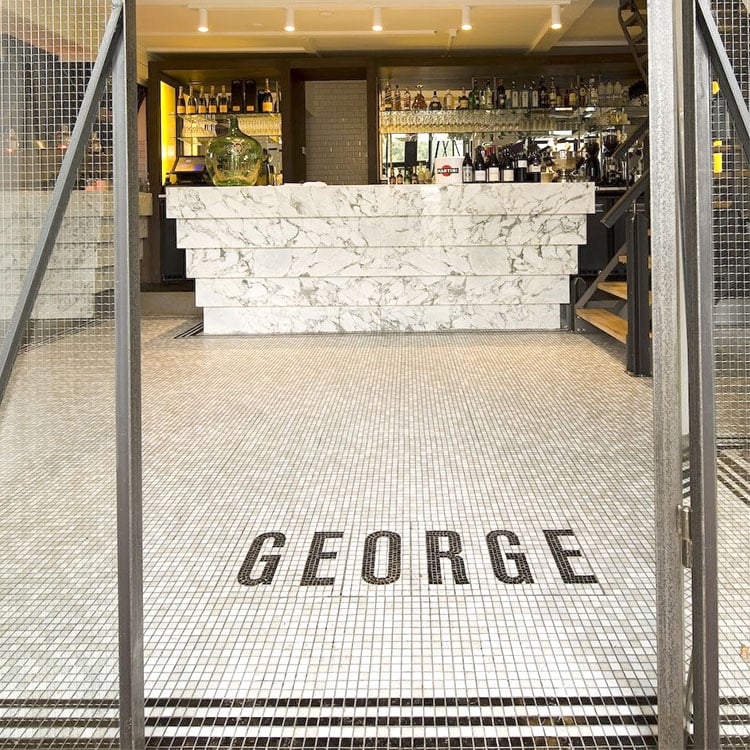
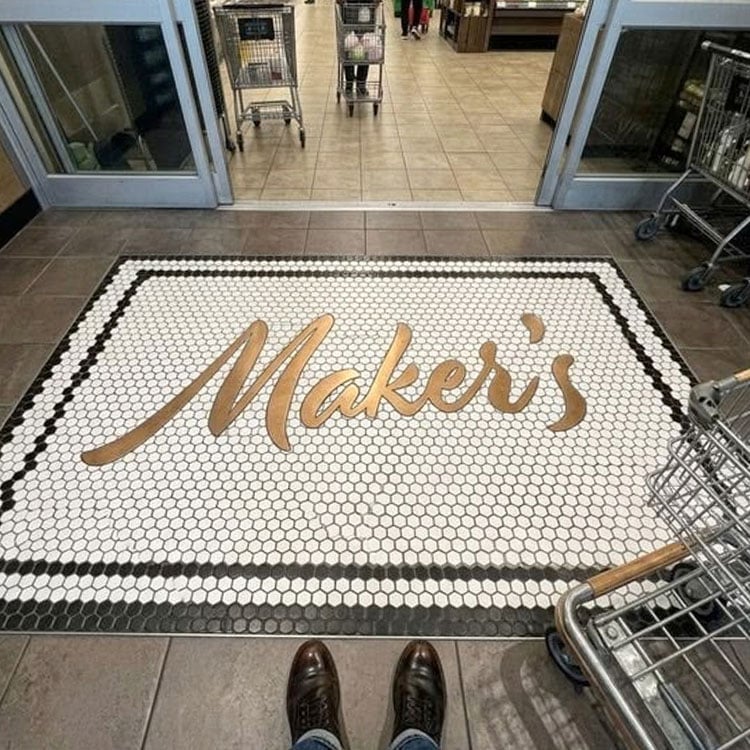
Imagine entering a boutique hotel and seeing its signature emblem carefully formed from hundreds of small marble mosaic pieces. Or walking into a restaurant where the brand's name is incorporated into a decorative mosaic at the entrance.
These details do more than identify a business. They connect its visual identity with the architecture and interior design.
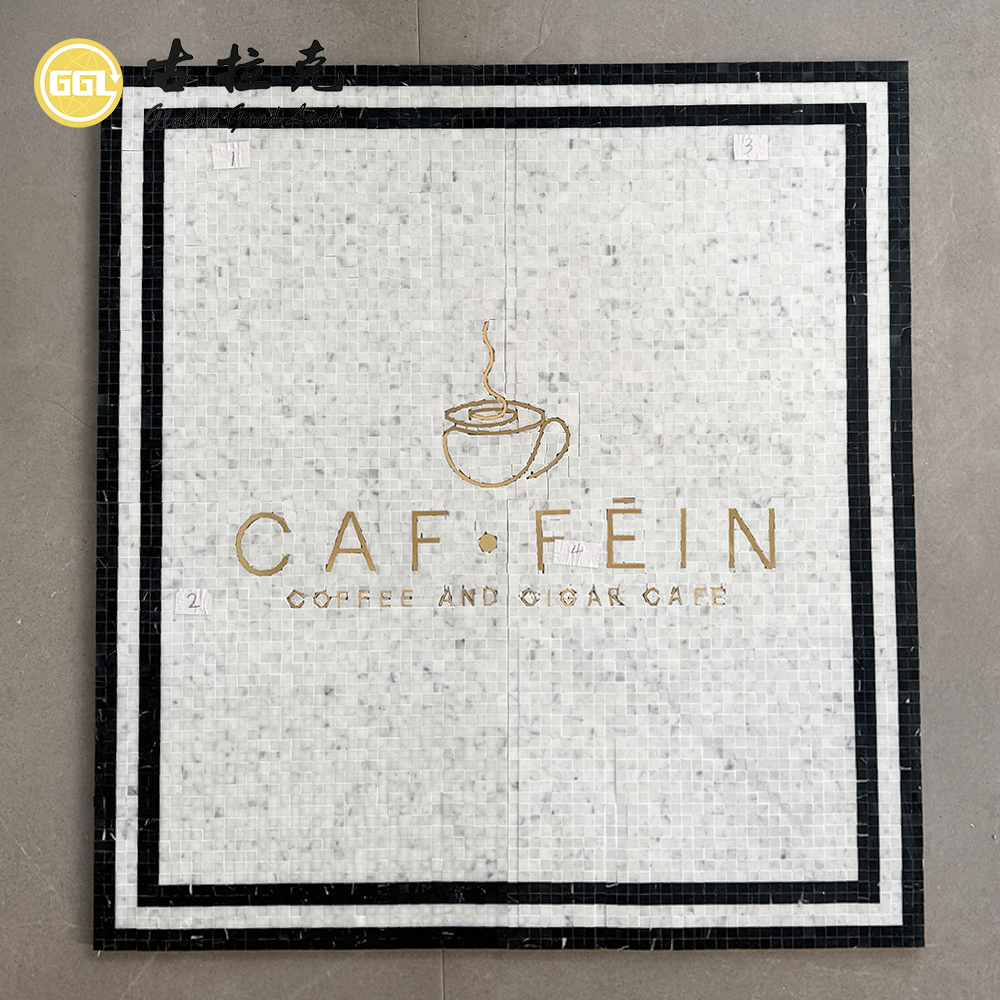
A custom logo mosaic transforms a company logo, brand name, monogram, or personal symbol into a decorative surface made from individual mosaic pieces.
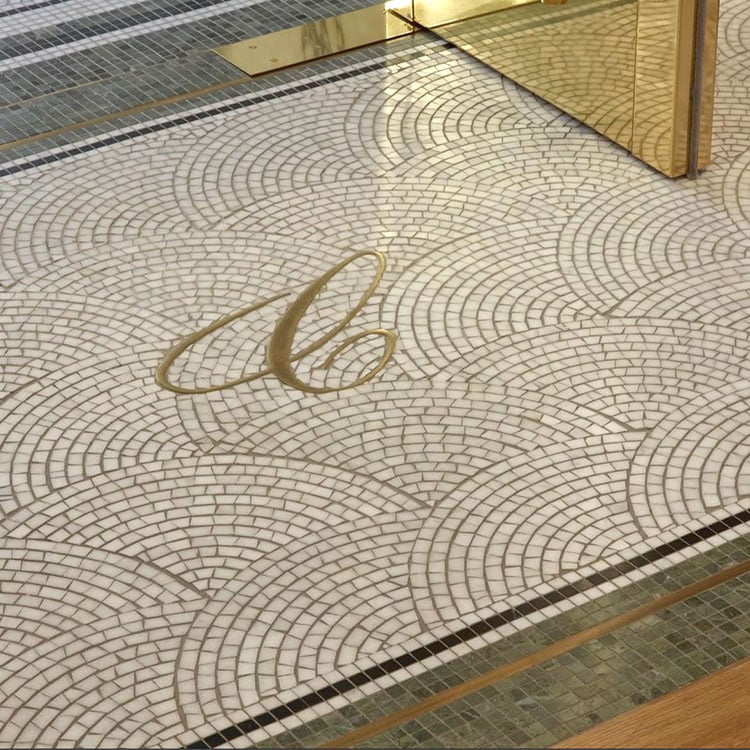
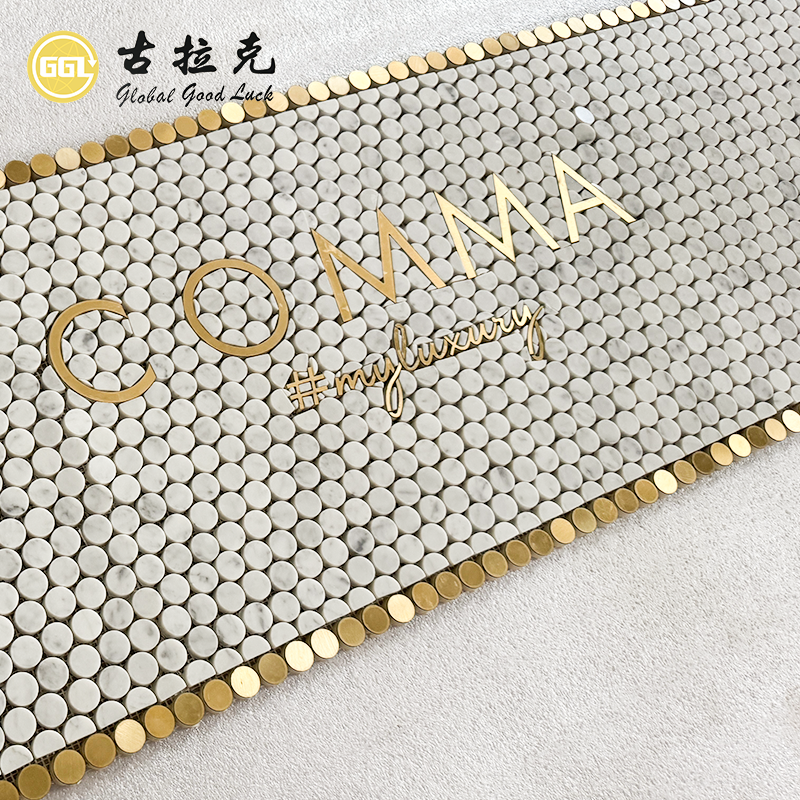
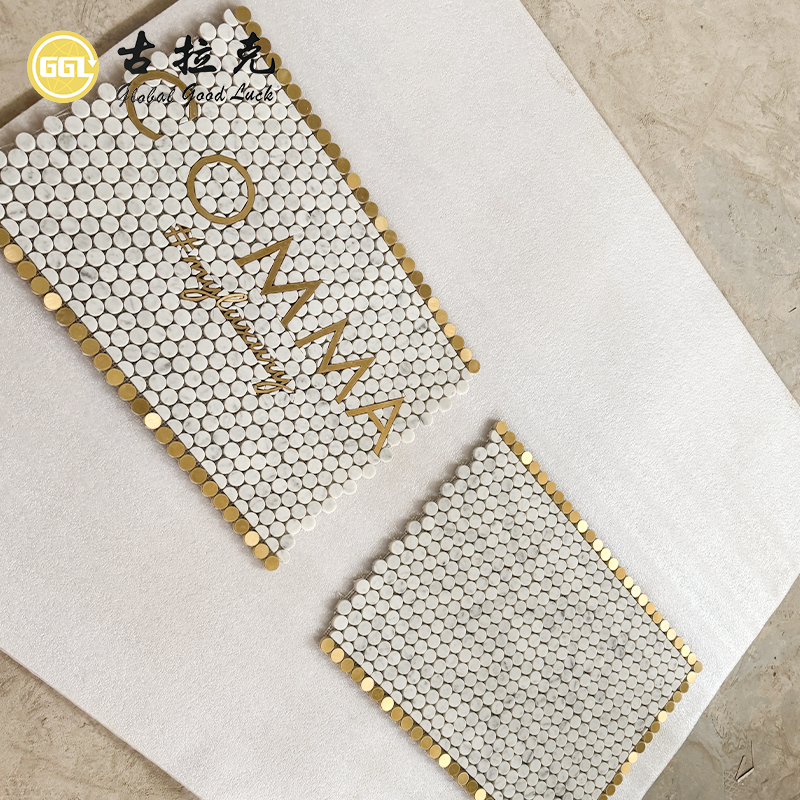
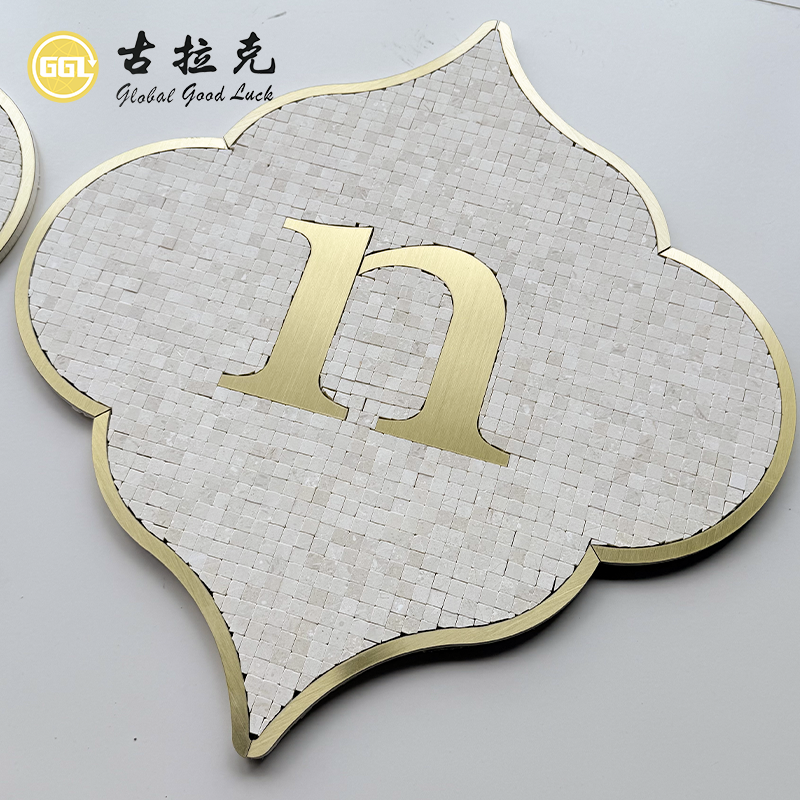
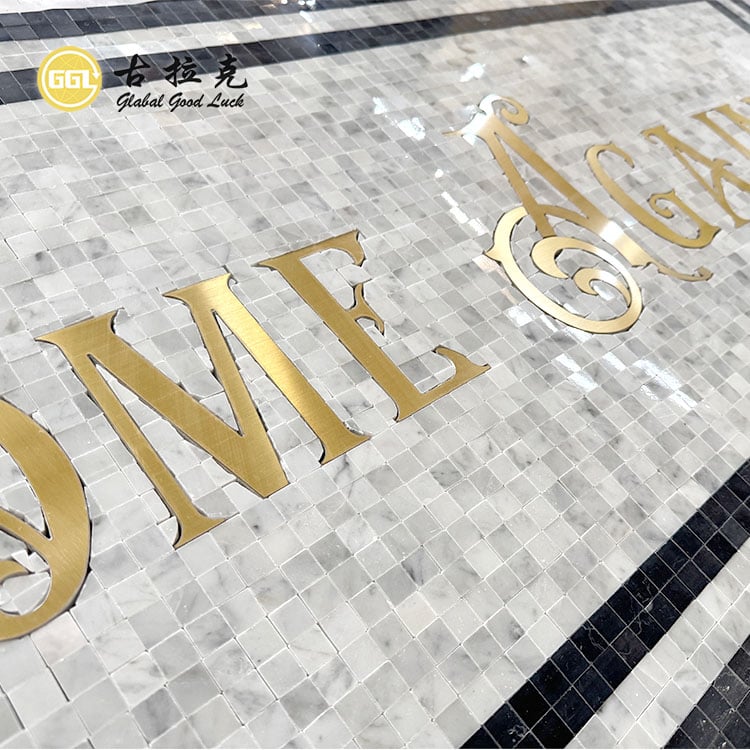
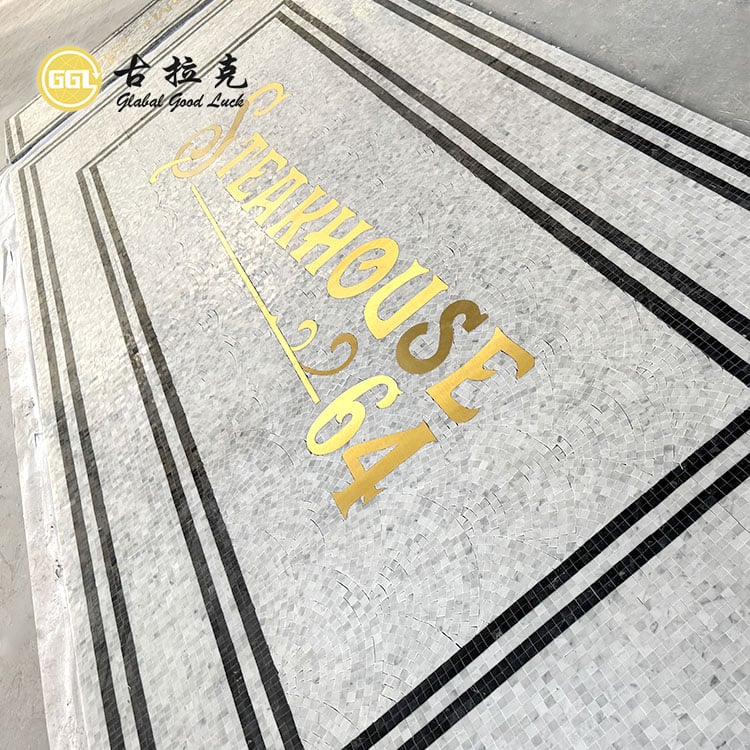
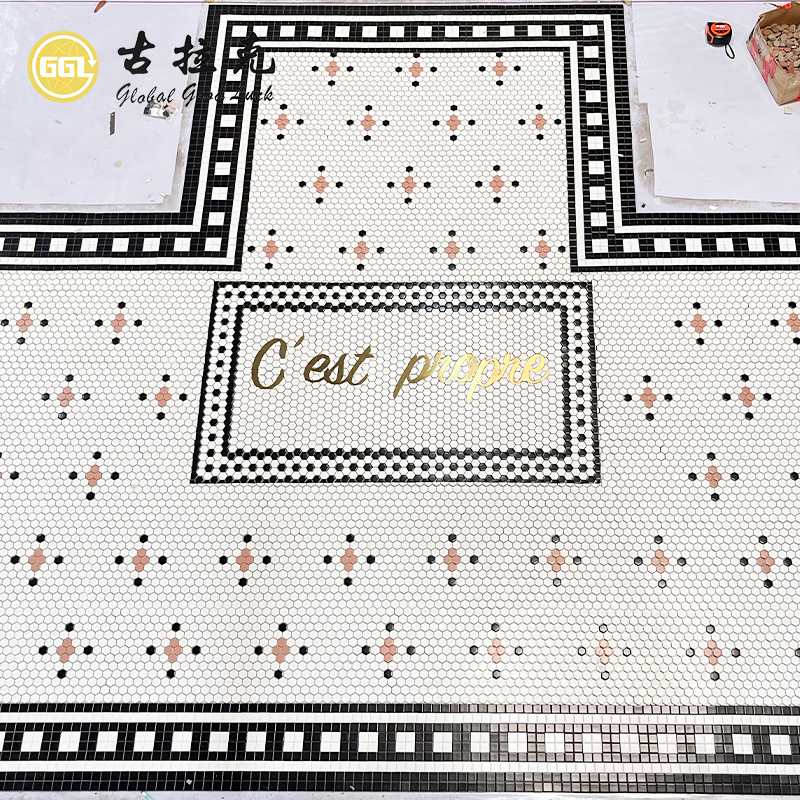
At GGL, we create custom logo mosaics using natural stone and ceramic mosaic pieces, carefully arranged by hand to reproduce letters, symbols, and decorative patterns. For selected designs, brass or gold-colored stainless steel lettering can also be incorporated to create an attractive contrast with the mosaic background.
Whether you are designing a hotel entrance, restaurant floor, reception wall, retail store, or private residence, understanding the materials and production process will help you create a mosaic that looks beautiful and remains easy to recognize.
 |
 |
Unlike a printed sign or a separately mounted logo, a mosaic can be integrated directly into a floor or wall surface.
A marble logo mosaic at a hotel entrance can complement the surrounding stone flooring. A ceramic mosaic featuring a restaurant's name can become part of an interior feature wall. In a retail store, a custom company emblem can contribute to the overall design of the entrance or reception area.
This makes mosaic particularly appealing for projects where branding and interior decoration need to work together.
 |
 |
Every mosaic is made from physical pieces rather than printed graphics.
Natural stone offers distinctive mineral patterns, subtle color variation, and the texture of real marble or other stone materials. Ceramic mosaics provide alternative color combinations and surface finishes.
The individual pieces and joints create visual depth that cannot be reproduced in exactly the same way by a flat printed surface.
Metal lettering can introduce another material contrast. Brass and gold-colored stainless steel are particularly suitable for projects seeking a refined, decorative appearance.
 |
 |
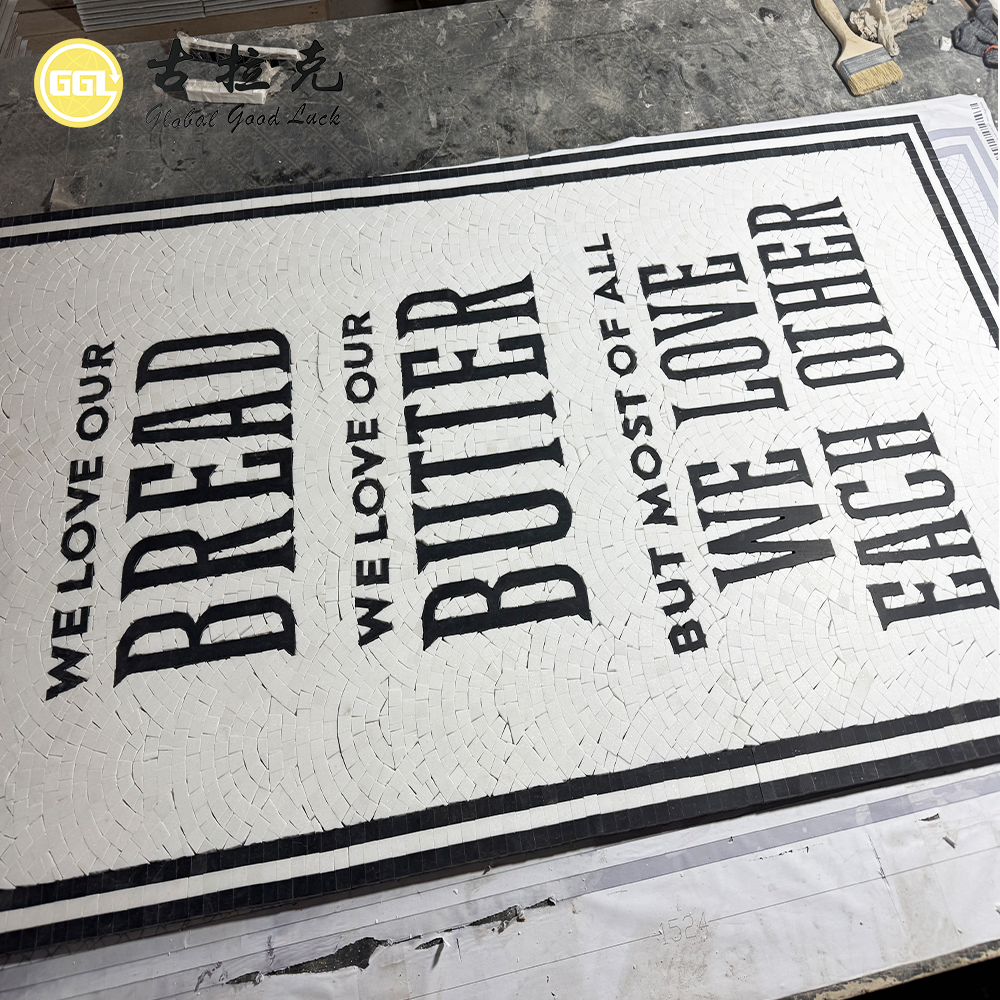
Our custom stone and ceramic logo mosaics are created by manually arranging and cutting small mosaic pieces to form the required design.
Individual pieces are selected and positioned according to the logo's shapes, lettering, and colors. Where necessary, pieces are manually trimmed to achieve the desired outlines and details.
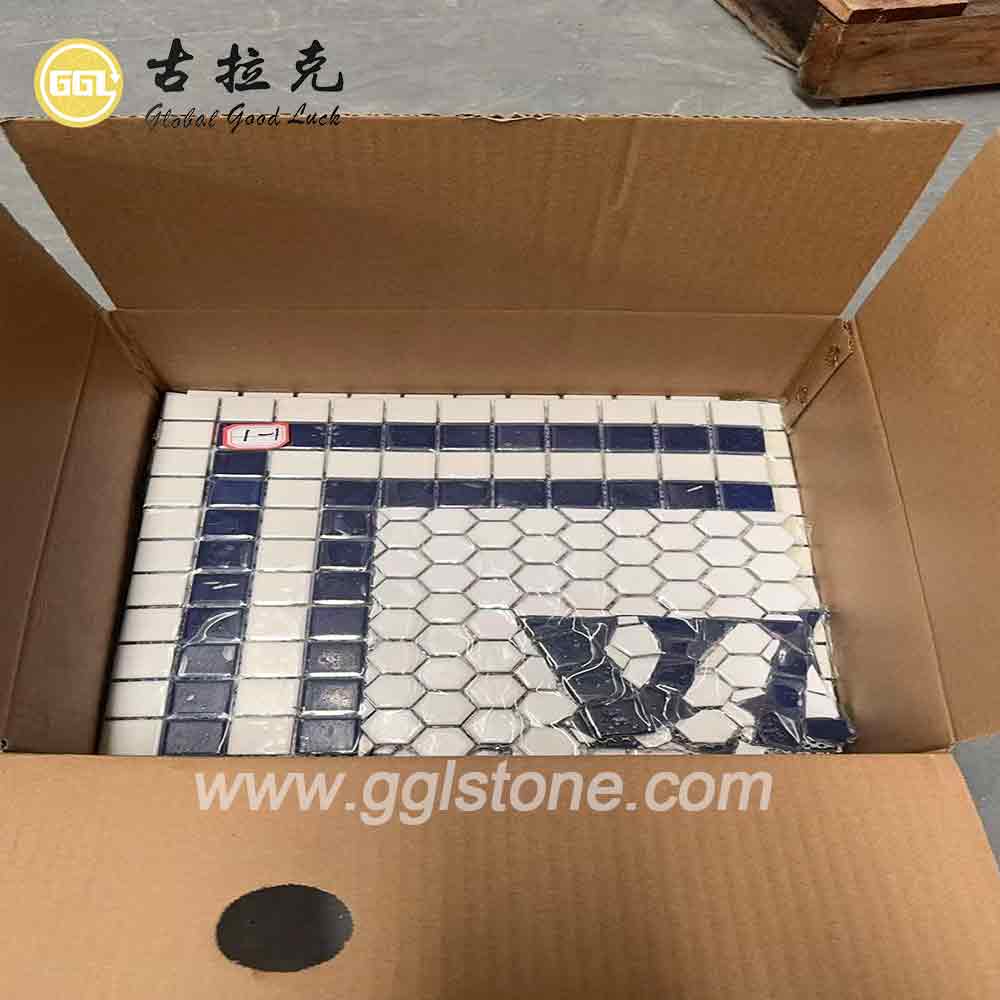
The assembled mosaic is secured to a mesh backing, helping keep the pattern together and making it easier to handle and install.
The quality of the finished artwork depends heavily on three things: the clarity of the design, the choice of mosaic pieces, and the skill involved in arranging them.
Every project begins with the customer's design.
This might be a company logo, a brand name, a family monogram, a decorative symbol, or a combination of lettering and graphic elements.
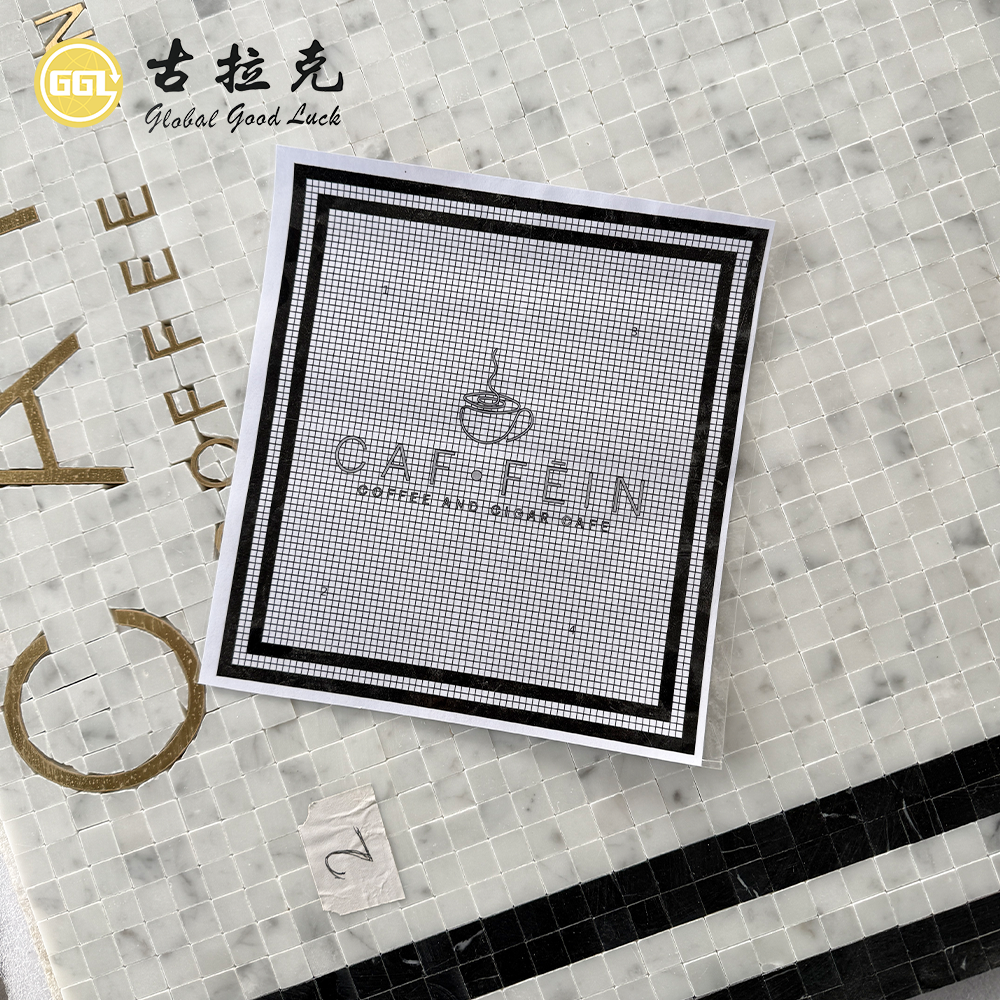
A clear design file is helpful because it allows the shape, proportions, and color relationships to be examined before production.
However, digital artwork and physical mosaic are not identical.
Fine lines, closely spaced letters, tiny symbols, and complex gradients may look excellent on a computer screen but become difficult to reproduce with individual pieces of stone or ceramic.
For this reason, the original design should be reviewed with mosaic production in mind.
The objective is to preserve the recognizable characteristics of the logo while ensuring the pattern can be created clearly using real mosaic pieces.
 |
 |
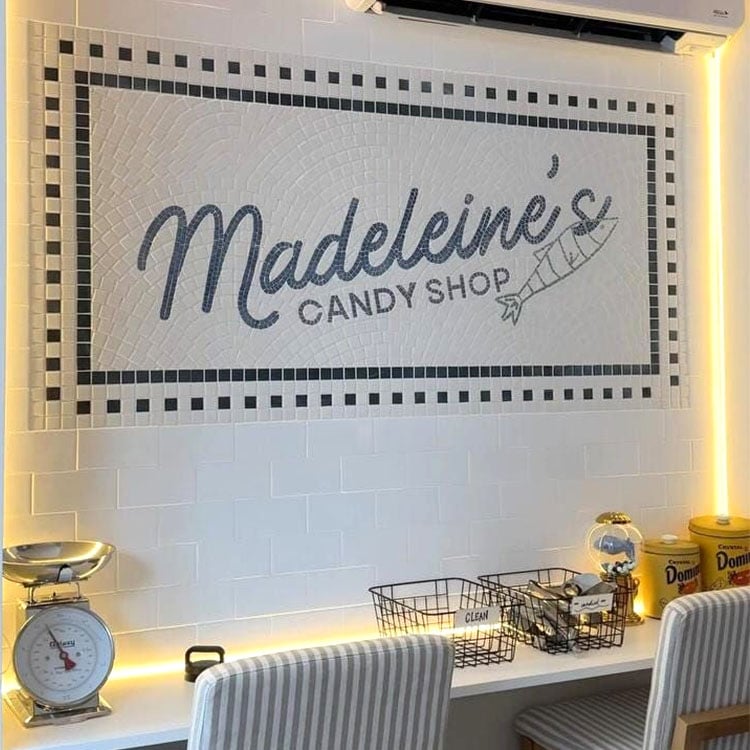
The size of the individual mosaic pieces has a direct effect on how accurately a design can be reproduced.
Smaller pieces generally allow greater flexibility when forming curved letters, narrow outlines, and detailed symbols.
Larger pieces may be more suitable for simple geometric logos, broad color areas, or designs without complicated lettering.
However, the smallest possible mosaic piece is not always the best choice.
Very small pieces can make production more labor-intensive, and excessive visual detail may be unnecessary when the finished logo will be viewed from several meters away.
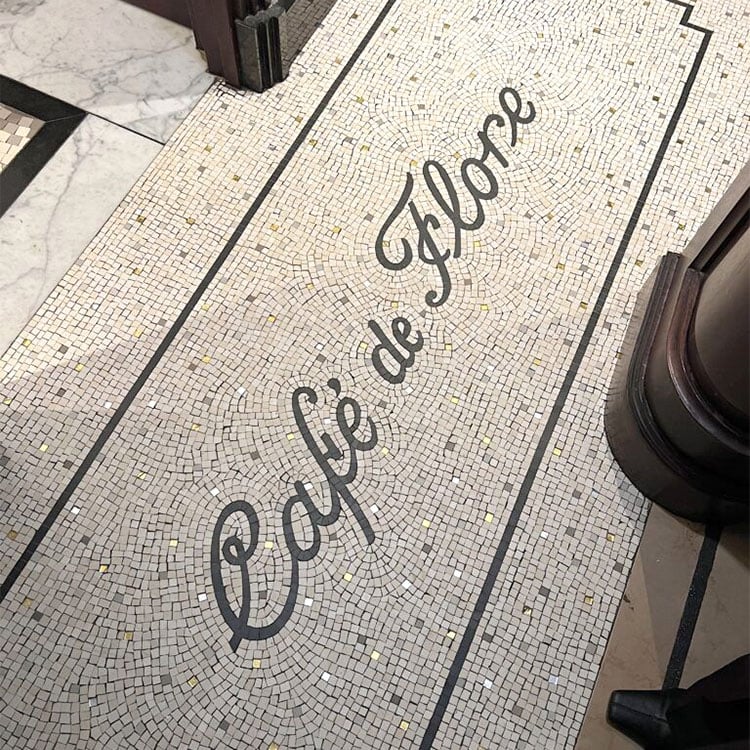
Color is essential to brand recognition.
A company logo may use a particular shade of blue, red, green, or gold. Translating these colors into natural stone or ceramic requires careful material selection.
Natural marble and other stones have inherent color variations. Two pieces of the same stone may have slightly different shades or veining.
These characteristics contribute to the natural appearance of the finished mosaic, but they also mean that an exact match to a digital color code cannot always be guaranteed.
Ceramic mosaic offers other color possibilities, although the available shades depend on the selected ceramic material.
When planning a custom logo, it is helpful to distinguish between colors that are essential to brand recognition and colors that can accommodate minor variations.
For example, a logo featuring a dark symbol against a cream background may be adapted using contrasting stone colors. A design that relies on several very specific, closely related shades may require additional material evaluation.
Color selection should also consider the grout joints, surrounding floor or wall materials, and lighting conditions.
A mosaic viewed under warm interior lighting may appear different from the same design under natural daylight.
 |
 |
Once the design, material selection, colors, and production details have been agreed upon, the logo can be formed using individual mosaic pieces.
The pieces are manually arranged to create the required letters, curves, borders, and graphic shapes.
Some pieces may be trimmed by hand to better follow the outline of the design.
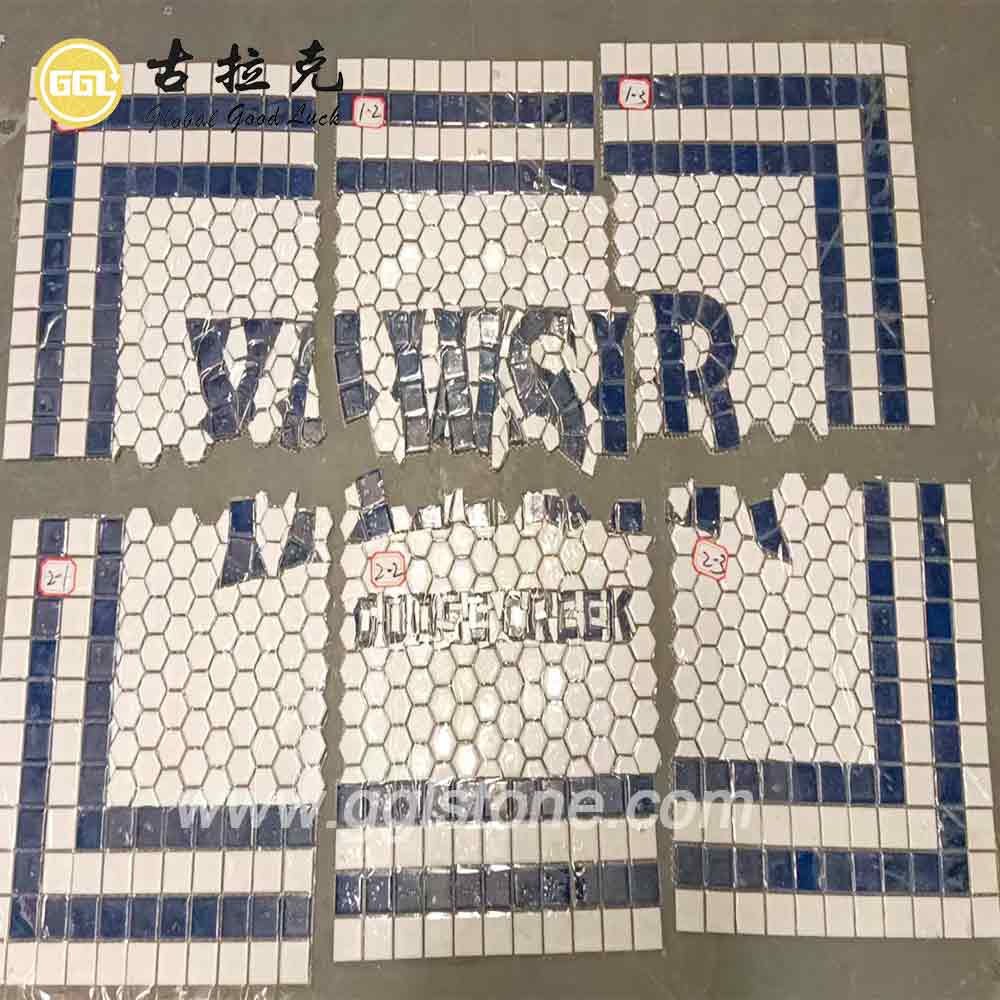
The mosaic is then secured to a mesh backing, which holds the individual pieces in their intended positions.
For larger designs, the finished mosaic may be supplied in multiple mesh-backed sections to make transportation, handling, and installation more manageable.
The installation arrangement should be planned according to the overall design, substrate, and site requirements.
 |
 |
A custom mosaic logo can be designed for a wide range of architectural and interior applications.
The best solution depends on where the artwork will be installed and how people will interact with it.
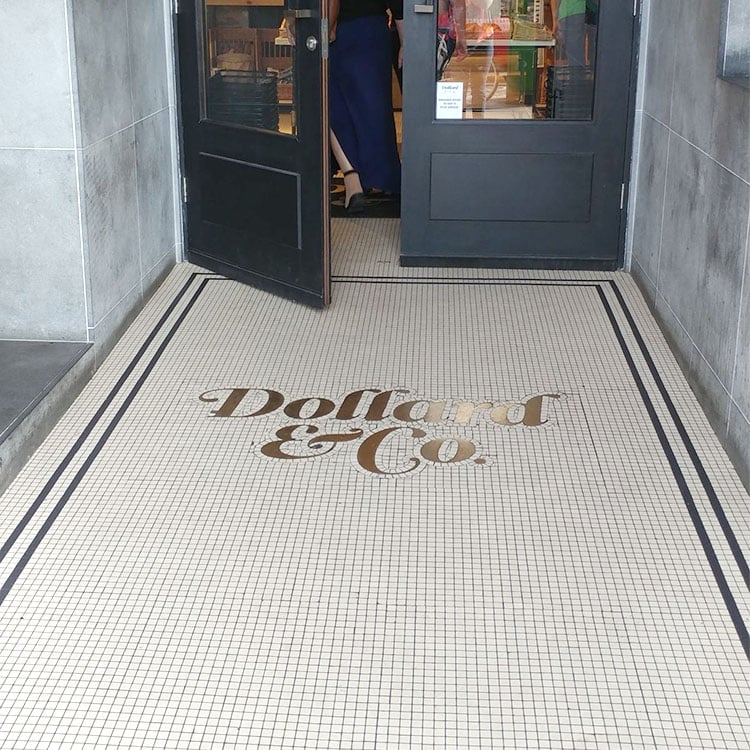
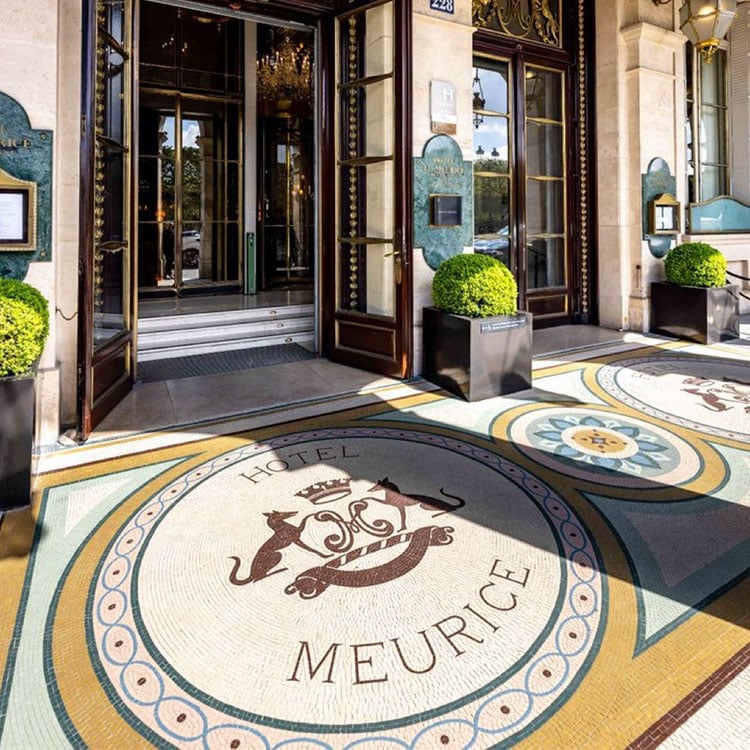
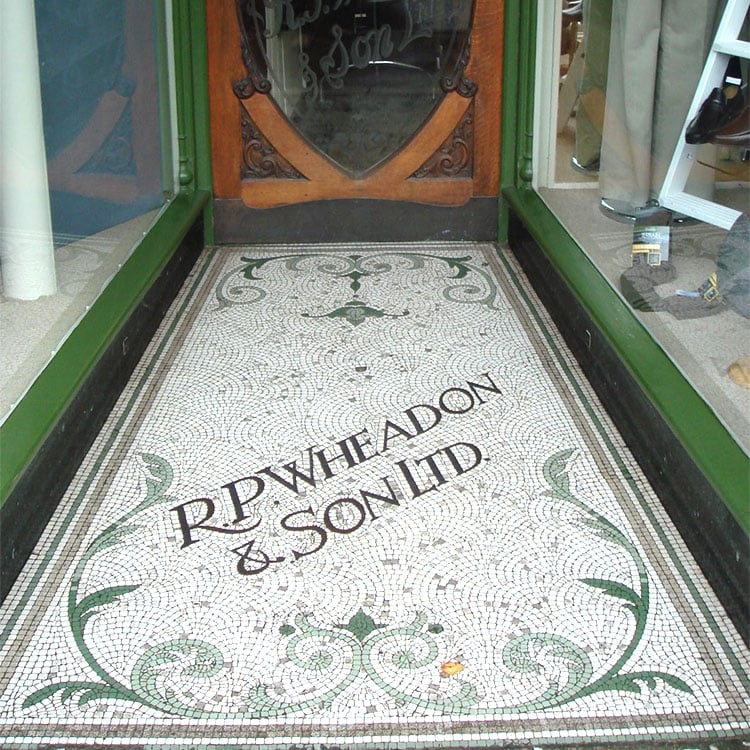
A custom mosaic floor logo can create a recognizable design feature at the entrance to a hotel, restaurant, boutique, or commercial building.
For projects with natural stone flooring, a marble logo mosaic can be coordinated with the surrounding tiles to create a consistent visual composition.
Circular emblems, company initials, decorative lettering, and bordered logo panels are all possible design directions.
Because entrance floors may experience regular foot traffic, material durability, appropriate surface finish, slip resistance, and installation conditions require particular attention.
A decorative mosaic should never be selected for a commercial floor based on appearance alone.
Reception walls provide another opportunity to incorporate brand identity into interior design.
A company logo can be created using contrasting stone or ceramic mosaic pieces, while optional metal lettering can make the brand name more prominent.
Feature walls generally allow greater freedom in selecting decorative finishes because they are not exposed to the same foot traffic as floors.
Lighting also plays an important role. Directional lighting may highlight the texture of the individual pieces and the reflective qualities of metal details.
 |
 |
For hospitality and retail projects, logo mosaics can contribute to a distinctive interior atmosphere.
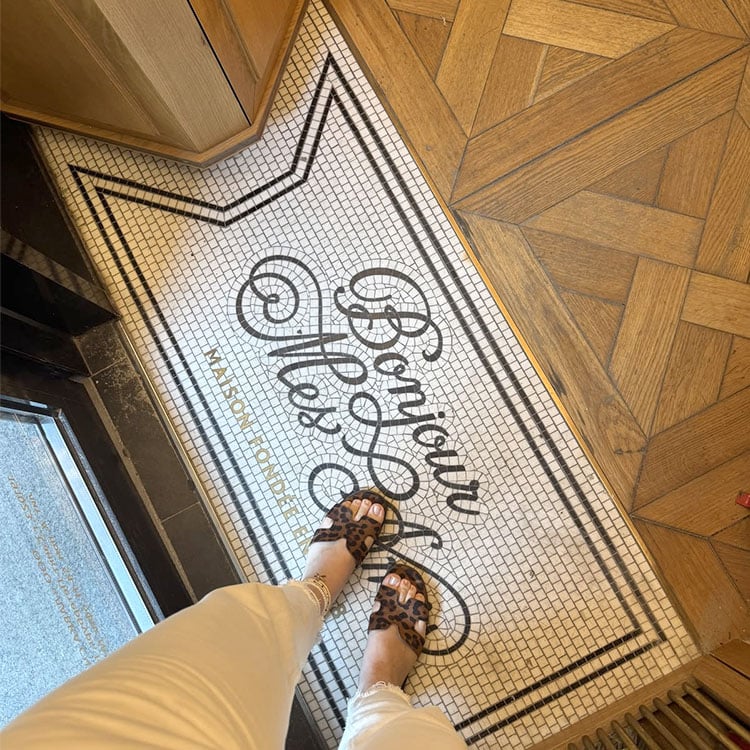
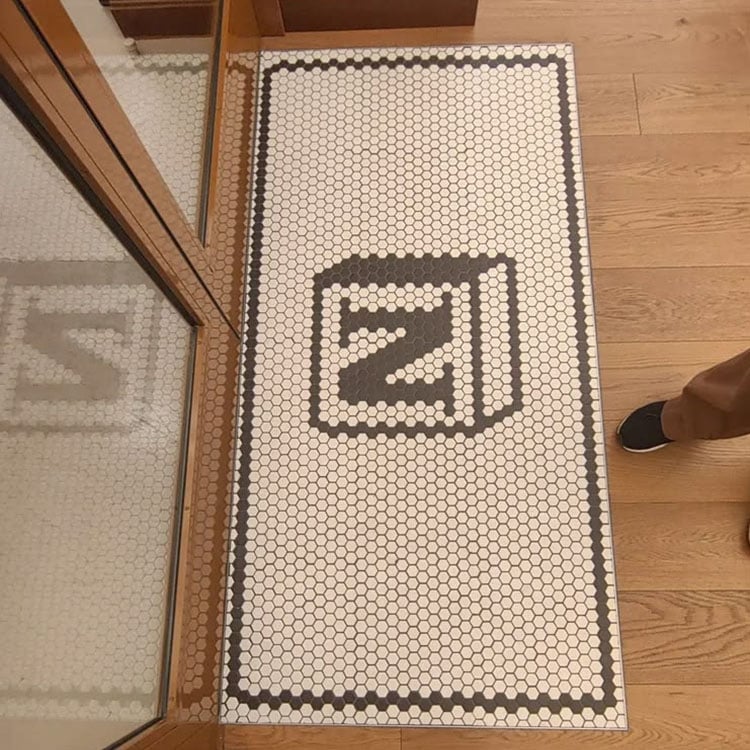
A restaurant may incorporate its name into a decorative entrance panel. A hotel may use a stone mosaic emblem in the lobby. A boutique might select a ceramic logo mosaic to coordinate with its interior color scheme.
These applications are especially effective when the logo design supports the architectural style rather than competing with it.
Custom mosaics are not limited to commercial logos.
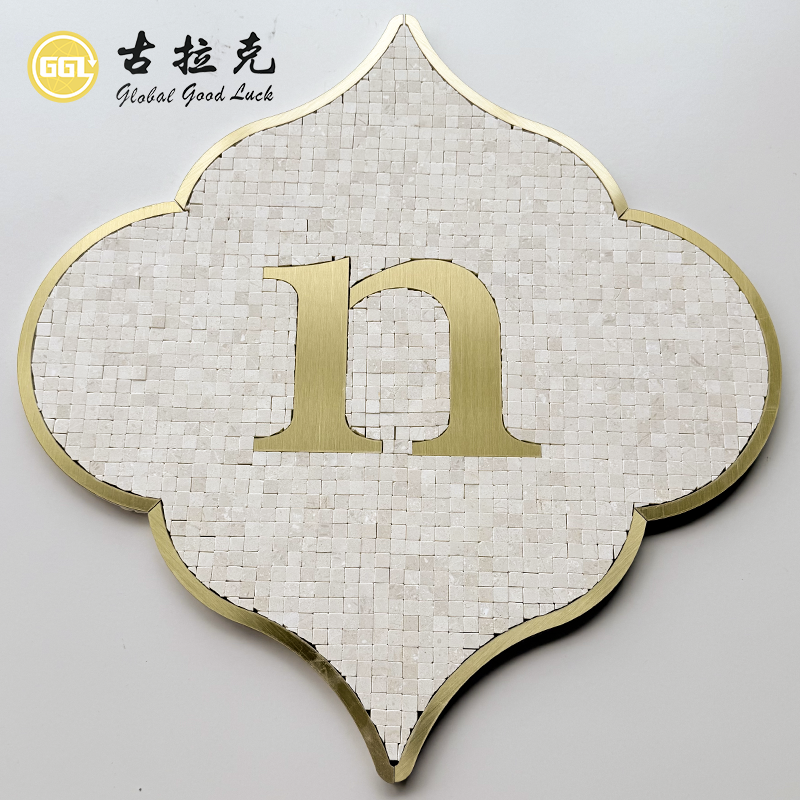
Initials, family names, house numbers, and personal symbols can also be created from small stone or ceramic mosaic pieces.
These designs may be used in residential entrance areas, decorative walls, and other suitable locations.
The same principles apply: suitable proportions, recognizable lettering, carefully chosen colors, and materials appropriate for the installation environment.
 |
 |
A custom logo mosaic does not necessarily require a complete technical drawing at the initial inquiry stage.
However, providing clear project information will make it easier to evaluate the design and identify suitable material options.
A vector file such as AI, EPS, or PDF is helpful when available. A clear PNG, JPG, or reference photograph can also be used for an initial discussion.
The important point is that the lettering, proportions, colors, and decorative details should be easy to identify.
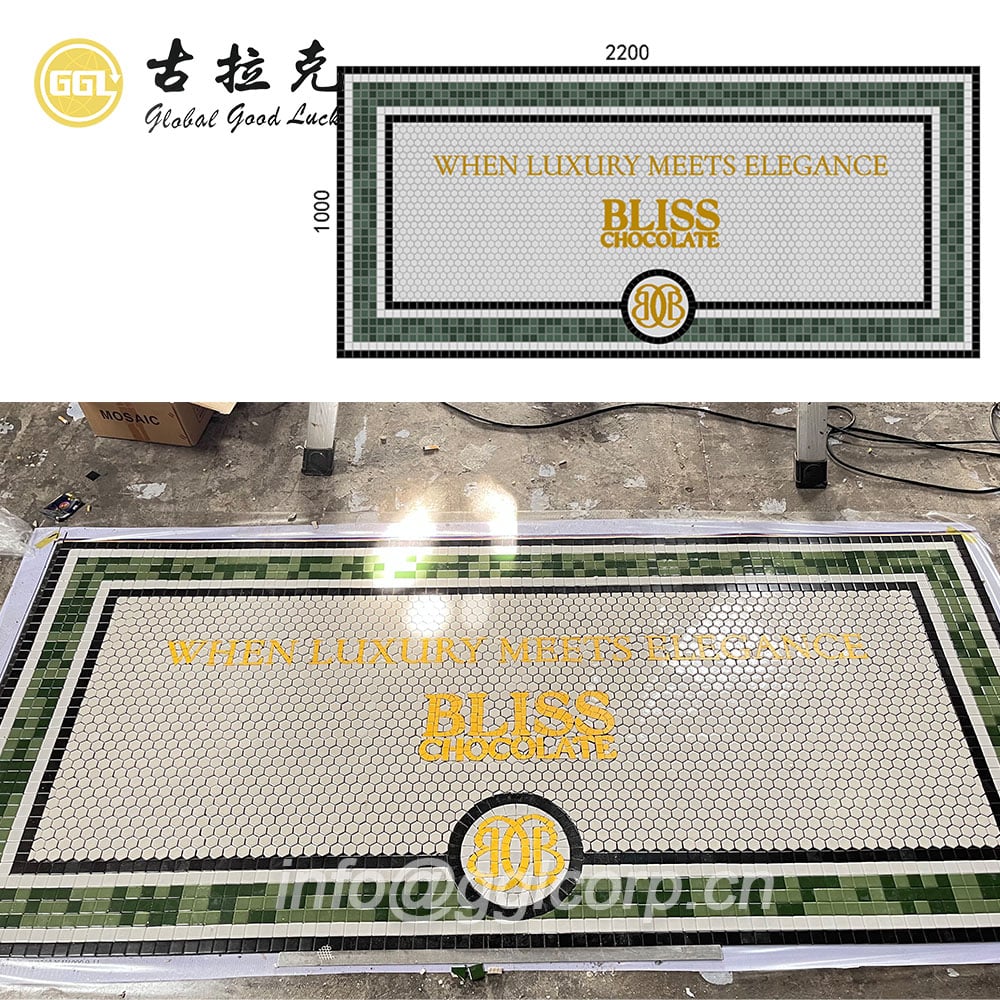
Provide the approximate width and height of the finished mosaic, or the dimensions of the available floor or wall area.
The final size will influence how the lettering and smallest design details can be formed.
Specify whether the artwork is intended for a wall, residential floor, commercial entrance, reception area, or another application.
The installation location helps determine which materials and finishes should be considered.
Let us know whether you prefer natural stone, ceramic mosaic, or a combination with metal lettering.
Reference images are useful for communicating the intended color scheme and visual style.
If exact brand colors are important, they should be identified early so that the feasibility of matching them with available materials can be discussed.
 |
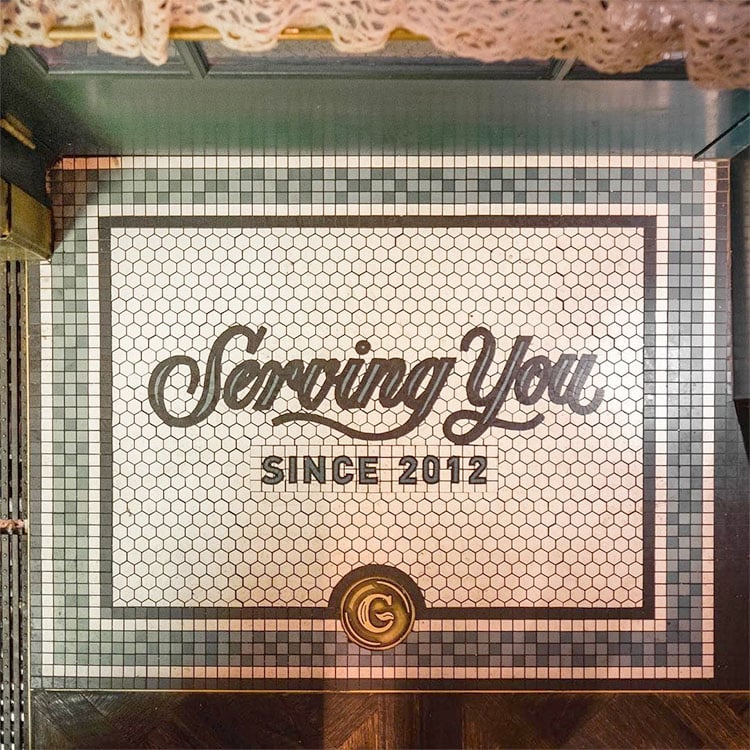 |
This is particularly important for logos containing small text or complicated fonts.
The design should be reviewed to determine whether the letters can be reproduced clearly using mosaic pieces or whether an alternative treatment would be more appropriate.
For commercial projects, provide the approximate number of pieces, required coverage, and expected project schedule.
These details help with production planning and quotation discussions.
The most useful starting information is your logo, approximate finished size, and installation location.
With these details, the material options and production feasibility can be discussed before moving forward.
 |
 |
Many logos can be adapted into mosaics, but not every digital detail can be reproduced exactly with individual pieces.
Designs featuring extremely fine lines, small letters, or complex color gradients may require simplification or changes to the overall size.
The design should be assessed before production to determine what is practical.
For mesh-backed custom logo mosaics, the individual stone or ceramic pieces are assembled and secured to a backing mesh.
This helps maintain the arrangement of the pattern during handling and installation.
Larger designs may be divided into sections. Suitable adhesives, substrates, and installation methods must be determined for the particular project.
 |
 |
Both materials can be suitable.
Natural stone is often selected for its distinctive texture, natural appearance, and compatibility with marble interiors.
Ceramic may be preferable for some designs that require particular color combinations.
The choice should depend on the logo, aesthetic preferences, and installation requirements rather than appearance alone.
This depends on the overall logo size, the font, the stroke width, and the mosaic piece size.
Some designs may require slightly larger letters, wider spacing, stronger color contrast, or simplified details.
Brass or stainless steel lettering may be another option for certain projects.
Yes, provided the selected materials, finish, substrate, and installation system are suitable for the intended floor application.
For commercial entrances and other areas with foot traffic, slip resistance, wear performance, and maintenance requirements should be evaluated.
Not every decorative mosaic or metallic detail is appropriate for every floor environment.
Typically, the starting information includes the logo design, approximate dimensions, intended application, material preferences, and required quantity.
If you have specific color requirements or a project deadline, these details are also helpful.
 |
 |
A custom logo mosaic is more than a decorative reproduction of a brand image.
It is the result of translating a digital design into physical materials, where the clarity of every letter, the placement of individual mosaic pieces, and the relationship between colors all contribute to the finished appearance.
From elegant natural stone entrance logos to colorful ceramic compositions and mosaic designs incorporating metal lettering, each project requires its own balance of visual detail and practical production considerations.
At GGL, we work with custom stone and ceramic mosaic designs, helping customers explore suitable material combinations and production possibilities for their individual projects.
Whether you are planning a hotel entrance, restaurant interior, branded reception wall, retail space, or personalized residential feature, the starting point is simple.
Share your logo, approximate dimensions, and intended installation location with us.
Our team can discuss the design's suitability for mosaic production, available material choices, lettering clarity, and customization requirements.
Share your logo, approximate size and installation location with our team.
Contact Us About Your Project →


