 ×
×
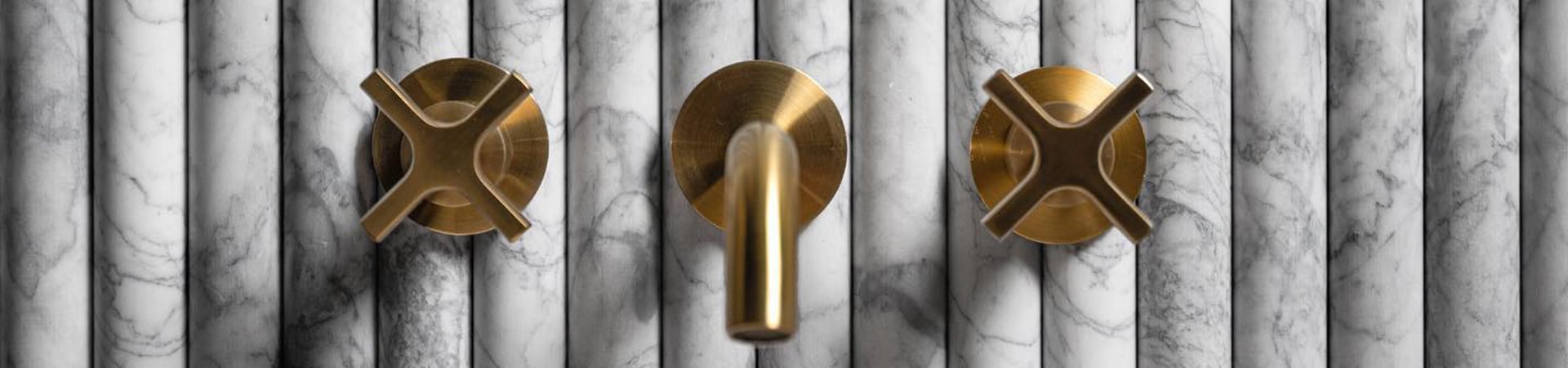
ARCHITECTURE & NATURAL STONE
Which Natural Stone Should You Choose?
A practical guide to appearance, performance, surface finishes and applications in contemporary architecture.
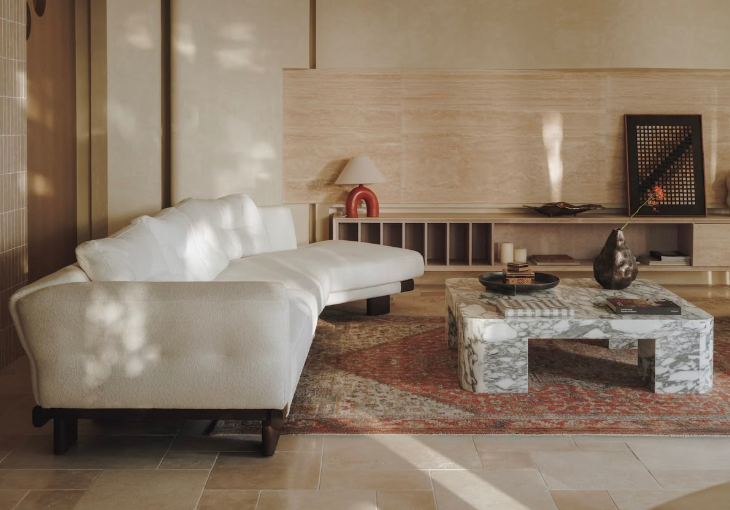
ARCHITECTURAL INSPIRATION — NATURAL MATERIALS AND TIMELESS DESIGN
Natural stone has a way of giving architecture a sense of permanence. It can make a contemporary building feel grounded, bring warmth to a minimalist interior, or add character to an outdoor space without relying on elaborate decoration.
Among the many natural stones used in residential and commercial architecture, limestone and travertine remain two particularly versatile choices. Their understated colors work comfortably alongside timber, glass, concrete and metal, while their natural textures offer something that manufactured surfaces rarely reproduce in quite the same way.
At first glance, the two materials can appear remarkably similar. Both are available in soft beige, cream and grey tones. Both can be fabricated into wall cladding, floor tiles, stair treads and architectural details. Both also have a long history in building construction.
Yet choosing between limestone and travertine involves more than deciding which surface looks better. Their geological formation, natural structure, surface characteristics and maintenance requirements can influence how they perform in different environments.
01 / UNDERSTANDING THE MATERIALS
The distinction begins with how the stones are formed.
Limestone is a sedimentary rock composed primarily of calcium carbonate. Many commercially available limestones develop through the accumulation and consolidation of marine sediments, including shells and other calcium-rich materials. Over geological time, these deposits form rock with a wide variety of colors, densities, fossils and textures.
Travertine is actually a particular type of limestone. Unlike many marine limestones, it forms through the precipitation of calcium carbonate from mineral-rich water, commonly associated with springs.
This process often creates a layered structure with characteristic pores, cavities and elongated openings. These natural features are an important part of travertine's appearance.
Consequently, while travertine belongs to the limestone family, the two materials are usually treated as distinct commercial stone categories. Neither is inherently better; the appropriate choice depends on the design, the individual stone variety and the conditions in which it will be used.
MATERIAL CHARACTER & VISUAL LANGUAGE
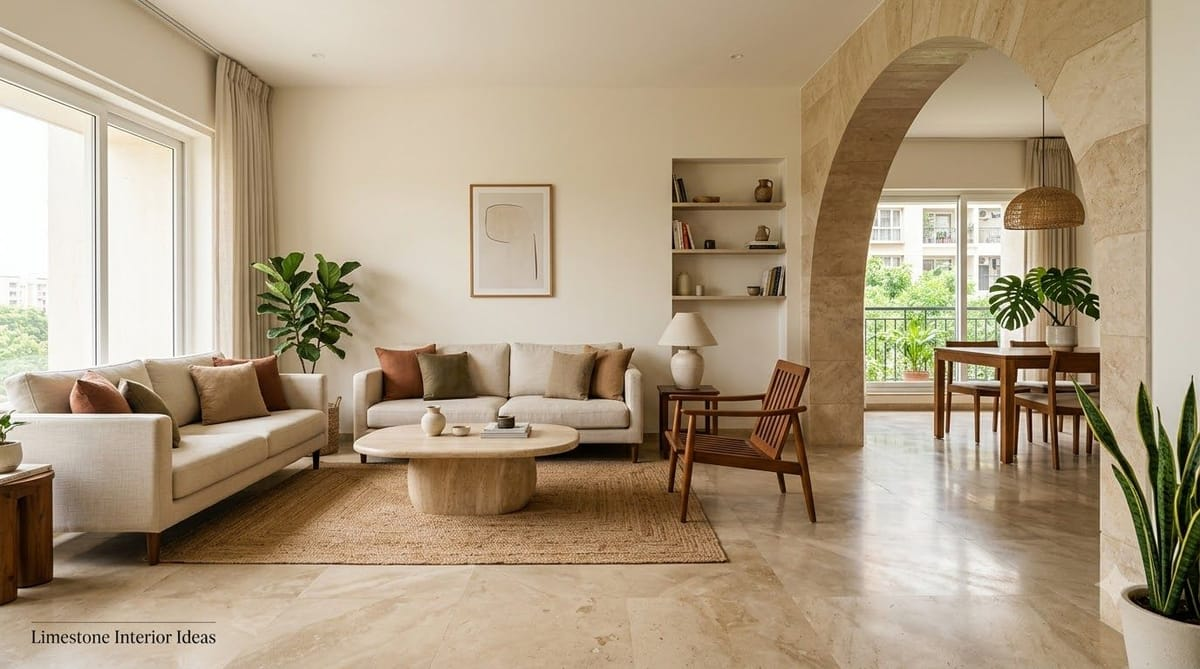 LimestoneSubtle variation, calm surfaces and architectural restraint. |
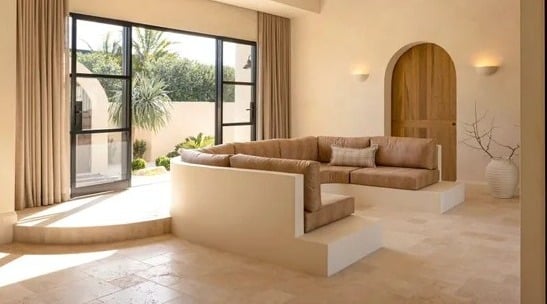 TravertineLayered movement, organic texture and natural warmth. |
02 / DESIGN & AESTHETICS
The visual difference between limestone and travertine becomes particularly noticeable when the materials are installed across large surfaces.
Many architectural limestones have a relatively quiet appearance. Their backgrounds may range from pale ivory and warm beige to light grey, taupe and deeper earth tones. Depending on the quarry and geological formation, the surface can contain delicate fossils, cloud-like variations or fine natural markings.
This makes limestone especially suitable for projects where the architecture itself should remain the main focus. A contemporary residence with limestone exterior cladding, for example, can achieve a unified appearance without visually competing with large windows, landscaped gardens or strong structural lines.
Limestone also works beautifully in minimalist interiors. Large-format limestone floor tiles can establish a calm foundation, while matching wall cladding creates continuity between adjoining rooms.
However, limestone should not be mistaken for a completely uniform material. Natural variations, fossil inclusions and differences between quarry batches are part of its character.
Travertine generally expresses its natural formation more visibly. Its layered patterns and characteristic cavities create a surface that feels organic, tactile and architectural.
Vein-cut travertine reveals more continuous, linear layers. This pattern is particularly effective on feature walls, reception counters and contemporary wall cladding.
Cross-cut travertine exposes a more irregular, cloud-like arrangement of natural markings. It tends to create a softer and less directional appearance, which can work well for expansive flooring and interior spaces.
The effect changes further depending on whether the stone's natural cavities are left open or filled during processing. For architects interested in texture and material expression, travertine offers considerable creative flexibility.
"The right natural stone does not simply decorate a space. It becomes part of the architectural language."
03 / MATERIAL PERFORMANCE
One of the most common questions from building professionals is whether limestone or travertine is more durable. There is no reliable answer based solely on the stone's commercial name.
Both materials include varieties with different densities, absorption rates, strengths and wear characteristics. Some limestone selections are dense and compact, while others are relatively porous. Travertine also varies significantly according to its geological structure and processing.
Water absorption deserves careful attention when natural stone is specified for exterior paving, wet areas or projects exposed to repeated moisture. A stone with higher absorption may require additional consideration regarding staining, moisture movement and weather exposure.
However, visible surface pores should not be used as the only indication of a stone's water absorption or overall suitability. Travertine can contain natural cavities that are filled during manufacturing, while certain limestones with smoother-looking surfaces may still exhibit significant water absorption.
Stone thickness, panel dimensions, support conditions and installation methods all affect performance. A limestone panel suitable for interior decorative cladding may not automatically be appropriate for an exposed building facade.
Relevant performance considerations may include compressive strength, flexural strength, abrasion resistance, absorption and freeze-thaw durability. The final specification should reflect the individual stone, local building requirements and the intended application.
04 / EXTERIOR ARCHITECTURE
Exterior stone cladding is one of the most visually significant applications for both materials. Natural stone facades can bring texture, depth and longevity to residential buildings, hotels, offices and public architecture.
Limestone is frequently associated with refined architectural facades. Light beige and cream limestone can soften the appearance of a modern building, while grey limestone may complement contemporary steel and glass structures.
Depending on the selected material and approved fixing system, limestone can be fabricated into rectangular cladding panels, architectural moldings, window surrounds and other custom elements.
Travertine provides a different architectural expression. Its linear markings can emphasize the horizontal or vertical proportions of a facade. Vein-cut panels, in particular, can create a strong sense of rhythm when their patterns are carefully arranged.
Exterior use requires particular attention to the stone's natural cavities, filling materials, moisture exposure and installation design.
For either material, exterior cladding should be assessed as a complete system, including the stone panels, anchors, substrate, joints, movement allowances and drainage details.
05 / INTERIOR APPLICATIONS
Both limestone and travertine can create beautiful interior floors, especially in spaces where natural color variation is desired. The choice often depends on the atmosphere of the building and the expected level of use.
Limestone flooring is particularly appealing in contemporary residential interiors. Large limestone tiles can create a cohesive surface across living rooms, hallways and dining spaces. A honed finish gives the floor a soft, low-sheen appearance that works well with natural wood and understated furniture.
Travertine flooring offers a warmer and often more textured impression. Filled and honed travertine is a familiar option for residential flooring, hotel interiors and other suitable applications.
For commercial floors, the selection process should also consider expected pedestrian traffic, cleaning procedures, abrasion resistance and the likelihood of surface wear.
Where possible, project teams should review larger samples under lighting conditions similar to those of the completed building.
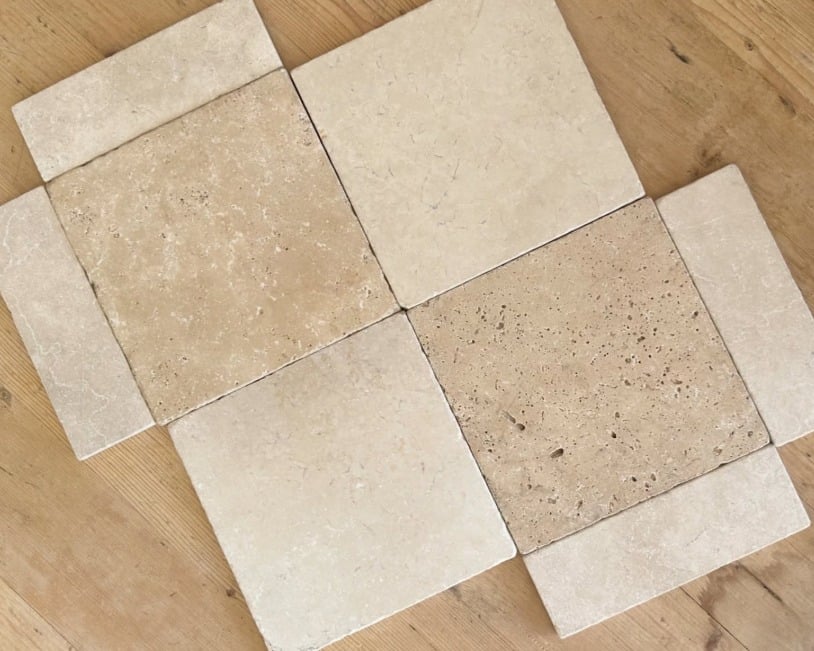
INTERIOR DESIGN / THE QUIET BEAUTY OF NATURAL SURFACES
06 / OUTDOOR LIVING
Outdoor flooring introduces a different set of challenges. Unlike interior stone surfaces, exterior paving may be exposed to direct sunlight, rainfall, temperature variation, cleaning chemicals and frequent moisture.
In pool areas, the requirements become even more specific. Barefoot comfort, slip resistance, drainage and resistance to the intended water chemistry all need to be considered.
Selected limestone varieties can be used for terraces, garden pathways, patios and outdoor living areas. Light-colored limestone is often attractive for projects seeking a soft, natural appearance, particularly around modern villas and landscaped courtyards.
A textured finish may be specified where additional traction is required. However, not every limestone is suitable for outdoor paving, particularly in areas with repeated freezing and thawing.
Travertine is frequently considered for pool decks and outdoor leisure spaces because of its natural appearance and variety of available finishes. Light beige travertine can visually connect a pool terrace with surrounding landscaping and architecture.
Tumbled, brushed and other textured finishes may be considered depending on the project. Nevertheless, no stone should be described as universally slip-resistant or cool underfoot.
For a pool deck, it is advisable to evaluate wet and barefoot slip resistance alongside surface temperature, drainage and maintenance requirements.
ARCHITECT'S NOTE
For exterior paving and wet areas, stone selection should be based on documented performance and actual site conditions, not color or visual texture alone.
07 / SURFACE FINISHES
The surface finish can have almost as much influence on the final appearance as the choice between limestone and travertine. Architects should consider how it interacts with lighting, moisture and daily use.
Honed stone has a smooth surface with little or no reflective sheen. It is widely used in contemporary interiors because it emphasizes the natural color and texture of the material without producing a glossy appearance.
Brushing produces a softer, slightly textured surface. On travertine, it can emphasize natural variations and create a more tactile appearance. Brushed limestone may also suit spaces where a relaxed finish is desired.
Polishing produces a reflective surface that can make the color and natural markings more pronounced. Although polished stone can look elegant on decorative walls, its suitability for flooring requires careful consideration, particularly in wet areas.
Tumbling creates softened edges and a weathered appearance, commonly associated with traditional travertine paving. Other finishes, including sandblasted and mechanically textured surfaces, may be available depending on the selected stone.
08 / LONG-TERM CARE
Neither limestone nor travertine is maintenance-free. Because both are primarily calcium-carbonate-based stones, they are sensitive to acids. Acidic cleaning products can etch the surface, leaving dull marks or changes in texture.
Routine maintenance should therefore use cleaning products suitable for natural calcium-carbonate stone. Regular removal of dust and abrasive particles helps protect floors from unnecessary wear.
Sealing may be appropriate depending on the stone's absorption characteristics and intended use. A suitable impregnating sealer can help reduce the penetration of certain contaminants, but it does not make stone completely stain-proof or protect against acid etching.
Travertine may require additional attention to filled cavities, particularly in high-traffic areas where existing fillings can wear or local voids may become exposed.
For hotels and commercial buildings, establishing realistic cleaning and maintenance requirements before installation is particularly important.
09 / PROJECT BUDGETING
Neither material has a fixed price advantage. The price of natural stone is influenced by quarry origin, material grade, block availability, color selection, fabrication requirements and order quantity.
A widely available commercial travertine may be economical for a large flooring project, while a specially selected limestone with strict color requirements and extensive custom fabrication can cost considerably more. The opposite can also be true.
For architectural projects, purchasing teams should look beyond the initial price per square meter. A realistic comparison should include thickness, dimensions, surface finishing, edge treatments, cutting waste, packaging, freight and installation requirements.
Rather than asking which material is cheaper in general, it is more useful to compare two materials against the same architectural requirements.
AT A GLANCE
| FEATURE | LIMESTONE | TRAVERTINE |
|---|---|---|
| Classification | Sedimentary carbonate rock | A type of limestone |
| Appearance | Subtle, sometimes fossil-rich | Layered, linear or cloudy |
| Natural Cavities | Varies by stone | Often visibly cellular |
| Common Colors | Ivory, beige, grey, brown | Cream, beige, silver, walnut |
| Interior Use | Walls, floors, stairs | Walls, floors, stairs |
| Exterior Use | Project-specific assessment | Project-specific assessment |
| Custom Fabrication | Available | Available |
Note: Actual stone performance depends on the individual material, finish, installation and exposure conditions.
10 / BESPOKE STONE SOLUTIONS
In many building projects, standard stone dimensions are not enough. Architects may require specific panel proportions, coordinated wall and floor finishes, non-standard stair components or detailed stone pieces designed around the building's geometry.
This is where custom fabrication becomes particularly valuable.
At GOOD LUCK STONE, we provide natural stone supply and custom fabrication services for residential, commercial and hospitality projects.
Our limestone and travertine solutions can be developed around project drawings, design specifications and material preferences, with options depending on the selected stone and manufacturing requirements.
These may include cut-to-size limestone and travertine tiles, large-format wall panels, exterior cladding pieces, stair treads, risers, coping stones, skirting, window sills and other architectural components.
Surface finishes, thicknesses, edge profiles and layout requirements can also be discussed during the specification process.
For architects and project buyers, early coordination can help identify practical production considerations before the final installation drawings are completed. Our aim is to supply stone products that fit both the design intent and the construction requirements.
|
01 Material SelectionStone varieties, colors, natural patterns and project requirements. |
02 Custom FabricationCut-to-size pieces, finishes, thicknesses and architectural details. |
03 Project SupplyFabrication planning, packaging and project-based stone sourcing. |
11 / SPECIFICATION CHECKLIST
When limestone and travertine are both being considered, the selection process should begin with the building rather than the stone sample.
A quiet, minimalist residence may benefit from the restrained appearance of limestone. A hospitality interior seeking warmth and material depth may be better served by vein-cut travertine.
Before finalizing a natural stone specification, review the following:
Design intent: Color, texture, pattern direction and relationship with other materials.
Application: Wall cladding, flooring, paving, stairs or decorative components.
Technical performance: Absorption, strength, wear and weathering characteristics.
Surface finish: Visual appearance, cleaning and relevant slip-resistance requirements.
Fabrication: Dimensions, thickness, cutting direction and tolerances.
Project logistics: Material availability, packaging and delivery planning.
Where the application is technically demanding, reviewed samples and relevant test documentation are far more useful than broad claims about which stone is stronger or more durable.
QUESTIONS & ANSWERS
Yes. Travertine is a form of limestone created through the precipitation of calcium carbonate from mineral-rich water. Its characteristic layers and cavities distinguish it from many conventional limestones.
Not necessarily. Suitable varieties of both materials can be used for exterior cladding. The choice should consider climate, panel dimensions, fixing systems and the physical properties of the selected stone.
Yes, appropriately selected travertine can be used for bathroom flooring. The finish, wet slip resistance, filling, waterproofing system and maintenance requirements should be considered.
Maintenance depends on the individual material, surface finish and application. Both stones are sensitive to acids. Travertine with filled cavities may require additional attention over time.
Absolutely. Their related color palettes make them suitable for coordinated architectural schemes, such as limestone flooring paired with textured travertine feature walls.
Yes. Many varieties can be processed into project-specific floor tiles, wall panels, stair components and architectural details. Feasible sizes depend on the selected stone, fabrication method and installation requirements.
FINAL PERSPECTIVE
Limestone and travertine share a common geological family, but they bring different qualities to architecture.
Limestone is often valued for its understated appearance, subtle natural variations and ability to complement contemporary building forms. Travertine is appreciated for its distinctive layers, tactile character and warmth.
Neither material should be selected on appearance alone. The most successful natural stone projects consider how the material looks, how it performs and how it will be fabricated, installed and maintained over time.
Whether the application is a limestone-clad residence, a travertine hotel interior or a custom natural stone flooring project, the right choice comes from balancing architectural intent with practical requirements.
A well-chosen stone does more than finish a building. It becomes part of the architecture itself.
GOOD LUCK STONE
From natural stone selection to custom cut-to-size fabrication, GOOD LUCK STONE helps architects, designers and project buyers explore limestone and travertine solutions tailored to their requirements.
CONTACT US FOR A CONSULTATION →Natural Stone Supply | Custom Fabrication | Architectural Projects


