 ×
×
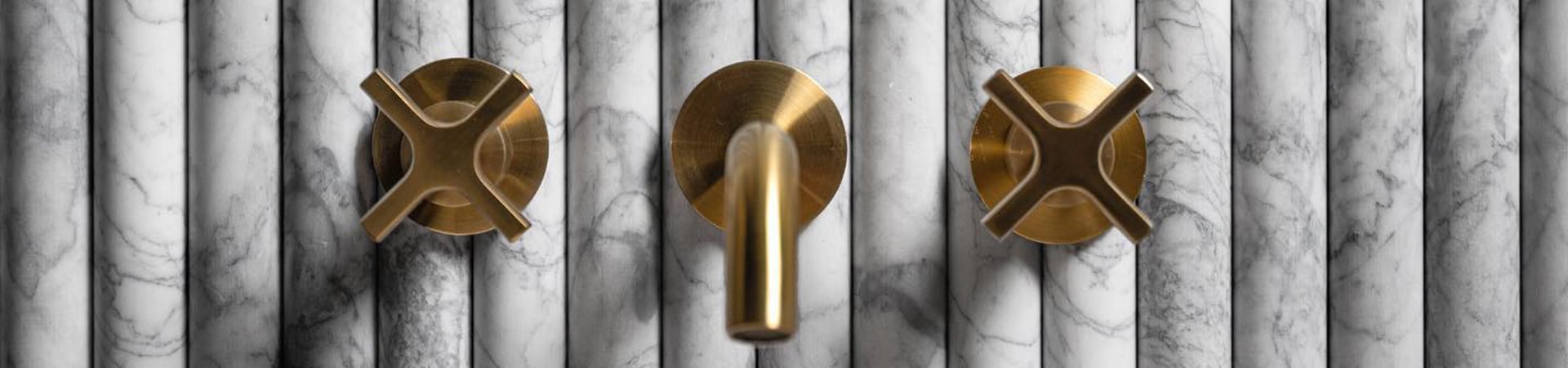
Marble mosaic has a long history in architecture, but it has never really stayed in the past. A simple Carrara hexagon, a black-and-white checker pattern or a traditional herringbone mosaic can still feel completely at home in a modern bathroom, kitchen or hotel today. Natural marble already carries movement, variation and character, so even a familiar pattern rarely looks completely ordinary.
But marble mosaic can go much further than the classics. Change the stone, introduce another color, cut the pieces into a different shape, add brass or mother of pearl, or develop the pattern through waterjet cutting, and the same material begins to take on an entirely different personality.
That is why marble mosaic is no longer simply a small-format alternative to marble tile. For architects, designers and project buyers, it has become a flexible design material — one that can move from simple and understated to highly decorative and completely custom.
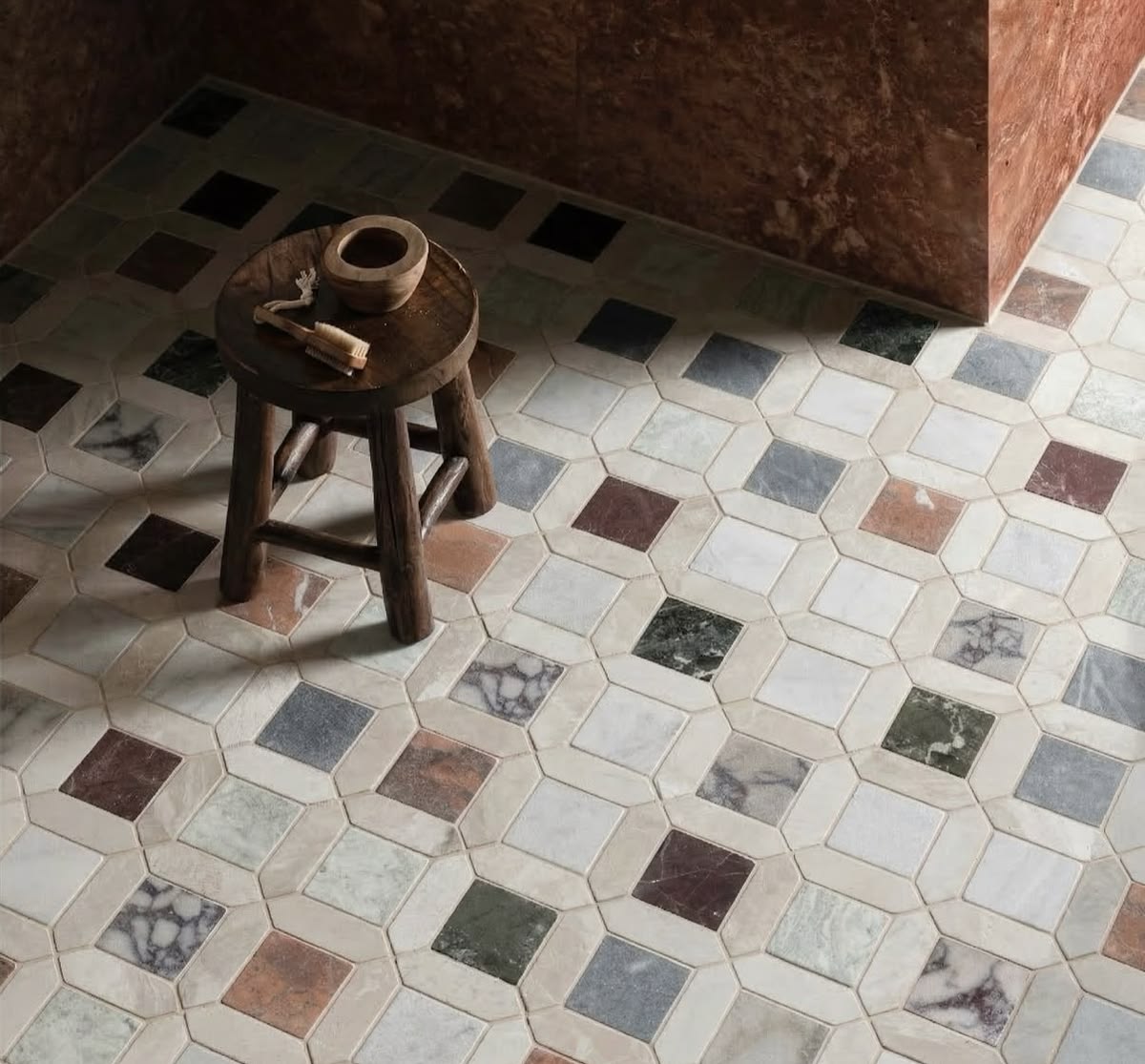
For many projects, classic marble mosaic is still the natural starting point. Herringbone, hexagon, basketweave, diamond and simple square mosaics have remained popular because they are easy to coordinate with other materials and versatile enough to work across different interior styles.
The interesting part is that the same pattern can feel completely different depending on the marble being used. Carrara White creates a softer, more relaxed look with light grey movement. Thassos White makes the same geometry cleaner and brighter. Nero Marquina adds dramatic contrast, while Calacatta Gold introduces warmer veining and a more luxurious character.
So although classic marble mosaic patterns may look simple at first, they are far from fixed. Designers can adjust the stone, chip size, finish and proportion without losing the timeless quality that makes these patterns so easy to use.
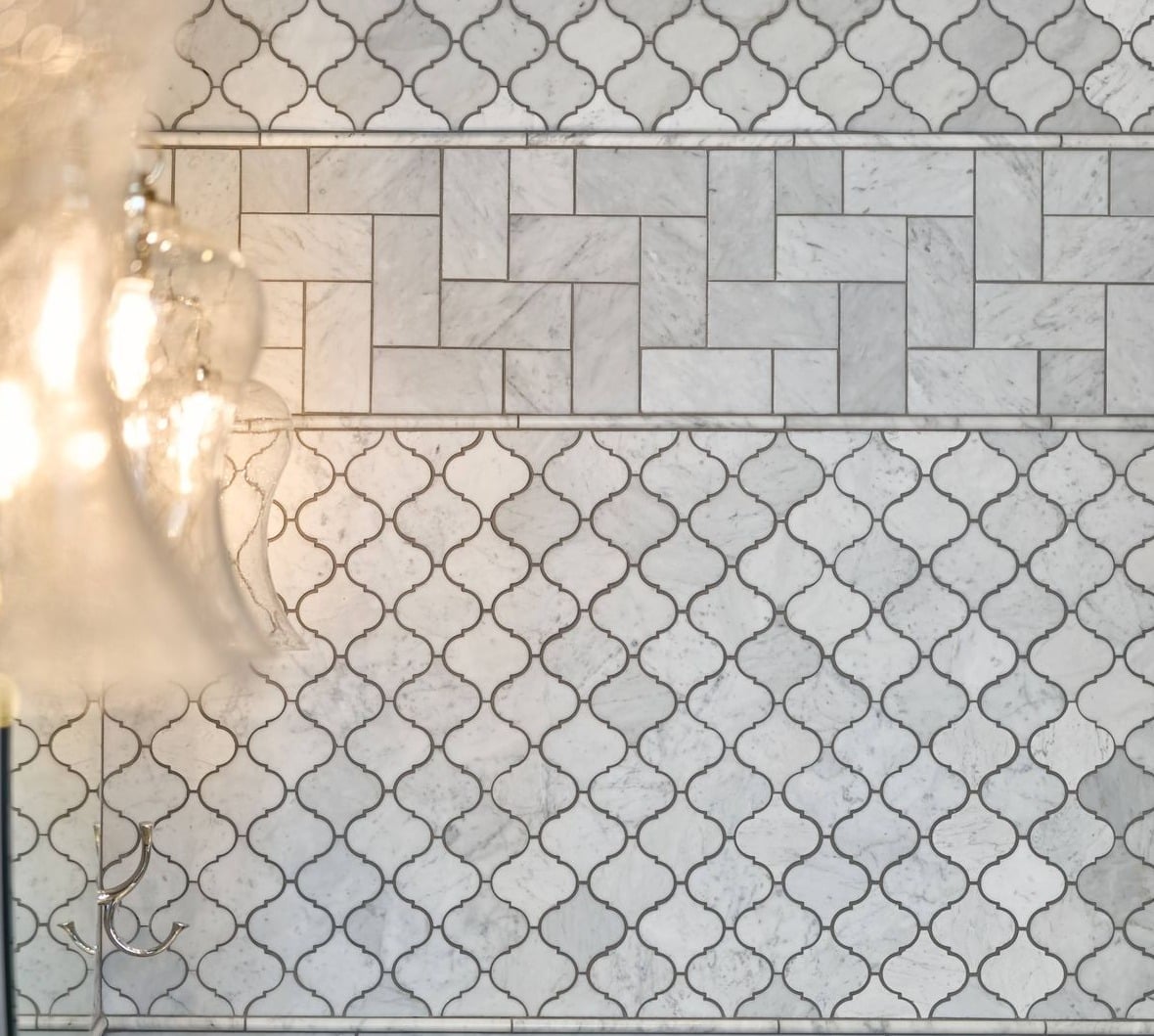
The next step is often not a more complicated pattern, but simply introducing a second material or color. A black-and-white marble mosaic is the most familiar example: contrast makes the geometry clearer, stronger and more graphic.
Yet the possibilities go much further. Carrara can be paired with green marble, Thassos with beige or grey stone, and Calacatta with darker marble to emphasize its warmer veining. Brass, mother of pearl, glass and stainless steel can also be introduced as accents rather than dominant materials.
Marble and brass mosaic is a good example of how a small material change can transform the entire mood of a design. Fine brass lines can outline a shape, separate two areas or introduce a warm highlight between pieces of natural stone without overpowering the marble itself.
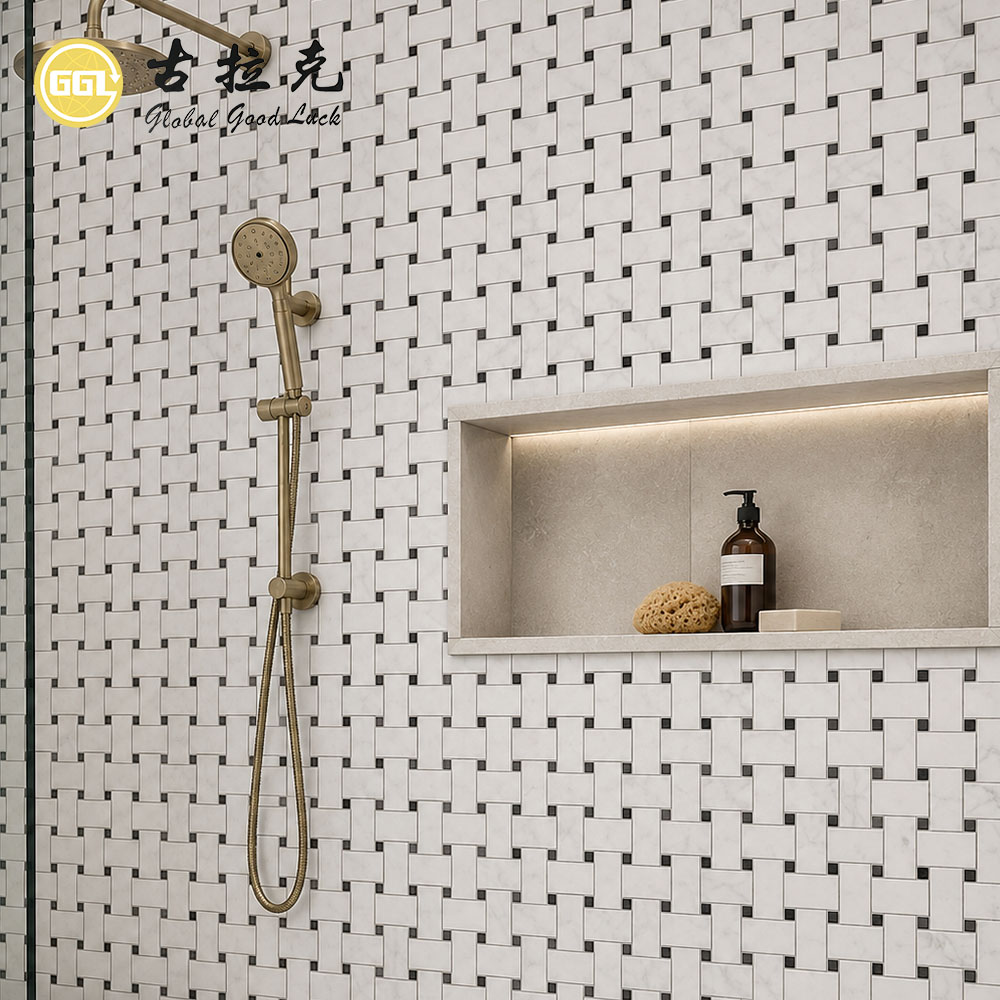
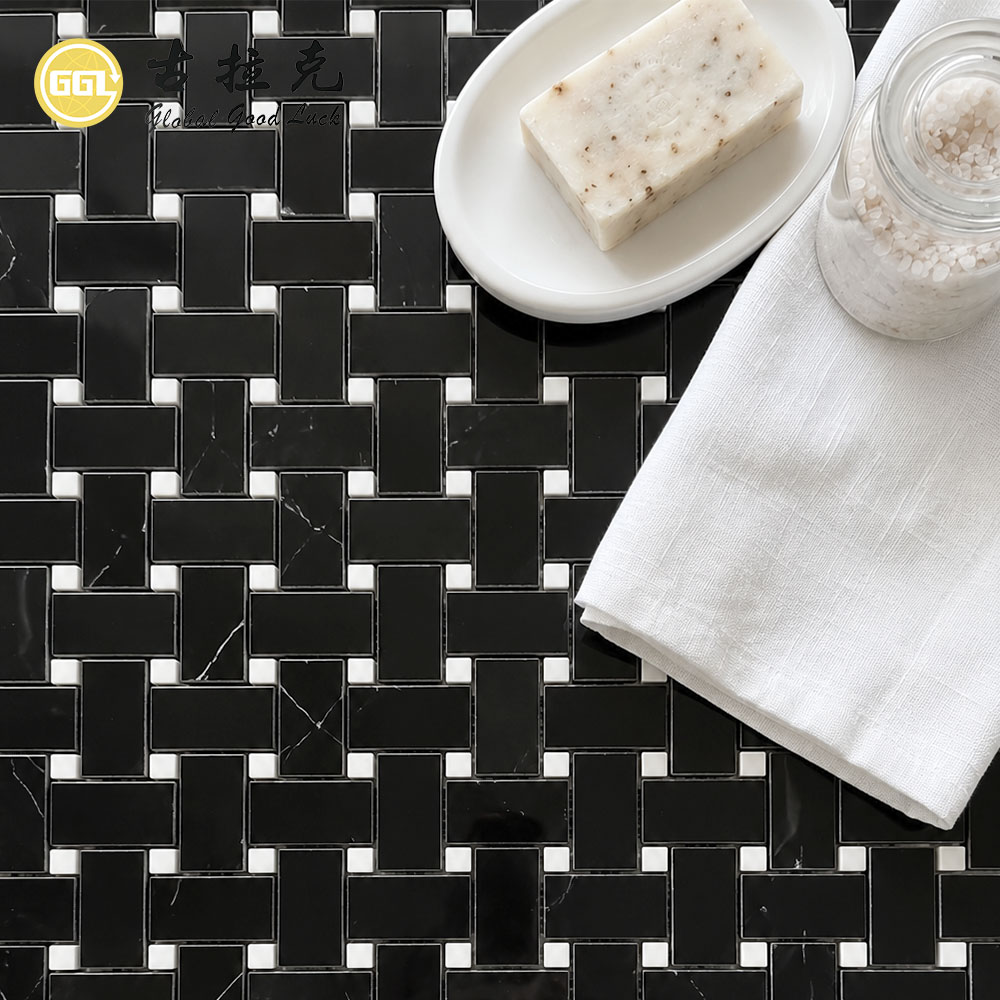
Once a project moves beyond standard squares, rectangles and hexagons, the design possibilities become much broader. One approach is cut-and-assembled mosaic, where different marble pieces are shaped into triangles, diamonds, trapezoids, curves or irregular geometric forms and then carefully assembled into a larger repeating pattern.
This type of design sits between a standard mosaic and a fully artistic waterjet composition. It offers more visual freedom while remaining structured enough for repeat production — a useful option for designers who want something distinctive without turning every surface into a decorative mural.
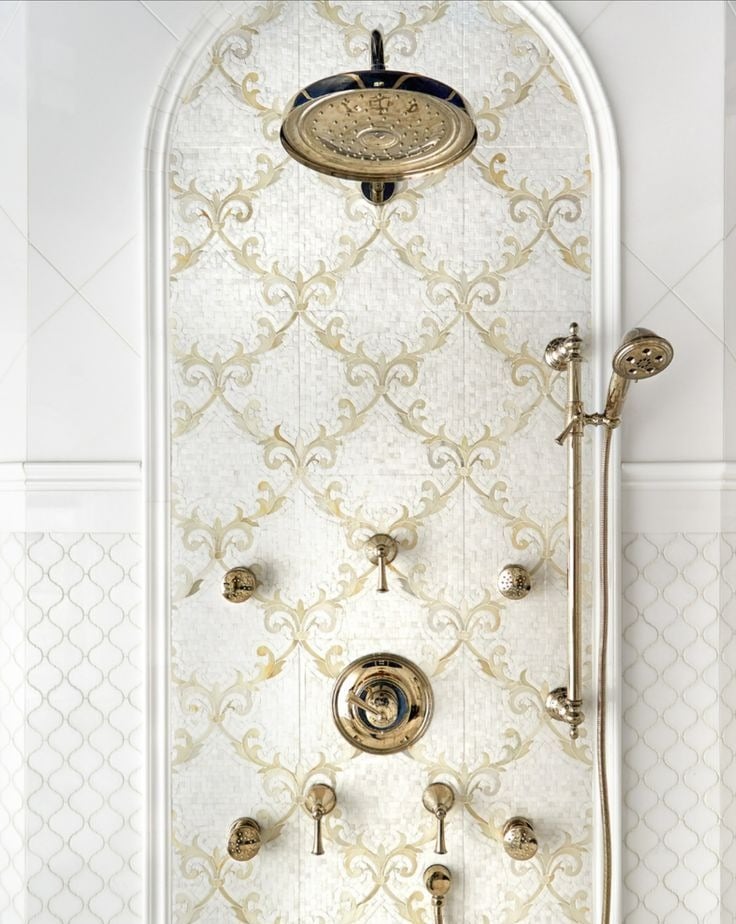
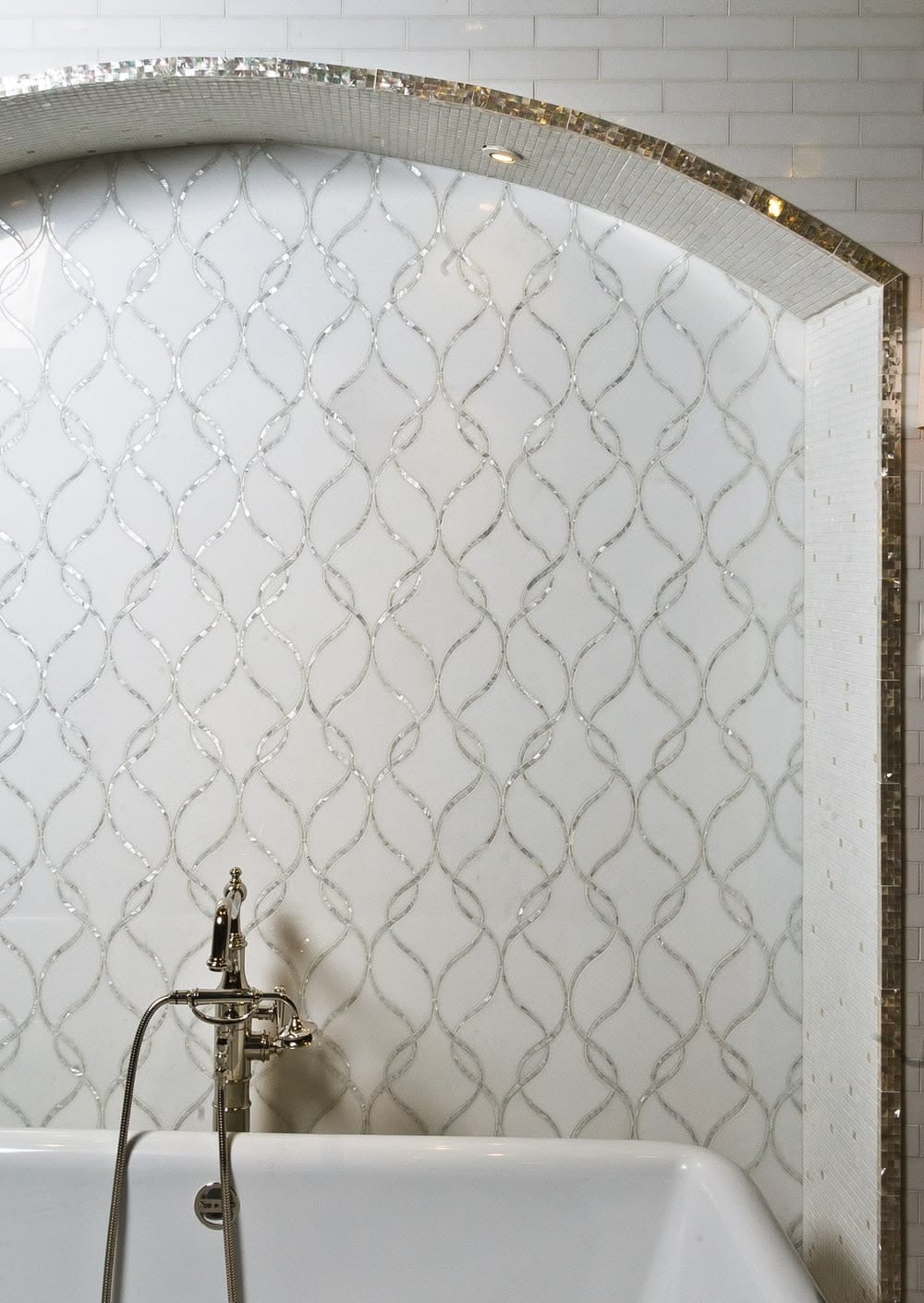
Waterjet cutting takes that freedom further. Marble can be shaped into detailed curves, petals, leaves, flowing lines and complex geometry that would be difficult to achieve with conventional straight cutting. Different stones can then be assigned to individual areas of the design to create depth and contrast.
For example, Carrara White can form the main body of a composition while bright Thassos White is used for floral details. The softer grey tone of Carrara helps the pure white elements stand out, making the flowers appear more dimensional. Brass can also be introduced to create fine outlines or transitions between marble sections.
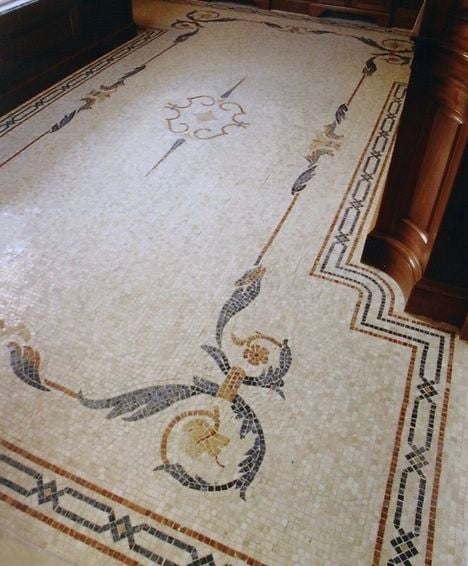
Not every project begins with a finished mosaic design. Sometimes it starts with a reference image, CAD drawing, interior rendering, hand sketch, existing floor pattern or simply an idea that needs to be translated into natural stone.
This is where custom marble mosaic becomes especially useful. The stone can change. The colors can change. Individual chip sizes can be adjusted, and the overall proportion of a pattern can be modified so it fits a specific wall, floor, entrance or decorative panel.
For larger architectural projects, the design may also need to be divided into numbered sections so each part can be produced, packed and installed in the correct order. Customization therefore goes beyond choosing a different color from a catalog — it is about making a design practical for real production and real installation.
Because marble mosaic can range from very simple to highly decorative, its applications are equally varied. In bathrooms, smaller mosaic pieces work well on shower walls, niches, vanity backsplashes and feature areas where a full slab might feel too heavy. In kitchens, herringbone, hexagon and decorative mosaics can add texture while still coordinating naturally with stone countertops and cabinetry.
For villas, hotels and commercial interiors, the possibilities become broader. A custom marble medallion can define an entrance. A waterjet floral pattern can turn a lobby floor into a visual feature. A marble and brass composition can add detail to a reception wall, elevator lobby or luxury retail interior.
Sometimes the best result is subtle. Sometimes the mosaic is the first thing people notice. That flexibility is exactly what makes marble mosaic such an enduring design material.
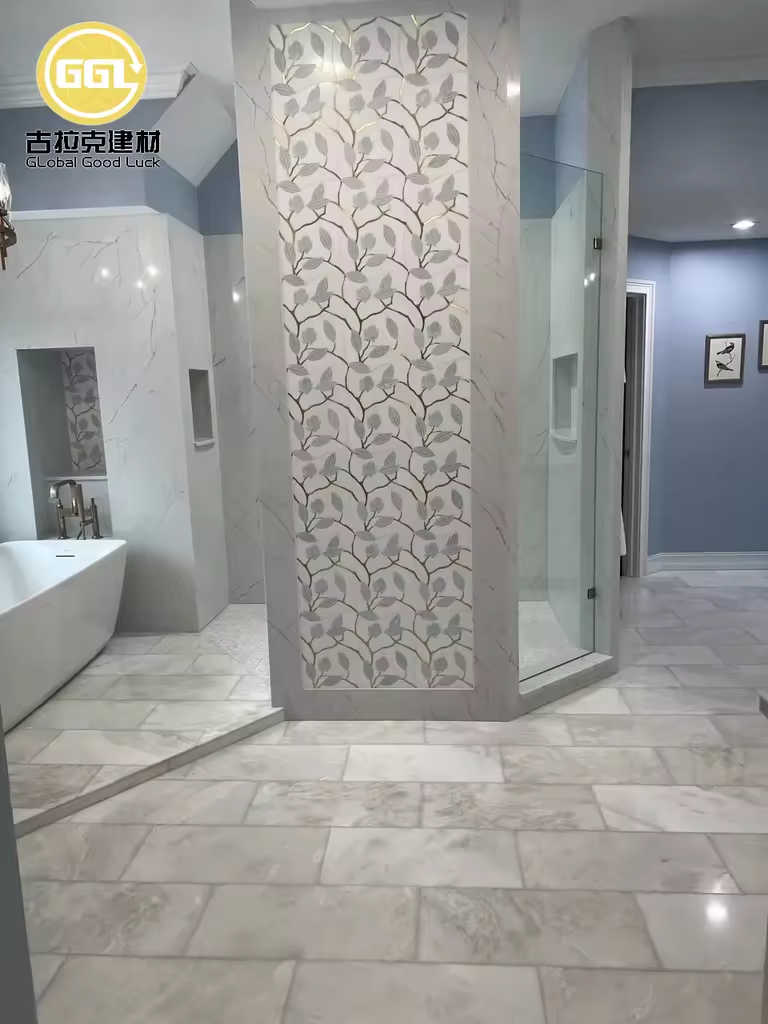 Bathroom, backsplash or feature wall application.
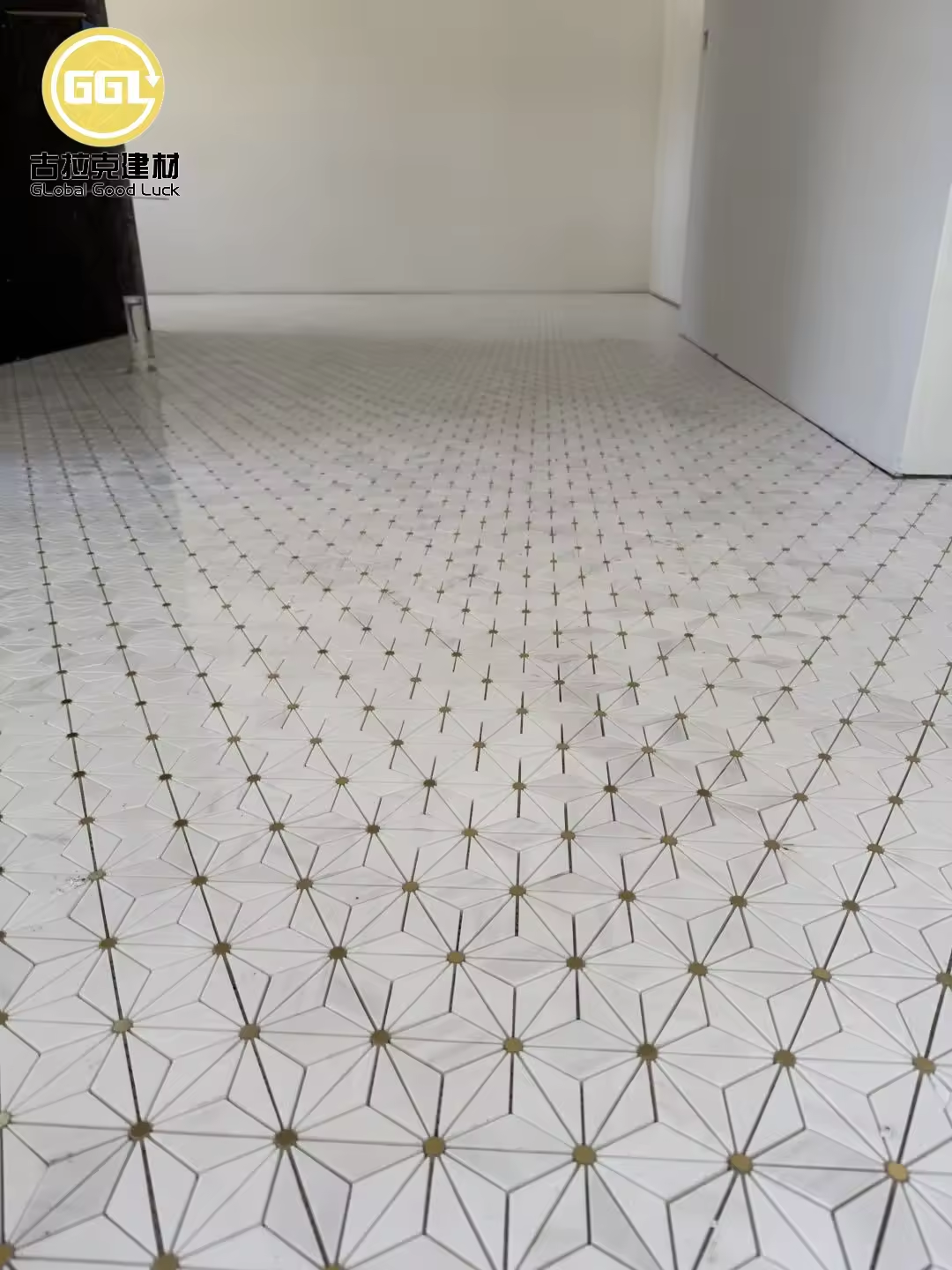 Entrance, foyer, villa or hospitality flooring.
Based in Shuitou, Fujian — one of China's major stone processing and trading centers — GoodLuck Stone has more than 20 years of natural stone manufacturing experience. We support both standard and custom marble mosaic projects, from material selection and pattern development to production, inspection, export packing and international shipment.
The beauty of marble mosaic is not only in the number of patterns available, but in how easily those patterns can evolve. A simple hexagon can become a two-color composition. A geometric mosaic can be reconstructed with different stone shapes. A familiar pattern can be reinterpreted with brass, mother of pearl or waterjet details.
And when a standard option is not quite right, a drawing, sample or reference image can become the starting point for something made specifically for one project. That journey — from familiar patterns to completely custom design — is what continues to make marble mosaic such an interesting material for architecture and interiors.
Send us your drawing, reference image, preferred stone, dimensions and quantity. Our team can help develop a practical custom mosaic solution for your project.
Discuss Your Project


