 ×
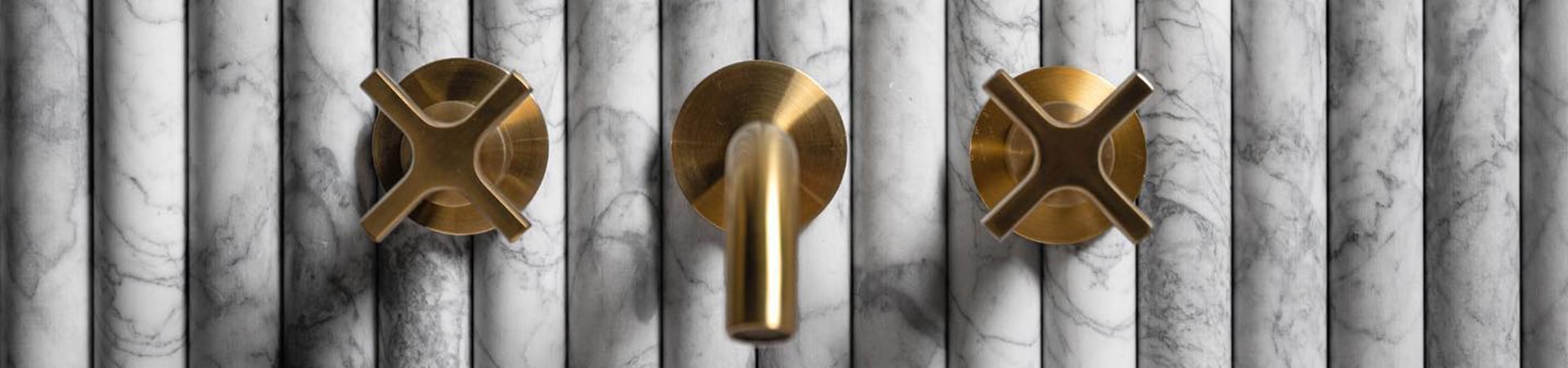
From warm travertine interiors to expressive quartzite kitchens, a closer look at the materials, finishes and specifications shaping thoughtful architecture.
For years, stone was often treated as a finishing touch: a dramatic kitchen island, a polished hotel lobby, perhaps a marble bathroom vanity. That is changing. Across residential, hospitality and commercial projects, architects are increasingly using natural stone to establish the character of an entire space. Floors flow into walls. Textured surfaces invite closer inspection. Carefully selected slabs become an architectural feature rather than a background material.
Heading into 2027, the conversation is less about a single fashionable marble color and more about selecting the right material for its setting. A limestone terrace must work in its climate. A quartzite countertop needs to suit its intended use. A decorative marble mosaic should look as convincing in a detailed shop drawing as it does in a mood board. These practical questions matter as much as appearance, particularly for importers, contractors and specifiers working across multiple markets.
Recent research helps explain the direction. In its 2026 US Emerging Summer Trends Report, Houzz recorded a 257% increase in searches for sandstone and a 38% rise in searches for wave tile, pointing to growing interest in tactile surfaces and softer geometry. The UK Houzz report also recorded higher interest in natural stone and stone walls. These are platform search trends, not sales figures, but they are useful signals of what designers and homeowners are exploring.
The design direction
Less visual noise. More material character. Better decisions about how and where stone is used.
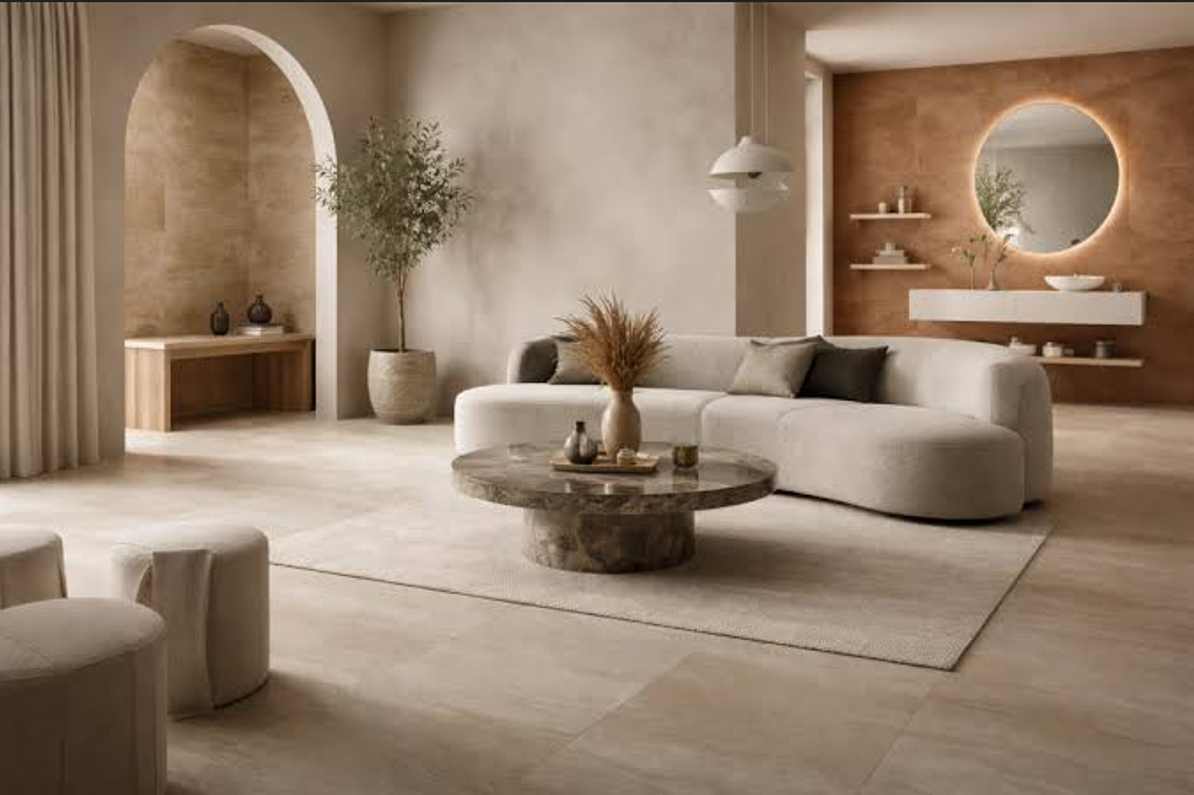
The cool gray interiors that dominated much of the previous decade have given way to warmer, quieter palettes. Cream, sand, oatmeal, soft taupe and muted beige work easily with oak, plaster, bronze and brushed metals. Natural stone fits this shift because the color is rarely uniform: subtle veins, mineral movement and tiny variations between pieces give a room depth without demanding attention.
Beige travertine tiles are a particularly compelling choice for open-plan living rooms, hotel bathrooms and statement walls. Their linear movement can be emphasized through vein-cut slabs, while cross-cut material delivers a softer, cloud-like appearance. Honed travertine offers a restrained, matte finish; filled and unfilled surfaces create very different maintenance expectations. Designers should settle these details early rather than treating “travertine” as one interchangeable specification.
Limestone wall cladding and natural limestone floor tiles offer a similarly calm architectural language. Fine-grained cream limestone can make an interior feel cohesive when used across floors, stairs and wall details. For busy projects, however, the stone's porosity, strength, finish and cleaning requirements should be reviewed with the supplier. Color alone cannot determine suitability.
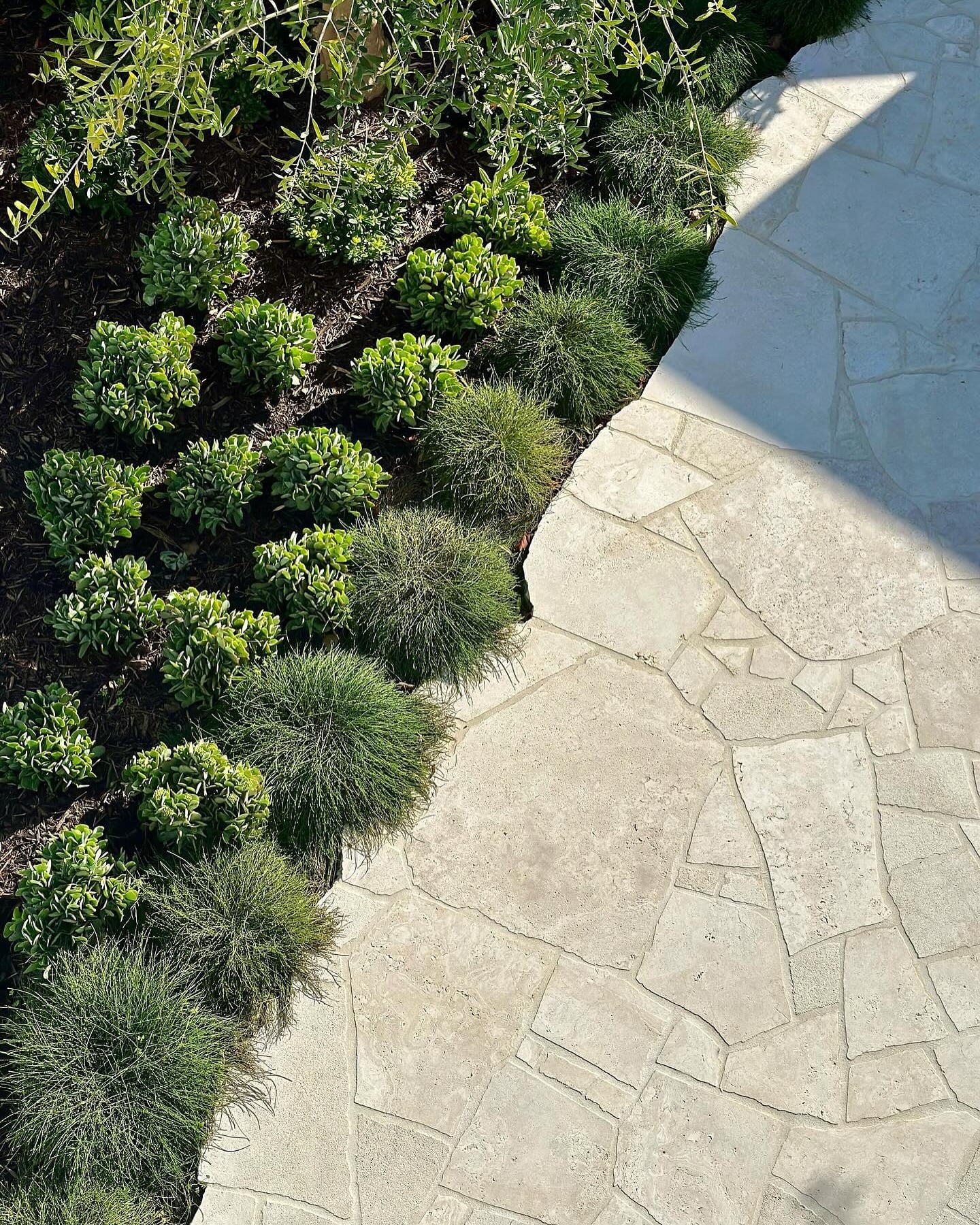
Warm neutrals work best when texture and lighting are considered together.
The stone surface is no longer expected to be perfectly glossy. Honed marble, brushed limestone, tumbled travertine and leathered quartzite create different experiences of light and touch. Fluted stone panels add shadow and rhythm to reception desks, feature walls and powder rooms. The effect can be subtle at a distance and more expressive at close range.
For architects choosing textured natural stone wall cladding, the profile matters as much as the material. A deeply carved flute collects light and shadow differently from a shallow groove. Vertical ribbing may make a room feel taller; horizontal channels can visually extend a wall. Edge transitions, corners, backing structure and panel thickness all affect whether the final installation looks intentional.
These finishes should never be chosen solely from an image. Request a physical finish sample and, where possible, review it under project lighting. Brushed and tumbled finishes are not automatically slip resistant. For floors, ramps and wet zones, ask for relevant test data for the exact stone and surface treatment proposed.
Quiet interiors still need a focal point, and a large natural stone slab often provides it. Dramatically veined quartzite kitchen countertops, full-height stone backsplashes and waterfall islands are an effective way to introduce movement without filling the room with decorative objects. Depending on the slab, the result can be architectural and restrained or richly expressive.
The latest NKBA 2027 Kitchen Trends Report, released in October 2026, highlights intentional simplicity and layered design. Coverage of its findings reports that 78% of surveyed designers expect quartzite to be popular for countertops. That is a useful indicator for stone buyers, although popularity should not be confused with universal performance.
Natural quartzite is often selected for its hardness and distinctive veining, but materials sold under the quartzite label can differ significantly. Some commercial stones may contain calcite or have characteristics closer to marble or other geological types. Before ordering, check the actual slab, available test information and the fabricator's recommendations for staining, etching and heat exposure. Sealing and normal care may still be required.
For a luxury marble kitchen or quartzite installation, slab layout should be reviewed before cutting. Vein direction, bookmatching, joint placement, cutouts and edge profiles decide whether a beautiful material becomes a beautiful finished project. High-resolution slab photographs, dry-lay approval and clear fabrication drawings are especially valuable on imported stone orders.
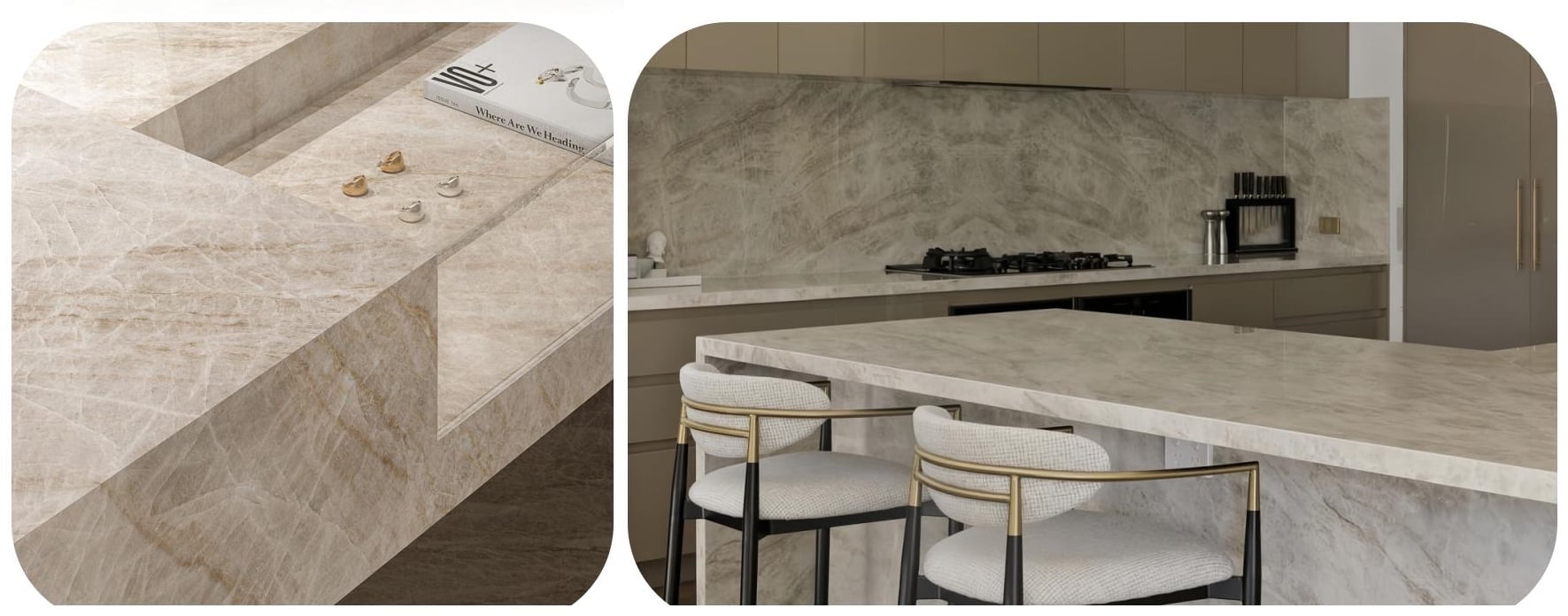
For large-format slabs, vein layout and fabrication are part of the design—not final-stage details.
Spa-inspired bathroom design continues to influence private homes, boutique hotels and wellness spaces. Walk-in showers, integrated seating, gentle lighting and natural materials help create an environment that feels restful without being overly decorated. In Britain, Houzz's 2026 Emerging Trends Report found growing interest in walk-in showers, wet rooms and accessible bathrooms—a reminder that atmosphere and practical use increasingly go hand in hand.
Marble bathroom tiles, limestone wall panels and travertine vanity surfaces can each support this direction. A honed stone wall softens reflected light; a carefully selected marble slab adds a sense of permanence to a vanity. Smaller marble mosaic tiles can help follow shower floor slopes and create more grout joints, although slip performance still needs to be assessed for the complete assembly.
Moisture management is critical. Natural stone itself is not a waterproofing system. Wet-area projects require suitable substrates, membranes, adhesive, grout, movement joints and maintenance guidance. Light-colored marbles may also require careful adhesive selection to avoid staining or discoloration. In a commercial setting, designers should balance the desired finish with cleaning schedules, accessibility requirements and local standards.
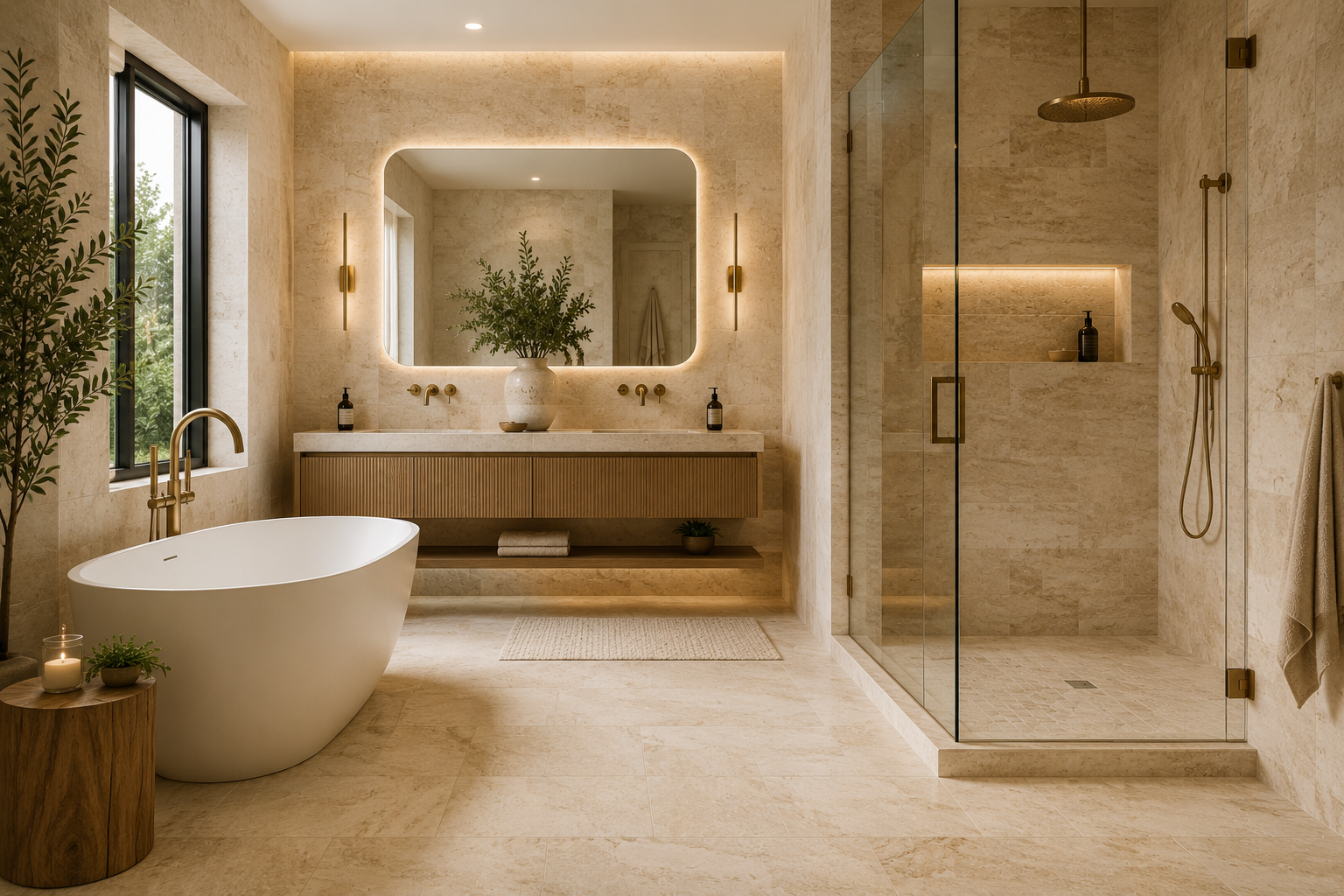
Calm bathrooms depend on proportion, lighting, detailing and water management as much as on stone selection.
Patios, courtyards, outdoor kitchens and pool terraces are now treated as extensions of the home. Designers want materials that connect interior and exterior spaces, but outdoor natural stone paving has more demanding requirements than an indoor floor. The right decision depends on climate, drainage, freeze-thaw exposure, traffic, water conditions and the installation method.
Travertine pavers for pool decks remain attractive for their warm colors and relaxed Mediterranean character. Tumbled limestone pavers are popular in garden and courtyard schemes where a softened edge suits the architecture. Granite paving offers another option for projects that need a dense, hard-wearing material. No single stone is automatically appropriate for every region.
Architects comparing limestone vs travertine for outdoor paving should look beyond sample color. Review absorption, frost resistance where relevant, wet slip resistance, thickness, surface finish and the substrate specification. Pool surrounds also require attention to edge profiles, coping details and the chemicals used in routine maintenance. An outdoor stone that performs well in a dry Mediterranean courtyard may not be the right choice for a freeze-thaw climate in northern Europe.
Modular layouts, including French pattern travertine and irregular natural stone paving, can make terraces feel established rather than overly manufactured. For procurement, request a layout drawing that clearly identifies piece sizes, tolerances and the quantity needed for cuts and breakage.
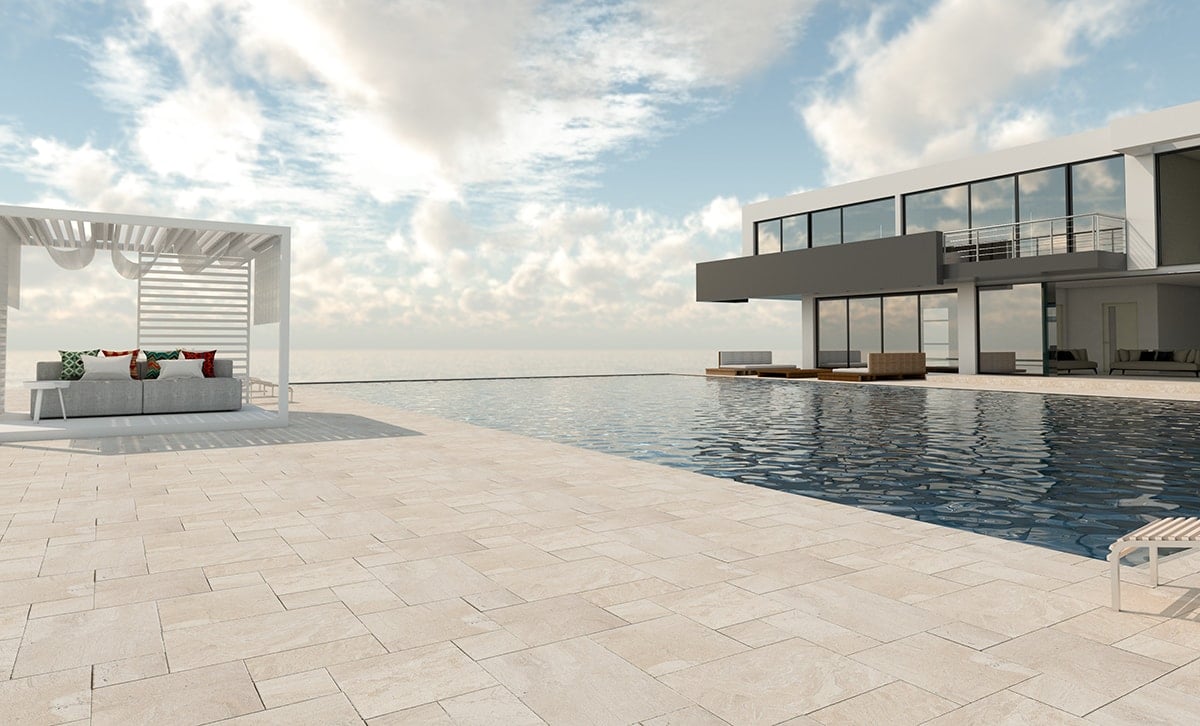
Exterior paving selections should begin with exposure, expected use and verified performance.
After years of large, visually continuous surfaces, smaller-format detail is finding a distinct role. Designers are bringing interest to a shower niche, kitchen backsplash, entryway floor or hotel reception area without overwhelming the architecture. Basketweave marble mosaic, herringbone layouts, geometric marble tile and custom waterjet marble mosaic patterns can all achieve this when the scale is controlled.
Waterjet cutting makes it possible to combine Carrara White, Nero Marquina, Calacatta and colored marbles with brass or shell accents in accurately planned shapes. The best results do not rely on complexity alone. Consistent joints, well-balanced colors and a pattern that repeats cleanly across sheets matter more than adding detail for its own sake.
For B2B orders, ask for the sheet size, individual pattern module, thickness, mesh backing and installation layout. A drawing should show how pattern lines continue at adjoining sheets and how field pieces meet borders. With marble and brass mosaic tiles, buyers should also discuss metal care, moisture exposure and compatibility with the intended cleaning products. Decorative metal details may not suit every wet or high-traffic application.
Large format natural stone tiles, oversized wall panels and full-height slabs support the desire for calmer, more continuous surfaces. Fewer visible joints can make a bathroom, lobby or corridor appear expansive. Yet the clean appearance depends on work done long before the first panel is installed.
Large natural stone slabs may have limitations on transport, handling, support and onsite access. The stone's thickness and flexural characteristics must suit the application. Designers should plan joint locations, tolerances, movement accommodation, lifting equipment and fixing systems with qualified installers. For exterior cladding, engineering and local codes are indispensable.
It is worth comparing a monolithic slab with a carefully designed assembly of smaller pieces. A smaller modular format can simplify replacement and handling without sacrificing the visual language, especially where the vein and joint alignment have been planned from the start.
Sustainability is becoming more closely tied to specification and documentation. Natural stone is valued for durability, repairability and the possibility of long service life, but those qualities should not be treated as proof that every stone product has a lower environmental impact. Quarrying methods, processing energy, production waste, transport distances, installation and maintenance can affect a project's footprint.
European projects, in particular, are asking increasingly detailed questions about product performance and environmental information. Where available, environmental product declarations, responsible sourcing documents and relevant test reports help buyers compare materials on a more consistent basis. A supplier should be clear about which records apply to the actual stone, factory and product—not present a generic certificate as though it covered every item in a catalog.
The strongest sustainability decision is often a practical one: specify a stone suitable for its intended service conditions, design joints and edges that can be maintained, order realistic quantities and avoid unnecessary replacement. Longevity starts with correct selection.
Specification checklist
Before placing a natural stone order, confirm stone identification and origin, finish and reference sample, nominal dimensions and tolerances, test data relevant to the application, required fabrication drawings, packing method and inspection criteria.
The strongest projects in the coming year are likely to combine an understated palette with precisely chosen details. Warm limestone can be used to give a hotel a cohesive identity; a richly veined quartzite slab can provide the main feature in a kitchen; honed marble can lend softness to a bathroom; and a custom marble mosaic can make a memorable first impression at an entrance.
For importers and contractors sourcing natural stone from China, the important question is not simply whether a factory can offer the required color. Can it provide consistent material selection, clear shop drawings, practical guidance on finishes and reliable communication before production? Early agreement on these details helps reduce costly surprises during fabrication and installation.
At Good Luck Stone, we work with natural stone tiles, slabs, cut-to-size architectural pieces and custom decorative mosaics for international projects. If you are developing a stone specification, share your project drawings, preferred material, finish, approximate quantity and delivery destination. These details provide a useful starting point for discussing feasibility, samples and a project quotation.
Project enquiries
Discuss marble, limestone, travertine, quartzite, natural stone cladding, cut-to-size fabrication or bespoke waterjet mosaics for your upcoming residential and commercial projects.
CONTACT US FOR A CONSULTATION →Industry references
Houzz, 2026 U.S. Emerging Summer Trends Report: Read report | Houzz UK, 2026 Emerging Trends: Read report | NKBA, 2027 Kitchen Trends Report: Report overview | KBB, 2027 NKBA findings: Read coverage.
Photography is illustrative only; images are not presented as completed Good Luck Stone projects. Product performance should be verified against individual project requirements.


