 ×
×
Explore Palissandro Bianco Marble, also known as White Gold Sand Marble, in modern interiors, including walls, bathrooms, floors, and staircases.
Share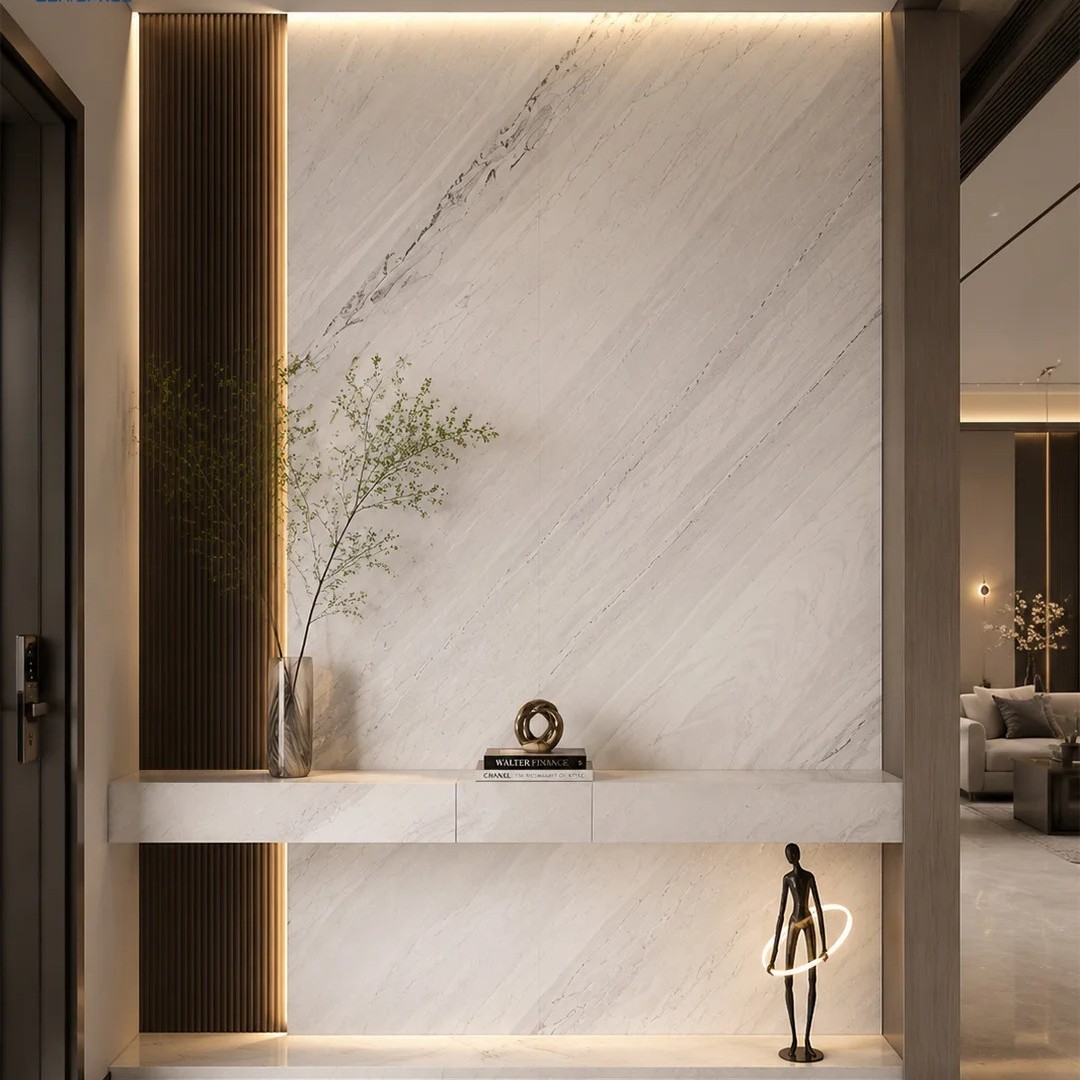
Fine diagonal beige-grey linear veining gives the stone a calm and refined appearance.
Introduction
Palissandro Bianco Marble is a light-toned natural stone known for its creamy white background, flowing grey and beige veining, and subtle crystalline depth. In this project, the material is also presented under the trade name White Gold Sand Marble. Because natural-stone names can vary between suppliers and markets, final selection should always be based on current slab photographs, physical samples, and approved layouts.
The project gallery shows how different slab selections can create very different results. Fine diagonal veins produce calm and spacious interiors, while wider graphite-grey bands create stronger feature walls, staircases, and architectural focal points. This natural variation makes the stone suitable for residential, hospitality, retail, and commercial projects that require both elegance and visual movement.
Palissandro Bianco Marble, also searched as Palissandro White Marble, typically features a pale ivory-to-cream base with grey, taupe, beige, and occasionally warmer gold-toned veins. Some slabs have long linear movement, while others show softer branching patterns or more dramatic dark bands. The polished surface can reveal a gentle pearlescent or crystalline effect under natural and artificial light.
These differences are not defects; they are part of the character of natural marble. For large wall, floor, or staircase projects, the block, slab sequence, vein density, background tone, and finish should be reviewed together. This helps the finished installation look intentional rather than randomly mixed.
Material at a Glance
Typical appearance: creamy white to pale ivory base
Veining: grey, beige, taupe, and occasional warm gold tones
Common finishes: polished, honed, and selected textured finishes
Applications: walls, floors, bathrooms, staircases, reception areas, and custom stonework
Slab Gallery
The two slabs below demonstrate why selection is one of the most important stages of a Palissandro Bianco Marble project. Both suit modern interiors, but their pattern density and movement create different visual effects.
Fine diagonal beige-grey lines create a calm, textile-like appearance.
A brighter slab with delicate branching grey movement across the surface.
Vein direction also changes the perception of space. Horizontal layouts can visually widen a shower wall, corridor, floor, or long feature wall. Vertical layouts can emphasize ceiling height, while diagonal veins add energy and movement. Designers should confirm the preferred direction before cutting, especially when panels continue across corners, niches, doors, or several connected surfaces.
For large-format installations, we recommend slab photography, digital vein layout, shop drawings, dry laying, and sequential panel numbering. These steps make it easier to create bookmatched features, align strong veins, control joints, and avoid placing important patterns behind furniture, sanitaryware, shelving, or architectural openings.
Review background tone, vein density, slab sequence, and visible natural variation before approval.
Coordinate strong patterns with joints, corners, openings, lighting, furniture, and sanitaryware.
Arrange panels before packing so installation teams can reproduce the approved sequence on site.
Residential Interiors
Light linear marble creates a continuous architectural base, while selected dark-veined panels add controlled contrast and depth.
Light linear marble flooring visually connects the seating and circulation areas.
Pale flooring and dark-veined wall panels create a balanced open-plan interior.
Expressive large-format slabs turn the wall behind the seating area into a focal point.
In the living-room images, the light marble floor creates a continuous base that reflects daylight and connects the seating, circulation, and display areas. The fine linear pattern adds detail without making the space feel busy. Warm timber, cream upholstery, and dark metal accents balance the cool mineral surface and create a comfortable contemporary interior.
The feature-wall image uses a more expressive slab selection. Large-format marble panels reduce visible joints and allow the natural veining to become the focal point behind the seating area. Before fabrication, the strongest veins should be positioned around the main viewing zone and coordinated with lighting, furniture, televisions, shelves, and door openings.
Design Principle
Palissandro Bianco can behave as either a quiet background or a strong architectural statement. On feature walls, fewer and larger panels usually create a cleaner composition. Digital layouts help place the most distinctive veins where they remain visible after furniture and fixtures are installed.
Wet Areas
Full-height wall cladding, coordinated vein direction, and the right surface finish can create a bright, unified, spa-inspired bathroom.
Full-height marble cladding around a glass shower and sanitary area.
Wall panels, bath surround, vanity area, and concealed lighting form one coordinated material scheme.
Horizontal veins visually widen a narrow shower enclosure.
The bathroom photographs show how Palissandro Bianco Marble can create a bright, unified, and spa-inspired environment. Full-height wall cladding visually enlarges the room, while the soft white and beige background works well with glass shower screens, dark vanity cabinets, warm lighting, and simple metal fittings.
A horizontal vein layout is especially effective in narrow shower rooms because it guides the eye across the wall and makes the space appear wider. Using the same marble on shower walls, vanity backsplashes, bath surrounds, and selected floor areas can create visual continuity, but the finish must be chosen according to the function of each surface.
Wet-area note: Polished marble is suitable for many vertical applications, while honed or slip-resistant finishes are usually more practical for wet floors. Bathrooms also require proper waterproofing, natural-stone adhesive, suitable grout, movement joints, and periodic sealing. Acidic cleaners should be avoided because natural marble can etch or lose its gloss.
Architectural Stonework
Wider graphite veins transform the marble from a background finish into an architectural element that connects treads, risers, landings, floors, and selected walls.
Close view of treads and risers showing the importance of vein sequence and edge detailing.
Bold-veined marble continues across the staircase and surrounding floor.
Sequentially arranged treads form a sculptural multi-level composition.
The staircase photographs feature slabs with wider dark-grey and graphite veins. In this application, the stone becomes part of the architecture rather than a quiet background. Extending the marble across floors, treads, risers, landings, and selected wall areas creates a strong visual connection between levels.
Marble staircase fabrication requires precise templates and careful sequencing. Tread depth, riser height, edge profile, reinforcement, anti-slip treatment, joint position, and vein alignment should all be confirmed before cutting. Sequential slab numbering is particularly important for curved, winding, floating, or cantilevered stairs.
Strong-veined Palissandro Bianco Marble works best with a controlled surrounding palette. Clear glass, brushed bronze, dark metal, grey plaster, and simple lighting allow the marble pattern to remain prominent. For high-traffic floors and stairs, the surface finish and maintenance plan should be selected according to the expected use of the space.
Design Coordination
Timber, metal, glass, finish level, and lighting temperature all influence how the pale background and layered veins are perceived.
Light oak, walnut, warm beige fabrics, bronze, brass, black metal, and clear glass soften or define the stone without competing with its pattern.
Polished surfaces create stronger reflection and a formal luxury appearance. Honed finishes look softer, more contemporary, and reduce glare.
Daylight emphasizes pale tones and fine grey lines. Warm concealed light can reveal beige, taupe, and subtle gold undertones.
Palissandro Bianco Marble pairs naturally with light oak, walnut, warm beige fabrics, bronze, brass, black metal, and clear glass. Timber softens the stone and adds warmth, while dark accents define edges and architectural details. This combination suits modern villas, luxury apartments, hotels, offices, showrooms, and reception areas.
Lighting has a major influence on the final appearance. Grazing light should be tested on feature walls and staircases because it can highlight both the natural veining and small variations in the surface.
Since every slab is unique, a small sample cannot represent the complete project. Final approval should be based on the actual slabs reserved for production, especially when the design requires a consistent white background, controlled vein density, bookmatching, or a continuous pattern across several panels.
Large light-toned wall panels create a clean commercial reception background against a darker polished floor.
Custom Production
For custom Palissandro Bianco Marble projects, our support can include current slab photographs, sample confirmation, cut-to-size production, shop drawings, digital vein layout, bookmatching, edge profiles, finish samples, staircase templates, panel numbering, quality inspection, and export packing.
Early coordination helps reduce on-site cutting and improves the consistency of the final installation. The commercial reception example shows how large light-toned panels can create a clean, spacious, and professional background in hotels, offices, showrooms, retail entrances, and luxury residential common areas.
Project support may include:
Current slab photos · Sample confirmation · Cut-to-size fabrication · Shop drawings · Digital vein layout · Bookmatching · Edge profiles · Finish samples · Panel numbering · Export packing
Buyer Questions
Stone trade names are not always standardized. In some markets, visually similar light linear marbles may be sold under names such as Palissandro Bianco, Palissandro White, or White Gold Sand Marble. Buyers should compare actual slab photos, origin information, samples, and technical requirements rather than relying only on the product name.
It is commonly specified for interior wall cladding, feature walls, floors, bathrooms, shower surrounds, vanity backsplashes, stairs, reception areas, tabletops, and other custom stone elements. The finish and thickness should be selected according to the application and expected traffic.
Polished marble has stronger reflection and highlights the crystalline character of the stone, making it popular for feature walls and formal interiors. Honed marble has a softer, lower-gloss appearance and is often preferred for contemporary floors. Wet floors may require an additional slip-resistant treatment.
The best results come from photographing the selected slabs, preparing a digital layout, confirming shop drawings, dry laying the panels, and numbering each piece before packing. This process helps control vein direction, joints, bookmatching, and transitions around corners or openings.
Yes. It can be used on shower walls and selected floor areas when the substrate is properly waterproofed and compatible natural-stone installation materials are used. The stone should be sealed as required, and acidic or abrasive cleaners should be avoided.
Use a soft cloth or mop with a pH-neutral stone cleaner, remove spills promptly, and avoid vinegar, lemon-based cleaners, bleach, and abrasive powders. Resealing intervals depend on the finish, location, exposure, and the sealer used.
Conclusion
This project demonstrates the range of Palissandro Bianco Marble, from quiet linear slabs used on floors and shower walls to dramatic selections used for feature walls and staircases. The most successful result comes from matching the slab character, vein direction, finish, panel size, and fabrication details to the architecture.
For a residential, hospitality, or commercial project, review the available slabs before ordering and confirm the layout before production. This provides better control over color, vein continuity, joints, and the final visual effect.
Review current slab availability, custom sizes, finishes, vein layouts, and fabrication support.
Explore Marble SlabsRequest a Project Quote